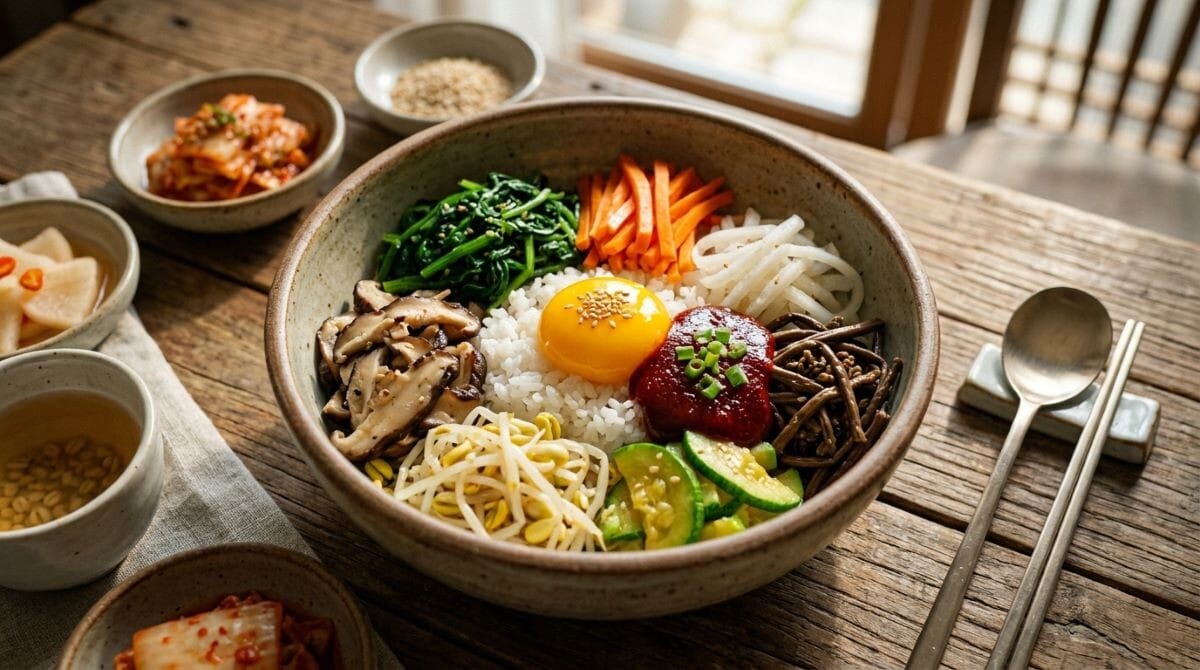
Bibimbap: The Perfect Harmony of Colors and Flavors
The word Bibimbap comes from "Bibim," meaning "mixing," and "Bap," meaning "rice." Essentially, it is a bowl of rice topped with various seasoned ingredients to be mixed together before eating. Beyond its delicious taste, bibimbap is celebrated globally for its adherence to the "Obangsaek" philosophy—the traditional Korean use of five colors (white, yellow, green, red, and black) to create visual and nutritional balance.
The Symbolic Meaning of Five Colors
The ingredients in bibimbap aren't chosen by chance; they represent the five traditional Korean colors, each linked to a specific organ in the body and a natural element. For example, white ingredients like radish or onions are thought to support the lungs, while green vegetables like spinach or zucchini are linked to the liver. This makes bibimbap not just a dish, but a thoughtful bowl of wellness designed to promote long-term health.
Key Ingredients: What’s Inside the Bowl?
One of the best things about bibimbap is its versatility. While you can customize it to your liking, there are several core components that define the traditional experience.
Fresh Sautéed Vegetables (Namul)
The soul of bibimbap lies in its "Namul"—sautéed or blanched vegetables. Common choices include fernbrake (gosari), bellflower root (doraji), bean sprouts, and spinach. Each vegetable is seasoned individually with garlic, salt, and a touch of toasted sesame oil to highlight its natural flavor. The result is a diverse range of textures, from crunchy to tender, in every bite.
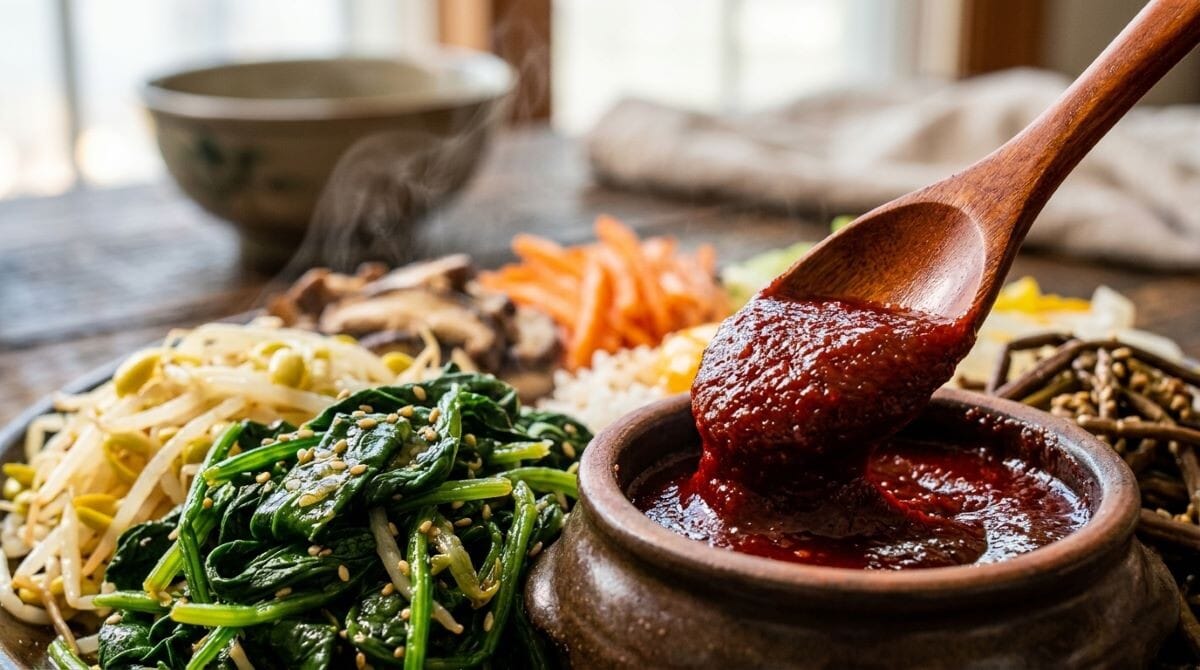
The Magic Sauce: Gochujang
The defining element that ties everything together is Gochujang, a fermented Korean chili paste. It provides a unique depth of flavor that is spicy, savory, and slightly sweet all at once. For those who are sensitive to heat, many restaurants offer a mild soy-based sauce or allow you to add the gochujang yourself so you can control the spice level.
Popular Varieties of Bibimbap
While the basic concept remains the same, bibimbap varies significantly depending on the region and the way it is served.
Jeonju Bibimbap (The Royal Classic)
Originating from Jeonju, the food capital of Korea, this version is considered the most authentic and sophisticated. The rice is often cooked in beef bone broth for added richness, and it is topped with high-quality ingredients like beef tartare (yukhoe) and yellow mung bean jelly. It is a true representation of royal Korean cuisine.
Dolsot Bibimbap (Sizzling Stone Pot)
This is a favorite among international foodies. Served in a piping-hot granite bowl (dolsot), the ingredients continue to sizzle as you mix them. The highlight of this version is the Nurungji—a layer of golden, crispy rice that forms at the bottom of the pot, providing a satisfying crunch that contrasts beautifully with the soft vegetables.
Expert Tips: How to Eat Bibimbap Like a Local
To enjoy bibimbap like a true Korean, try using chopsticks instead of a spoon to mix the ingredients. This prevents the rice from becoming mushy and keeps the delicate vegetables intact, ensuring a better texture.
Additionally, if the rice feels a bit dry, add a spoonful or two of the accompanying soup (usually bean sprout or miso soup) to help everything blend smoothly. Finally, never skip the extra drizzle of sesame oil at the end—it’s the secret to that irresistible, aromatic finish that makes bibimbap truly unforgettable.