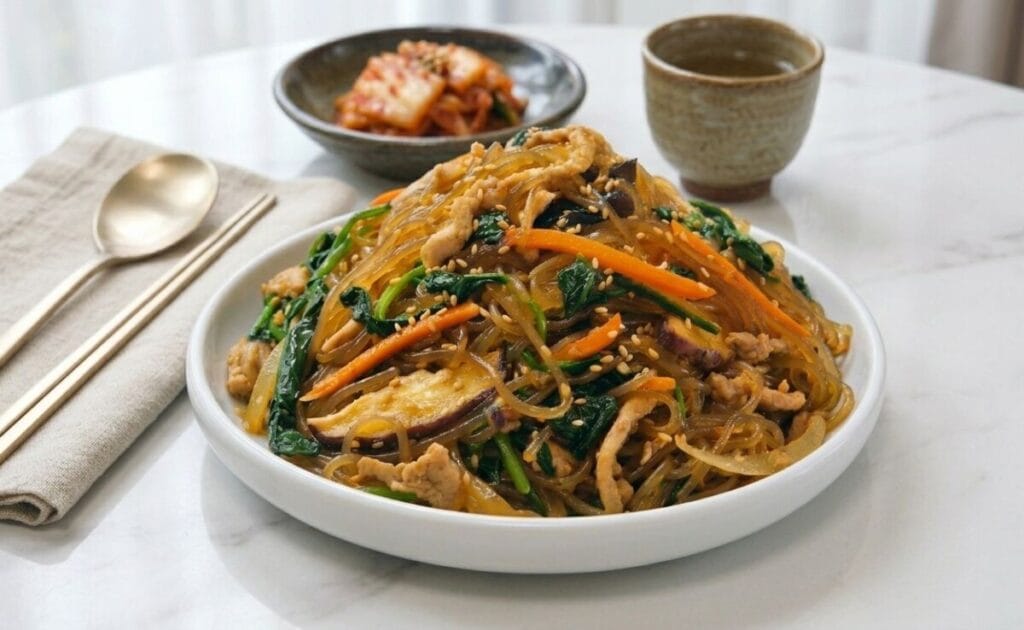
Japchae (잡채) is one of Korea’s most treasured celebration dishes — a glistening tangle of glass noodles stir-fried with julienned beef, vibrant vegetables, and a deeply savory soy-sesame sauce. Originally served at royal banquets during the Joseon Dynasty, it has long since become a staple at Korean birthdays, holidays, and family gatherings, beloved for its beautiful presentation and satisfying depth of flavor.
What makes Japchae truly special is the texture: the noodles are made from sweet potato starch, giving them a uniquely springy, slippery chew that soaks up sauce without turning heavy or starchy. Each ingredient — the beef, spinach, mushrooms, and vegetables — is cooked separately so every component keeps its own color and character, then brought together in a final toss that transforms the bowl into something far greater than the sum of its parts.
Japchae Ingredients
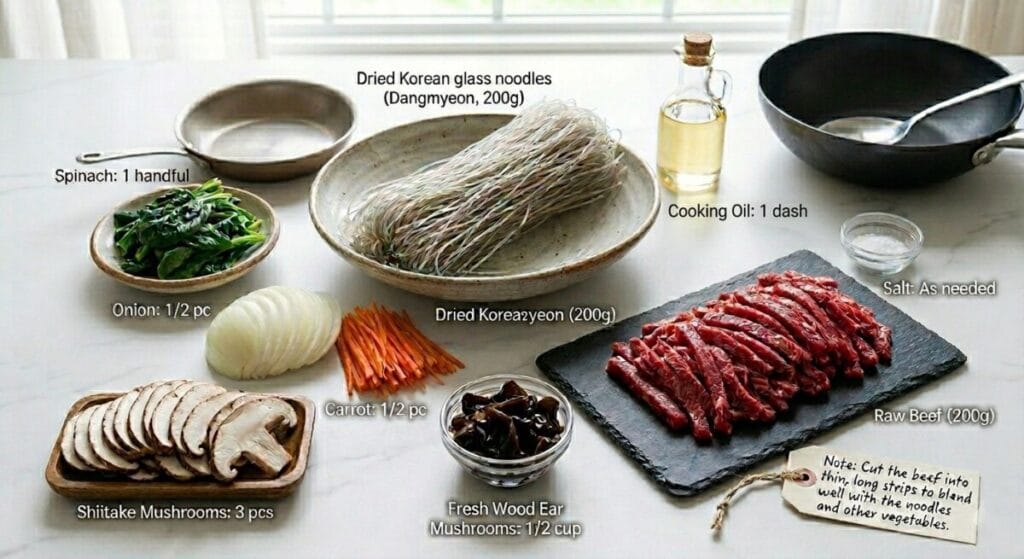
Main Ingredients(Serves 2–3)
| Ingredient | Amount |
|---|---|
| Glass Noodles (Dangmyeon, sweet potato starch) | 200 g |
| Beef, thinly julienned | 200 g |
| Spinach | 1 handful |
| Onion | ½ pc |
| Shiitake Mushrooms | 3 pcs |
| Fresh Wood Ear Mushrooms | ½ cup |
| Carrot | ½ pc |
| Salt | As needed |
| Cooking Oil | A dash |
Seasonings & Sauces
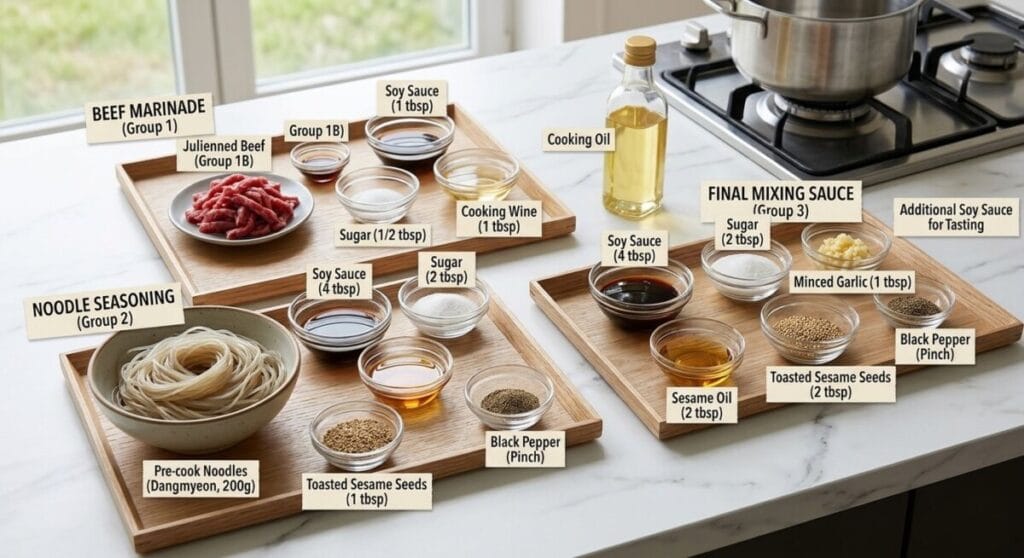
Beef Marinade
- Soy Sauce — 1 tbsp
- Sugar — ½ tbsp
- Cooking Wine — 1 tbsp
Noodle Seasoning
- Soy Sauce — 4 tbsp
- Sugar — 2 tbsp
- Sesame Oil — 1 tbsp
- Toasted Sesame Seeds — 1 tbsp
- Black Pepper — a pinch
Final Mixing Sauce
- Soy Sauce — 4 tbsp
- Sugar — 2 tbsp
- Minced Garlic — 1 tbsp
- Sesame Oil — 2 tbsp
- Toasted Sesame Seeds — 2 tbsp
- Black Pepper — a pinch
How to Make Japchae — Step-by-Step Recipe
Step 1 — Prep All Your Ingredients
- BeefUse a lean cut and slice it into thin matchstick strips (julienne). Keeping the strips long and uniform helps them blend naturally with the noodles and cook evenly.
- VegetablesThinly slice the onion and carrot into strips the same rough size as your beef. Consistent cuts mean everything cooks at the same rate.
- MushroomsRemove the stems from the shiitake mushrooms and slice the caps thinly. Clean the base of the wood ear mushrooms and cut into bite-sized pieces.
- SpinachRinse thoroughly and leave whole — it will be blanched separately in Step 3.
Step 2 — Stir-Fry Each Component Separately
- Cook the BeefHeat a pan with a little cooking oil over medium-high heat. Stir-fry the julienned beef with 1 tbsp soy sauce, ½ tbsp sugar, and 1 tbsp cooking wine until just cooked through. Transfer to a large mixing bowl and let it cool.
- Stir-Fry the VegetablesIn the same pan with fresh oil, cook the onion and carrot separately — each with a pinch of salt. Keep the heat high so they soften quickly without losing color. Transfer each to the mixing bowl.
- Stir-Fry the MushroomsStir-fry the shiitake and wood ear mushrooms together with a little oil and a pinch of salt. Once lightly wilted and fragrant, add them to the mixing bowl.
💡 Why cook separately? Each ingredient has a different moisture content and cooking time. Cooking them apart preserves their individual textures and vibrant colors — and prevents the pan from steaming instead of searing.
Step 3 — Blanch the Spinach
- Boil & BlanchBring a generous pot of salted water to a boil. Add the spinach and blanch for about 20 seconds — just until wilted but still bright green.
- Shock & SqueezeImmediately transfer the spinach to a bowl of cold water to stop the cooking. Drain, then gently squeeze out as much excess moisture as possible. Set aside — you’ll fold it in at the very end.
Step 4 — Cook and Season the Noodles
- Boil the Glass NoodlesBring a large pot of water to a rolling boil. Add the dangmyeon and cook for 6 minutes, stirring occasionally to prevent sticking. Drain, rinse under cold water, and cut the noodles into manageable lengths with scissors.
- Season in the PanReturn the noodles to a pan over medium heat. Add 4 tbsp soy sauce, 2 tbsp sugar, 1 tbsp sesame oil, 1 tbsp toasted sesame seeds, and a pinch of black pepper. Stir-fry until the seasoning is fully absorbed and the noodles look glossy. Cook off any remaining moisture, then let the noodles cool slightly.
💡 Noodle tip: Don’t skip the pan-seasoning step. Coating the noodles while they’re warm helps them absorb the soy sauce deeply, giving every strand a rich, even flavor instead of a surface glaze.
Step 5 — Final Mix
- Combine EverythingAdd the seasoned noodles to the large mixing bowl with the stir-fried beef and vegetables. Add the final mixing sauce: 4 tbsp soy sauce, 2 tbsp sugar, 1 tbsp minced garlic, 2 tbsp sesame oil, 2 tbsp toasted sesame seeds, and a pinch of black pepper.
- Toss by HandUse your hands (wearing gloves if preferred) to mix everything together thoroughly. Hand-mixing is genuinely the best method — it lets you feel whether the noodles are evenly coated and ensures the ingredients are distributed without breaking up the vegetables.
- Fold in the SpinachAdd the blanched spinach last and fold it in gently. The spinach is delicate — a light toss is all it needs. Taste and adjust salt or sesame oil if needed before serving.
Essential vs. Optional Ingredients
One of the great things about Japchae is its flexibility. The core structure — noodles, sauce, and at least a few vegetables — is what defines the dish. Everything else can be swapped or skipped based on what’s in your fridge.
Must-Have Ingredients
These are the ingredients that make Japchae what it is. Leaving any of them out will fundamentally change the character of the dish.
| Ingredient | Why It’s Essential |
|---|---|
| Glass Noodles (Dangmyeon) Must-Have | The defining element — their springy, glossy texture is what Japchae is built around. No substitute captures the same chew. |
| Soy Sauce Must-Have | The backbone of every sauce layer in this recipe. It provides the savory, umami depth the dish depends on. |
| Sesame Oil Must-Have | Gives the finished dish its signature nutty aroma. Added at the end, it’s irreplaceable. |
| Sugar Must-Have | Balances the salt of the soy sauce and creates the characteristic sweet-savory flavor profile. |
| Toasted Sesame Seeds Must-Have | Provides subtle crunch and nuttiness throughout — both in the noodle seasoning and the final toss. |
Nice-to-Have Ingredients
These add color, texture, and depth — but Japchae will still taste great without them or with easy substitutions.
| Ingredient | Notes & Substitutes |
|---|---|
| Beef Optional | Adds richness and protein. Can be replaced with chicken, mushrooms only, or omitted entirely for a vegetarian version. |
| Wood Ear Mushrooms Optional | Add a satisfying crunch. Dried wood ear mushrooms (rehydrated) work just as well, or skip if unavailable. |
| Shiitake Mushrooms Optional | Bring earthy umami. Button mushrooms or oyster mushrooms are good swaps. |
| Spinach Optional | Adds freshness and a pop of green. Blanched watercress or bok choy works as a substitute. |
| Carrot Optional | Mostly for color and texture. Can be left out with no impact on flavor. |
| Cooking Wine Optional | Helps tenderize the beef and removes any gamey aroma. Sub with a splash of sake or mirin. |
Tips for the Best Japchae
Make It Ahead
Japchae actually tastes better after it has rested for 20–30 minutes, as the noodles continue to absorb the sauce. It keeps well in the fridge for up to 2 days — just bring it back to room temperature before serving, or warm it gently in a pan with a tiny splash of soy sauce and sesame oil to loosen the noodles.
Getting the Noodles Right
Glass noodles firm up and clump as they cool. If your Japchae has been sitting and the noodles feel stiff, a quick toss in a warm pan with a few drops of sesame oil will restore their silky, pliable texture in under a minute.
Serving Ideas
Japchae is traditionally served as a side dish (banchan) alongside steamed rice, but it works just as well as a standalone meal. For a festive table, garnish with thin strips of egg garnish (jidan) — separately cooked yellow and white egg sheets cut into ribbons — which add both visual beauty and richness.
Whether you’re cooking it for the first time or revisiting a dish you grew up eating, Japchae is one of those recipes that rewards patience and care at every step.
Once you’ve made it from scratch, there’s no going back.