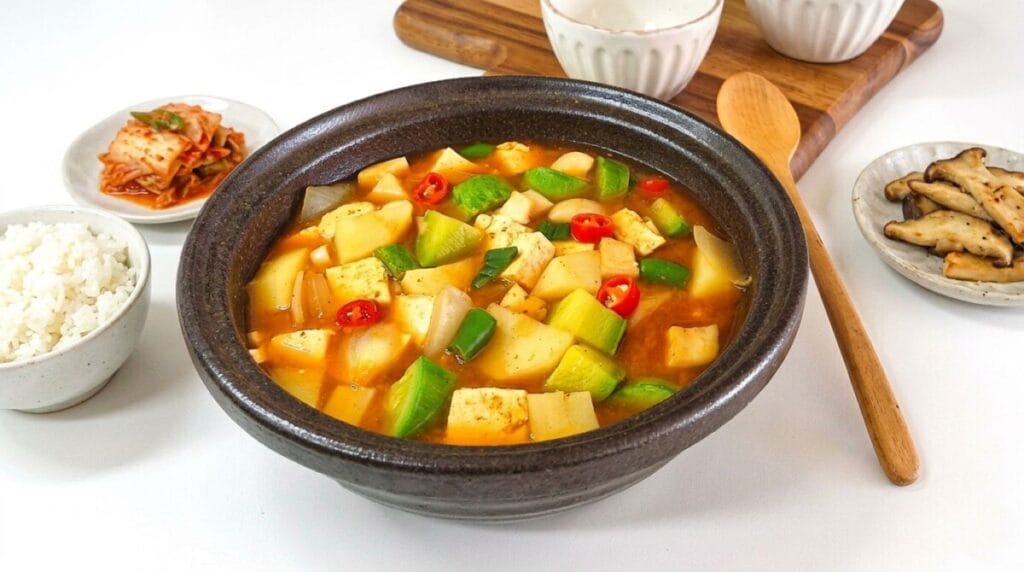
Doenjang Jjigae (된장찌개) is Korea’s most beloved everyday stew — the kind of dish that appears on the Korean table more nights than not, not because it’s fancy, but because it’s that good. Today’s version is built around potato and zucchini, uses no meat or seafood whatsoever, and is entirely plant-based and vegetarian-friendly. Whether you’re cooking for a vegetarian friend, cutting back on meat, or just curious about Korean food that isn’t fried chicken or tteokbokki — this is the recipe to start with. It’s honest, it’s approachable, and once you’ve made it, you’ll wonder why it took you so long.
Doenjang Jjigae Ingredients
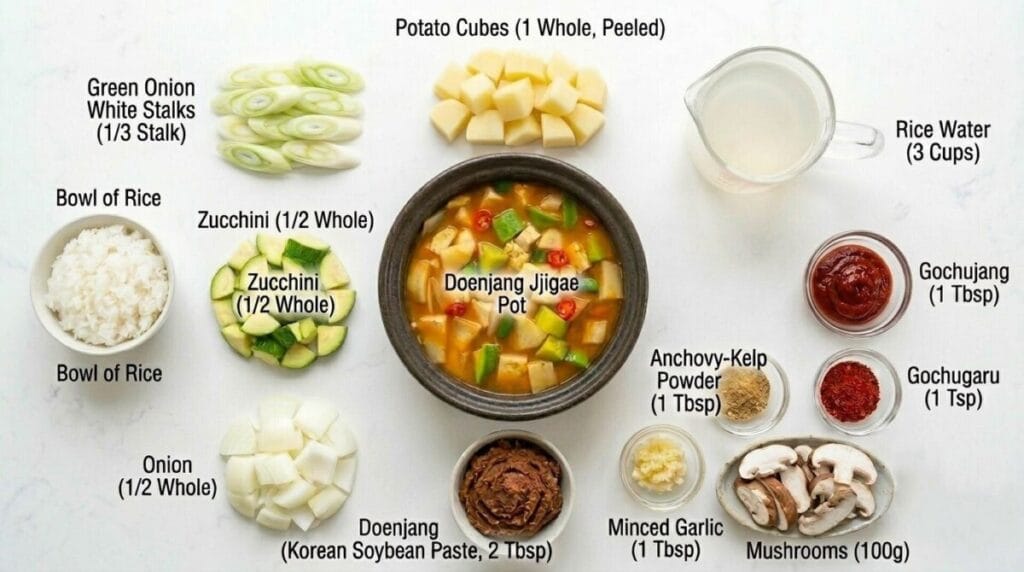
Main Ingredients (Serves 2–3)
| Ingredient | Amount | Notes |
|---|---|---|
| Potato | 1 medium | Peeled and cut into bite-sized cubes |
| Zucchini (Korean aehobak / 애호박) | ½ pc | Sliced into half-moons, about 1cm thick |
| Onion | ½ pc | Roughly chopped |
| King Oyster Mushroom (새송이버섯) | 1 pc | Sliced or torn into pieces |
| Tofu (firm or soft) | ½ block | Cut into 2cm cubes |
| Green Onion (대파) | ⅓ stalk | Diagonally sliced, added at the end |
| Cheongyang Chili Pepper (청양고추) | 1 pc | Thinly sliced — this one brings the heat |
| Red Chili Pepper (홍고추) | 1 pc | Thinly sliced — mostly for color |
| Doenjang (된장, fermented soybean paste) | 2 tbsp | The soul of the dish — don’t substitute |
| Gochujang (고추장, chili paste) | 1 tbsp | Adds depth and a gentle heat |
| Minced Garlic | 1 tbsp | Fresh is best |
| Anchovy & Kelp Stock Powder (멸치다시마가루) | 2 tbsp | Swap with kelp powder for fully vegan |
| Rice Water (쌀뜨물) | 3 cups | The milky water from rinsing rice — or plain water |
How to Make Doenjang Jjigae — Step-by-Step
Step 1 — Make Your Broth Base
Pour the rice water into a medium pot (a Korean earthenware ttukbaegi is ideal, but any pot works) and bring it to a gentle simmer over medium heat. Stir in the anchovy and kelp stock powder and let it dissolve for about 3 minutes. This is your flavor foundation — simple, but essential. The starchiness of the rice water gives the broth a subtle body that plain water just doesn’t have.
Step 2 — Add the Pastes and Garlic
Drop the doenjang and gochujang directly into the simmering broth. Use a spoon to break them up and dissolve them fully — undissolved clumps will make the broth uneven. Once dissolved, stir in the minced garlic. Take a sniff. It’ll smell intensely savory, almost sharp. That’s exactly right. The vegetables are going to mellow everything out beautifully.
Step 3 — Add the Vegetables in Stages
Start with the potato and onion, since they take the longest to soften. Let them cook in the seasoned broth for 5 minutes over medium heat. Then add the zucchini, mushrooms, and both chili peppers. Give everything a gentle stir, then carefully nestle the tofu cubes into the pot. Tofu doesn’t need to be stirred aggressively — treat it gently and it’ll hold its shape beautifully in the finished stew.
Step 4 — Simmer, Taste, and Finish
Let the stew simmer for another 8–10 minutes until the potato is completely tender when pierced with a chopstick or knife. Taste the broth and adjust — more doenjang if it needs depth, a pinch of salt if it just needs a lift. Add 1 tsp of Gochugaru (Korean chili powder) along with the Doenjang and Gochujang for a deeper color and a hint of spice.If you prefer a milder soup, you can skip the Gochugaru or reduce the amount to your liking Finish with the sliced green onion scattered over the top. Serve immediately, still bubbling, with steamed white rice on the side.
💡 Pro tip: If you have a Korean earthenware pot (뚝배기 / ttukbaegi), now’s its moment. These clay pots hold heat so well that the stew keeps bubbling at the table for minutes after you’ve turned off the heat — which is exactly how it’s meant to be served.
Essential vs. Optional Ingredients
Ingredients You Cannot Skip
Some things in this recipe are truly non-negotiable. Remove them and it’s simply a different dish.
| Ingredient | Why It’s Essential |
|---|---|
| Doenjang ✅ Must-Have | This is the dish. It provides the fermented depth, umami, and character that nothing else can replicate. Don’t substitute miso — it’s softer and sweeter, and the result will be entirely different. |
| Tofu ✅ Must-Have | Tofu is the protein anchor of doenjang jjigae. It soaks up the broth like nothing else and gives the stew its familiar, satisfying texture. Firm or soft both work — soft tofu gives a silkier finish, firm holds its shape better. |
| Minced Garlic ✅ Must-Have | Koreans use garlic generously, and for good reason. It rounds out the sharpness of fermented paste and adds warmth that the dish would feel flat without. |
| Rice Water or Broth ✅ Must-Have | Plain water produces a thin, harsh broth. Rice water adds starch and body; any kind of light broth adds depth. Don’t skip the liquid quality — it matters more than you’d think. |
Nice-to-Have Ingredients
These add color, complexity, and texture — but the stew will still be excellent without them.
| Ingredient | Notes & Substitutes |
|---|---|
| Potato 🔶 Optional | Adds starchy body and a mild sweetness. Sweet potato works as a substitute. You can leave it out entirely for a lighter stew. |
| Zucchini 🔶 Optional | Traditional in this version, but not universal. Squash, eggplant, or even cabbage make good swaps. |
| King Oyster Mushroom 🔶 Optional | Adds meaty texture and mild umami. Shiitake, button, or oyster mushrooms all work. Or skip mushrooms entirely. |
| Cheongyang Chili 🔶 Optional | This is a very spicy Korean chili. If you’re heat-sensitive, leave it out. The stew is flavorful without it. |
| Red Chili Pepper 🔶 Optional | Primarily decorative — adds a pop of red color. Skip without any flavor impact. |
| Gochujang 🔶 Optional | Adds a layer of fermented chili complexity. Some recipes omit it entirely. The stew is great either way — just slightly different in character. |
What Is Doenjang Jjigae?
Doenjang jjigae is a Korean fermented soybean paste stew — Korea’s answer to the kind of humble, warming dish that every culture has in its bones. Doenjang (된장) is made by fermenting soybeans with salt over months or years, resulting in a thick, complex paste that carries enormous depth of flavor: earthy, slightly funky, deeply savory, and rich with natural umami. When dissolved into a pot of broth with vegetables and tofu, it becomes something quietly extraordinary.
This version is 100% vegetarian. Instead of the traditional anchovy broth base, we’re using rice water (쌀뜨물) and anchovy stock powder — and I’ll tell you exactly how to swap that out for a fully vegan version too. The potatoes add body, the zucchini brings gentle sweetness, and the tofu soaks up every bit of that rich, fermented broth. It’s a complete, satisfying meal in a single pot.
Tips for Making the Best Doenjang Jjigae
Make It Fully Vegan
This recipe is already vegetarian, but making it fully vegan is simple. Swap the anchovy and kelp stock powder for pure kelp (dasima) powder or make a quick kelp broth by simmering a 10cm piece of dried kelp in your rice water for 5 minutes before removing it. The umami base will still be there — just cleaner and entirely plant-based.
Getting the Doenjang Balance Right
Doenjang brands vary widely in saltiness and intensity. Start with 1.5 tablespoons if you’re using a stronger variety, taste as you go, and add more at the end if needed. The stew should taste bold and savory — but not overwhelming. If it ever feels too intense, a small splash of water and a minute more of simmering will smooth it out.
The Rice Situation
Doenjang jjigae is always served with rice — this is non-negotiable in Korea, and once you taste them together, you’ll understand why. The broth soaks into the rice, the rice mellows the broth, and together they’re better than either alone. Short-grain white rice is traditional, but brown rice works beautifully too.
Leftovers Actually Get Better
Like a lot of fermented-paste dishes, doenjang jjigae deepens in flavor as it sits. Leftovers stored in the fridge for a day or two often taste richer than the original. Reheat gently on the stovetop with a small splash of water if needed, and taste before serving — you may find it needs nothing at all.
Why This Dish Is Worth Making
Doenjang jjigae doesn’t photograph as dramatically as some Korean dishes. It’s brown, it’s simple, it bubbles quietly. But there’s a reason it shows up on the Korean table more than almost any other dish — it’s the kind of food that nourishes you in a way that feels almost deliberate. The fermentation brings depth that no shortcut can manufacture. The vegetables bring freshness. The broth brings warmth in a completely literal sense.
And for vegetarians exploring Korean cuisine, this is genuinely one of the best entry points. It’s fully satisfying without meat, built around fermented and plant-based ingredients, and introduces the flavor profile of doenjang in the most approachable way possible. Make it once, eat it with rice, and I think you’ll understand what Korean home cooking is really about — not spectacle, but substance.