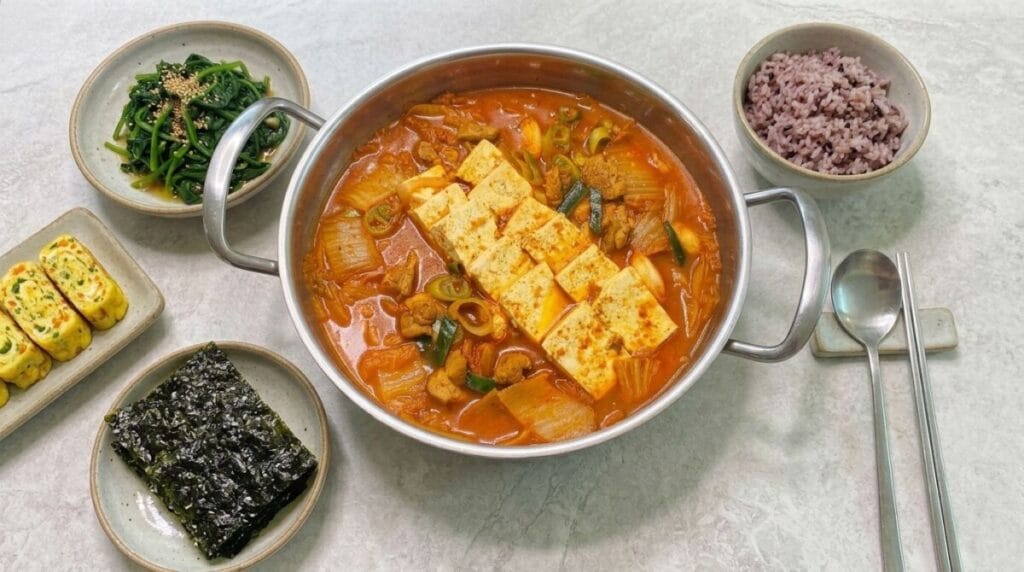
On the menu today is Pork Kimchi Stew
Kimchi Jjigae Ingredients
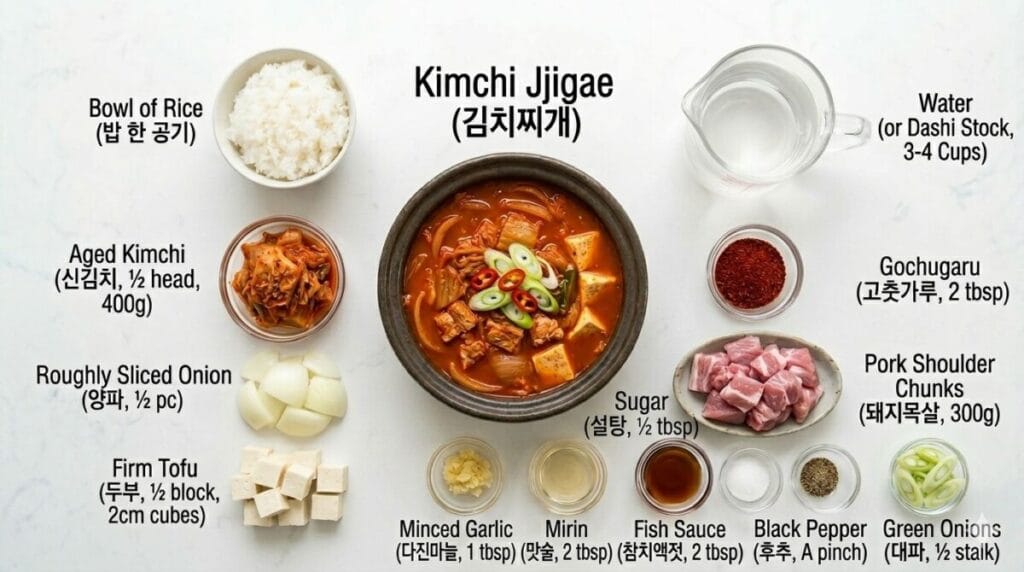
Main Ingredients (Serves 2–3)
| Ingredient | Amount | Notes |
|---|---|---|
| Aged Kimchi (신김치) | ½ head (about 400g) | The sourer, the better — this is the backbone of the dish |
| Pork Shoulder (목살) | 300g | Cut into bite-sized chunks; belly works great too |
| Tofu (두부) | ½ block | Firm or medium-firm; cut into 2cm cubes |
| Onion (양파) | ½ pc | Roughly sliced |
| Green Onion / Leek (대파) | ½ stalk | Diagonally sliced; added near the end |
| Gochugaru (고춧가루) | 2 tbsp | Korean red pepper flakes — adjust to heat preference |
| Fish Sauce (참치액젓) | 2 tbsp | Tuna fish sauce adds depth; regular fish sauce works too |
| Sugar (설탕) | ½ tbsp | Balances the acidity of the kimchi |
| Minced Garlic (다진마늘) | 1 tbsp | Fresh is always better than jarred |
| Mirin (맛술) | 2 tbsp | Adds gentle sweetness and helps tenderize the pork |
| Black Pepper (후추) | A pinch | Just enough to brighten the flavors |
| Anchovy Stock (멸치육수) | 5 cups | The broth base — see tips section for how to make it |
| Cooking Oil (식용유) | 2 tbsp | For sautéing the pork and kimchi at the start |
How to Make Kimchi Jjigae — Step by Step
Step 1 — Sauté the Pork and Kimchi Together
Heat your cooking oil in a heavy-bottomed pot or, ideally, a Korean earthenware pot (뚝배기) over medium-high heat. Add the pork pieces and let them sear for about 2 minutes — you’re not trying to cook them through, just get some color and render a little of that fat. Then add the kimchi directly on top and stir everything together. Let this cook for another 3–4 minutes. This step is crucial: sautéing the kimchi in pork fat before adding liquid builds a layer of flavor that you simply can’t achieve by throwing everything in raw.
Step 2 — Season and Build the Base
Add the gochugaru, minced garlic, fish sauce, mirin, sugar, and a pinch of black pepper. Stir to coat the pork and kimchi evenly in the seasoning paste. It’ll look a little dry and intense — that’s fine. Let everything cook together for 1–2 minutes so the gochugaru blooms in the fat and loses its raw edge. This is where the color deepens to that gorgeous brick-red you’re looking for.
Step 3 — Add Broth and Aromatics
Pour in the anchovy stock and bring the pot to a boil. Add the sliced onion. Once boiling, reduce to a steady simmer and let it cook uncovered for about 15 minutes. You want the pork to become tender and the kimchi to fully soften and release its flavors into the broth. Stir occasionally and skim any foam from the surface in the first few minutes.
Step 4 — Add Tofu, Finish, and Taste
Gently slide in the tofu cubes. Avoid aggressive stirring from this point — tofu breaks apart easily and you want those satisfying cubes in the final bowl. Let the stew simmer for another 5 minutes. Add the green onion and give it one last taste. Adjust seasoning: more fish sauce if it needs salt and depth, a tiny pinch more sugar if the kimchi is very sour. Serve immediately in the pot — kimchi jjigae is always best piping hot.
Ingredients You Can Skip (Optional)
Not every kitchen is stocked like a Korean grocery store, and honestly, this stew is forgiving. Here’s what you can safely leave out without derailing the dish:
- Mirin: Replace with a splash of rice wine or dry sherry, or just skip it entirely. The difference is subtle.
- Fish sauce (참치액젓): Regular soy sauce works as a substitute, though it changes the flavor profile slightly. You can also use regular anchovy fish sauce instead of tuna-based.
- Sugar: If your kimchi isn’t very sour, you may not need this at all. Taste first.
- Black pepper: Minor player here. Leave it out if you don’t have it.
Ingredients You Absolutely Cannot Skip
These are the load-bearing walls of the dish. Remove them and you no longer have kimchi jjigae — you have something else entirely:
- Aged kimchi: This is the dish. Fresh kimchi gives you a completely different result. If you only have fresh kimchi, try leaving it in a warm spot for a day or two to accelerate fermentation.
- Pork with fat: Lean chicken or beef won’t give you the same richness. The fat from pork belly or shoulder is what gives kimchi jjigae its characteristic body. This is a non-negotiable.
- Gochugaru: This isn’t just heat — it’s color, sweetness, and the unmistakably Korean flavor of the stew. Don’t substitute with cayenne or chili powder; the flavor is completely different.
- Garlic: Korean cooking is almost unimaginable without garlic. In a dish this simple, every ingredient pulls serious weight.
- Anchovy stock: You can cheat with water in a pinch, but the umami backbone you get from good anchovy broth is worth the extra 10 minutes. More on this below.
What to Eat with Kimchi Jjigae
In Korea, kimchi jjigae is served as a main dish with rice — always white rice, always steamed, ideally in a bowl that’s been slightly warmed. The broth is meant to be spooned over the rice, which absorbs it beautifully. But if you’re building out a proper Korean table (한상), here are the side dishes that make the most sense alongside it:
- Steamed white rice (공기밥): Essential, not optional. The broth and the rice are inseparable partners.
- Kongnamul (bean sprout banchan): Light, crunchy, and sesame-scented — a perfect textural contrast to the stew.
- Gyeran-mari (rolled omelette): Mild and slightly sweet, it cools your palate between bites of the spicy stew.
- Spinach namul (시금치나물): Blanched and seasoned spinach — clean and simple, it rounds out the richness of the pork.
- Extra kimchi on the side: Always. For those who want more heat and crunch.
If you’re keeping it simple on a weeknight, just the stew and a bowl of rice is a complete, deeply satisfying meal. Don’t overthink it — that’s the whole spirit of this dish.
Tips for Making Your Best Kimchi Jjigae
Make Your Own Anchovy Stock — It’s Easier Than You Think
Good anchovy broth is just dried anchovies (국물용 멸치) and kelp (다시마) simmered in cold water for 10–15 minutes, then strained. That’s it. Use about 8–10 medium dried anchovies and a 10cm piece of kelp per 5 cups of water. Remove the anchovy heads and guts before using — they make the broth bitter. If you want to shortcut it entirely, anchovy stock powder (멸치육수 티백) from a Korean grocery dissolves instantly and is surprisingly good.
The Pot Matters More Than You’d Think
A Korean earthenware pot (뚝배기) retains heat exceptionally well and keeps the stew bubbling at the table, which is part of the experience. If you don’t have one, a heavy cast-iron pot or Dutch oven is the best alternative. Thin stainless pots lose heat too quickly and you won’t get that satisfying boiling presentation.
Leftovers Are Actually Better the Next Day
Like most stews, kimchi jjigae deepens overnight. The flavors meld, the pork becomes even more tender, and the broth gets richer. Reheat gently and add a splash of water or stock if it’s become too thick. Some people argue the second-day version is the best version. They’re not entirely wrong.
Dial in the Sourness to Your Taste
If your kimchi is extremely sour and the stew ends up too sharp, a small amount of sugar (½ tsp at a time) will balance it without making it sweet. If it tastes flat, more fish sauce — not salt — is your friend. Fish sauce adds salinity and umami simultaneously, in a way that plain salt simply can’t replicate.
Don’t Overcrowd the Tofu
Add tofu in a single layer if possible, and resist stirring it into the stew. The goal is tofu that’s silky inside and has absorbed the broth — not tofu that’s been stirred into crumbles. Treat it with the same care you’d give a piece of fish in a braise.
What Makes a Great Kimchi Jjigae?
Here’s the honest truth most recipes skip: the quality of your kimchi is 80% of the battle. Fresh, just-made kimchi won’t cut it here. You want kimchi that’s been fermenting for at least 2–3 weeks — ideally a month or more. The sourness, the depth, the funk — that’s what transforms a pot of soup into something extraordinary. If you’re using kimchi straight from a supermarket bag that was made last Tuesday, manage your expectations accordingly. Older is genuinely better for this dish.
The other non-negotiable? Fat. Lean pork will give you a watery, one-dimensional broth. Pork belly (삼겹살) or shoulder (목살) — the recipe we’re working with today — brings the richness that makes the whole thing sing. Don’t be tempted to skim the fat. It belongs there.
A Few Final Thoughts
Kimchi jjigae is one of those rare dishes that rewards both beginners and experienced cooks. Beginners love it because it’s genuinely hard to ruin — the bold flavors of aged kimchi and gochugaru do most of the heavy lifting. Experienced cooks love it because there’s always something to refine: the age of the kimchi, the ratio of fat to lean in the pork, the depth of the stock, the timing of the tofu. It’s a dish with a low floor and a very high ceiling.
If you’re new to Korean cooking and trying to figure out where to start, this is the one. Not bibimbap, not japchae, not any of the showier dishes. Start with kimchi jjigae, a bowl of white rice, and a quiet evening. That’s the real introduction to Korean food — not the Instagram version, but the version that’s kept people warm on cold nights for generations.
If there’s one dish that truly defines Korean home cooking, it’s Kimchi Jjigae (김치찌개) — a fiery, deeply savory stew that Koreans grow up eating at least once a week. This isn’t restaurant food dressed up for tourists. It’s the real deal: the kind of pot that simmers on the stove while you’re getting changed after work, filling the whole apartment with that unmistakable smell of fermented kimchi hitting hot pork fat. And once you try it made right, you’ll understand why every Korean mom has her own “definitive” version she swears by.
What makes kimchi jjigae genuinely special isn’t complexity — it’s chemistry. Aged kimchi, fatty pork, tofu, and anchovy broth come together in a way that’s almost alchemical. The acid from the kimchi tenderizes the meat. The pork fat rounds out the sharpness. The tofu absorbs everything. Done well, it’s one of the most satisfying dishes you can make in under 40 minutes, with ingredients that are becoming easier to find worldwide. Let’s get into it.
Click here to discover more kimchi-based dishes