A Beginner’s Guide to Korean Food and Dining Culture
Korean food offers much more than spicy dishes and Korean barbecue. From comforting soups and fermented vegetables to grilled meats, rice dishes, and regional specialties, Korean cuisine includes a wide range of flavors, ingredients, and dining traditions.
For first-time visitors, however, ordering food in Korea can sometimes feel unfamiliar. Restaurant menus may include Korean names that are difficult to pronounce, side dishes may arrive before the main meal, and some restaurants use ordering systems that differ from those in other countries.
Understanding a few basic customs can make the experience easier and more enjoyable.
This guide introduces popular Korean dishes, explains how a typical Korean meal is organized, and shares practical tips for choosing a restaurant, ordering food, and exploring Seoul’s diverse food neighborhoods.
1. Understanding a Typical Korean Meal
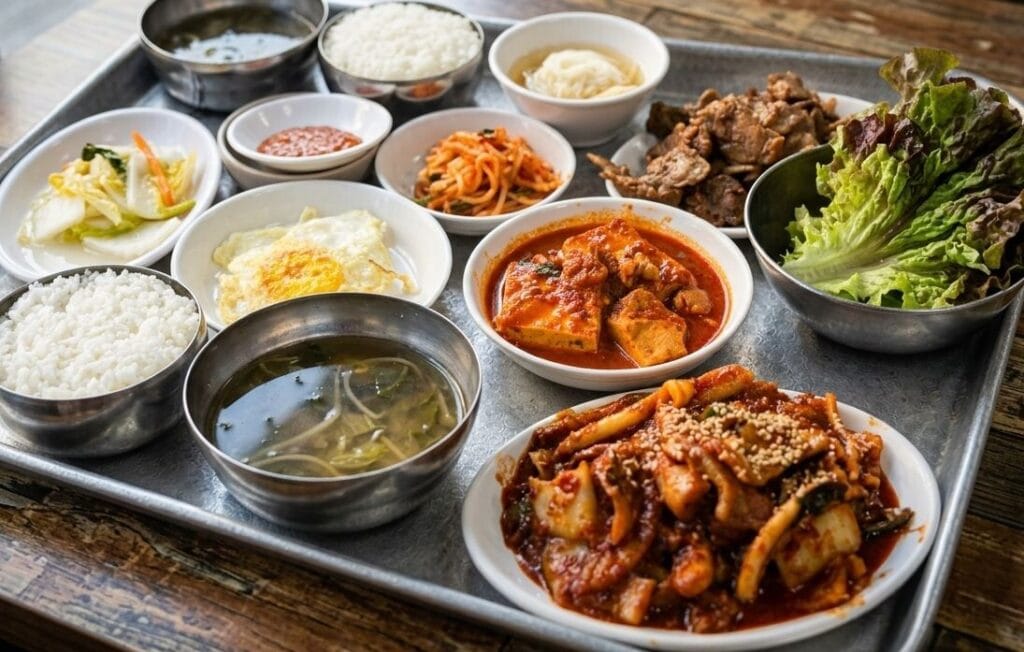
A traditional Korean meal often includes rice, soup or stew, kimchi, and several side dishes known as banchan.
However, not every meal follows this arrangement. A bowl of noodles, a plate of dumplings, or a serving of Korean fried chicken can be a complete meal on its own.
Understanding these basic components will help you recognize common items on Korean restaurant tables.
Rice, Soup, and Side Dishes
Rice, called bap in Korean, is a common part of everyday meals.
Soups and stews are also widely enjoyed. Some have mild, savory broths, while others contain chili-based seasonings or fermented soybean paste.
Banchan refers to the small side dishes served alongside a meal. Common examples include kimchi, seasoned vegetables, bean sprouts, and braised potatoes.
Many Korean restaurants include several side dishes with the main order. Whether additional servings are available at no extra cost depends on the restaurant.
Some establishments bring extra portions when requested, while others use self-service stations or charge for additional items.
What Is Kimchi?
Kimchi is one of the best-known foods in Korean cuisine.
It is a broad category of fermented vegetables, most commonly napa cabbage or radish, seasoned with ingredients such as salt, garlic, ginger, and chili pepper.
Kimchi can taste fresh, crunchy, sour, or strongly fermented depending on its ingredients and maturity.
It is commonly served as a side dish, but it is also used in cooked dishes such as kimchi jjigae, kimchi fried rice, and kimchi pancakes.
If you are new to Korean food, trying kimchi alongside rice is a simple way to experience an important part of everyday Korean dining.
How Korean Meals Are Shared
Some Korean meals are designed for sharing.
Korean barbecue, hot pots, and certain stews may be served in the center of the table, allowing diners to share the food.
Other dishes, including many noodle soups and rice bowls, are generally ordered as individual portions.
When dining with a group, it is helpful to check whether a menu item is intended for one person or several people. Restaurant menus often indicate serving sizes, but asking the staff can prevent confusion.
2. Popular Korean Foods to Try for the First Time
Korean cuisine includes dishes with different levels of spice, different cooking methods, and a wide range of ingredients.
You do not need to begin with the hottest dish on the menu. Choosing food based on your preferred flavors is a practical way to explore Korean cooking.
Bibimbap
Bibimbap is a rice dish topped with ingredients such as seasoned vegetables, egg, meat, and gochujang, a fermented chili paste.
The ingredients are mixed together before eating, creating a combination of textures and flavors.
Some restaurants serve the dish in a regular bowl, while others use a hot stone bowl called a dolsot. In the stone-bowl version, the rice at the bottom may develop a crisp texture.
Bibimbap is a useful starting point for visitors who want to try several Korean ingredients in one meal.
If you prefer less spicy food, ask whether the gochujang can be served separately.
Bulgogi
Bulgogi is commonly prepared with thinly sliced beef marinated in a mixture that may include soy sauce, garlic, sugar, and sesame oil.
The meat is usually savory and slightly sweet, although recipes vary.
Bulgogi is often served with rice and side dishes. Depending on the restaurant, it may be grilled, pan-cooked, or prepared with additional broth and vegetables.
It is a good option for visitors who prefer familiar grilled meat flavors without the strong heat associated with some Korean dishes.
Samgyeopsal: Korean Pork Belly Barbecue
Samgyeopsal is a popular Korean barbecue dish made with pork belly.
The meat is cooked on a grill, often at the table, and eaten with accompaniments such as lettuce leaves, garlic, dipping sauces, and other side dishes.
Diners may wrap pieces of cooked pork in lettuce with selected ingredients before eating them together.
Some restaurants provide the grill and cooking tools for customers, while others have staff members assist with the cooking.
Because samgyeopsal is usually ordered for sharing, check the minimum order quantity and portion size before placing your order.
Korean Fried Chicken
Korean fried chicken is known for its crisp coating and variety of sauces.
Popular styles include plain fried chicken, soy-garlic chicken, and sweet-spicy chicken.
It is often served with pickled radish and may be ordered as a shared meal with friends or family.
Portions can be large, so check whether the menu offers a whole chicken, half chicken, or smaller serving.
If you do not eat spicy food, look for a plain or soy-garlic option and confirm the seasoning with the restaurant.
Tteokbokki
Tteokbokki consists of chewy rice cakes cooked in a seasoned sauce.
Many versions use gochujang, giving the dish a sweet, savory, and spicy flavor. Other versions use different sauces or ingredients.
Tteokbokki is widely associated with Korean street food and casual dining.
The level of spiciness varies, so ask about the sauce before ordering if you are sensitive to chili.
Korean Soups and Stews
Soups and stews are important parts of Korean dining.
Seolleongtang is a milky beef-bone soup commonly served with rice. Diners may season it with salt, pepper, or chopped green onions.
Gomtang is another beef soup, with preparation methods and flavor varying by restaurant.
Doenjang jjigae is a soybean paste stew that may contain tofu, vegetables, mushrooms, or other ingredients.
Kimchi jjigae is a stew made with kimchi and may include pork, tofu, or other additions.
These dishes demonstrate that Korean food is not limited to barbecue and spicy sauces. There are many options for people who prefer warm, savory meals.
3. How to Order Food at a Korean Restaurant
Ordering food in Korea is usually straightforward once you understand a few common practices.
Restaurants differ in how they take orders. Some use printed menus, some provide QR-code ordering, and others have touchscreen kiosks or ordering machines.
The method depends on the restaurant rather than following one universal system.
Check the Menu Before Ordering
Before choosing a dish, look for information about portion size, ingredients, and price.
Some menus display photographs, while others use Korean names with short descriptions.
If you are unfamiliar with a dish, searching for its name or asking the staff about the main ingredients can help.
For barbecue and hot-pot restaurants, check whether the listed price is per person, per serving, or per portion.
Some restaurants also require a minimum order, particularly for meat dishes.
Useful Korean Phrases
Learning a few simple expressions can make ordering easier.
- Igeo juseyo — This one, please.
- Mul juseyo — Water, please.
- Maepji anke haejuseyo — Please make it not spicy.
- Gyesan haejuseyo — The bill, please.
- Gamsahamnida — Thank you.
Pronunciation may take practice, but even a few expressions can help you communicate basic requests.
If you have a food allergy or dietary restriction, do not rely on a short phrase alone. Clearly explain the specific ingredient you need to avoid and confirm that the restaurant understands your request.
Self-Service and Table Call Buttons
Some Korean restaurants provide a button at the table that customers can press to request assistance.
Other restaurants expect customers to speak to a staff member directly.
You may also encounter self-service water stations, condiment areas, or side-dish counters.
These arrangements are not universal. If you are unsure whether an item is self-service, it is perfectly reasonable to ask.
Paying the Bill
Payment procedures vary by establishment.
Some restaurants bring the bill to the table, while others ask customers to pay at a counter near the entrance.
Cash and card acceptance can also vary, particularly at smaller businesses or temporary market stalls.
Check the available payment methods if you have a specific preference.
4. Korean Restaurant Etiquette: What Visitors Should Know
Korean dining customs are generally easy to learn, and visitors do not need to memorize a long list of rules.
A few practical considerations can help you feel more comfortable.
Using Chopsticks and Spoons
Korean meals commonly include metal chopsticks and a spoon.
Chopsticks are used for many side dishes and solid foods, while spoons are often used for rice and soup.
Practices vary by dish and personal preference, so there is no need to worry about using the wrong utensil occasionally.
If you are unfamiliar with metal chopsticks, take your time and use whichever method feels comfortable.
Sharing Side Dishes
Sharing side dishes is common in many Korean meals.
However, you should not assume that every dish is intended to be shared. Individual rice bowls and noodle soups are often served as personal portions.
If you are dining with other people, follow the arrangement of the meal and use serving utensils when provided.
Eating Korean Barbecue
At Korean barbecue restaurants, raw meat is often cooked on a grill at the table.
Restaurants may provide tongs and scissors for handling and cutting the meat.
Use the cooking utensils supplied by the restaurant, and keep tools used for raw meat separate from utensils used to handle cooked food.
Some restaurants cook the meat for customers, while others expect diners to cook it themselves.
If you are unsure, ask the staff for assistance.
Restaurant Noise and Conversation
Dining environments vary considerably.
Some restaurants are quiet and relaxed, while others become lively during busy meal times.
Restaurants near nightlife areas, markets, and popular shopping streets may have a different atmosphere from small neighborhood restaurants.
Observe the setting and follow the general behavior of other diners.
The most useful principle is to be considerate of other customers and staff.
5. Dietary Restrictions and Food Allergies
Korean cuisine offers many different ingredients and cooking styles, but people with dietary restrictions should check how dishes are prepared.
A dish that looks vegetarian may contain fish sauce, seafood seasoning, meat stock, or other animal-derived ingredients.
Likewise, a dish that does not look spicy may contain chili-based seasonings.
If You Do Not Eat Spicy Food
Look for dishes such as bulgogi, seolleongtang, gomtang, or certain noodle and rice dishes.
However, recipes differ, and some dishes may include spicy condiments on the side.
Ask the restaurant whether the dish contains chili or whether the seasoning can be served separately.
If You Are Vegetarian or Vegan
Do not assume that vegetable dishes are automatically vegetarian or vegan.
Kimchi may contain salted seafood, and vegetable soups may use meat or seafood stock.
If you avoid all animal-derived ingredients, explain this clearly before ordering and ask about sauces, broths, and side dishes.
Restaurants vary in their ability to accommodate strict dietary requirements.
If You Have a Food Allergy
Common ingredients in Korean cooking include soybeans, wheat, sesame, fish, and shellfish.
Ingredients and preparation methods differ between restaurants, so a dish’s name alone may not reveal everything it contains.
For a serious allergy, explain the specific allergen and ask about both the ingredients and the possibility of cross-contact during preparation.
If the restaurant cannot confirm that a dish is safe for you, choose another option.
6. Exploring Seoul Through Its Food Neighborhoods
Seoul offers many ways to explore Korean food, from traditional markets and neighborhood restaurants to contemporary dining areas.
Different neighborhoods have different atmospheres and restaurant options. Choosing an area based on the kind of experience you want can make food planning easier.
Hongdae and Sinchon
Hongdae and Sinchon are lively areas associated with university life, shopping, entertainment, and a wide variety of casual dining options.
Visitors can look for Korean barbecue, fried chicken, noodles, street snacks, and restaurants offering international cuisines.
These neighborhoods can be convenient for travelers who want to combine food with shopping and evening activities.
Restaurant choices and opening hours vary, so check current information before making a special trip.
Myeongdong
Myeongdong is a busy shopping district with restaurants, cafés, and street-food vendors.
It is a convenient area for visitors who want to try familiar Korean dishes while exploring central Seoul.
Street-food stalls may offer items such as grilled snacks, fried foods, and sweet treats, depending on the season and vendor.
Availability, prices, and operating hours can change. Visitors should check the current situation rather than assume that every stall operates daily.
Gwangjang Market
Gwangjang Market is known for its traditional market atmosphere and food stalls.
Visitors may encounter dishes such as bindaetteok, a savory mung-bean pancake, and mayak gimbap, small seaweed rice rolls.
Market dining can be different from eating at a full-service restaurant. Seating may be limited during busy periods, and some vendors may accept only certain payment methods.
If you plan to visit, check the current opening hours and be prepared for crowds at popular times.
Anguk and Insadong
The areas around Anguk and Insadong are popular for exploring traditional architecture, cultural attractions, cafés, and Korean restaurants.
Visitors can look for traditional set meals, noodle dishes, soups, and other foods depending on the restaurant.
These neighborhoods are useful for travelers who want to combine sightseeing with a meal.
The best restaurant choice depends on your budget, dietary needs, and the type of food you want to try.
How to Choose the Right Neighborhood
When planning a food outing, consider three questions:
- What kind of food do you want to eat?
- How much time do you have for the visit?
- Do you want a quick meal, a traditional dining experience, or a place to spend time with friends?
Answering these questions can help you narrow your options.
You can then compare individual restaurants based on their menus, prices, location, opening hours, and available visitor information.
7. How to Choose a Korean Restaurant
A restaurant’s popularity does not automatically mean it will suit every visitor.
The best choice depends on your expectations, budget, dietary requirements, and the kind of meal you want.
Before visiting a restaurant, consider the following factors.
Menu and Price Transparency
Look for a menu that clearly identifies the dishes and their prices.
If the menu is unfamiliar, check the main ingredients and serving size before ordering.
For shared dishes, confirm how many people a portion is intended to serve.
Location and Opening Hours
Check the restaurant’s current address and opening hours before traveling.
Restaurants may change their schedules, close temporarily, or stop accepting orders before their listed closing time.
If you are visiting a restaurant specifically for one dish, confirming availability in advance can help avoid disappointment.
Suitability for International Visitors
Useful information may include whether the menu has English descriptions, whether staff can explain the dishes, and whether the ordering process is easy to understand.
These features can improve the experience, but they are not the only measures of a restaurant’s quality.
A restaurant without an English menu may still serve excellent food, while a restaurant with extensive English-language information may not necessarily match your preferences.
Reviews and Firsthand Information
Online reviews can help you understand other diners’ experiences, but they should not be treated as a guarantee of your own experience.
Look for recent comments about menu changes, service, prices, and opening hours.
When reading a restaurant guide, check whether the author clearly distinguishes firsthand visits from information gathered through menus, official listings, or other published sources.
This distinction helps readers understand how the information was obtained.
8. Explore More Korean Food with First Korea Food
First Korea Food aims to help international visitors discover Korean dishes, restaurant options, and food-related travel experiences.
The most useful way to explore Korean cuisine is to start with your interests and then look for information that matches your plans.
If you want to discover a particular dish, begin with a food guide or recipe. If you are planning a day in Seoul, explore restaurant recommendations for the neighborhood you intend to visit.
Before visiting an individual restaurant, check its current menu, location, prices, and opening hours.
Restaurant information can change, and details should be verified before travel whenever possible.
Korean cuisine includes far more than a handful of famous dishes. It ranges from simple rice meals and comforting soups to regional specialties, fermented foods, street snacks, and elaborate traditional meals.
By trying different dishes and learning a little about the culture behind them, you can build a more rewarding understanding of Korean food.
Whether you are visiting Seoul for the first time or returning to explore another neighborhood, let your preferences guide your choices and use reliable, current information to plan your next meal.
Further Reading
Explore related First Korea Food guides to continue planning your Korean food experience.
- Korean Food Culture: Learn about the traditions, ingredients, and seasonal influences that shape Korean cuisine.
- Hongdae and Sinchon Restaurant Guides: Explore dining options in two lively Seoul neighborhoods.
- Myeongdong Restaurant Guides: Find food options near one of Seoul’s best-known shopping districts.
- Korean Recipes: Discover recipes that introduce Korean ingredients and cooking methods.
Editorial note: Restaurant details, menus, prices, and opening hours may change. Confirm important information with the restaurant before visiting. This guide provides general information about Korean food and dining customs; individual experiences and restaurant practices may vary.