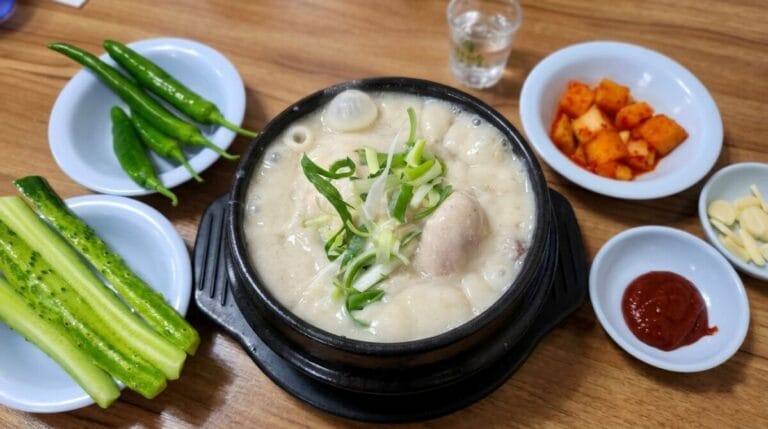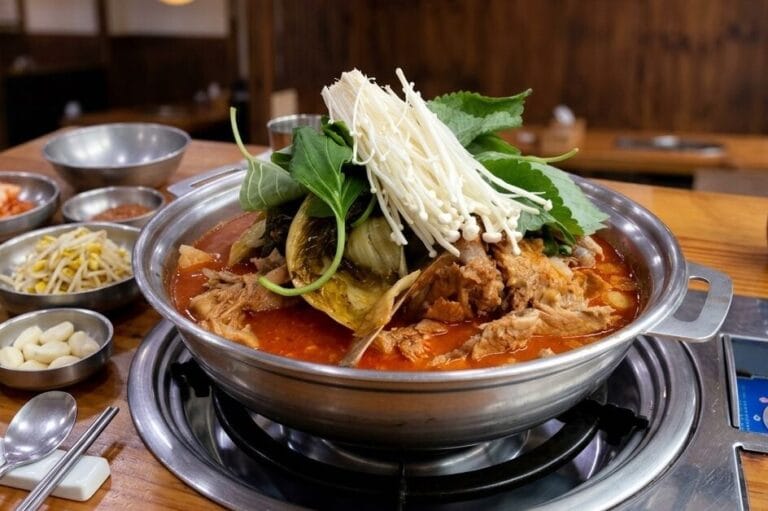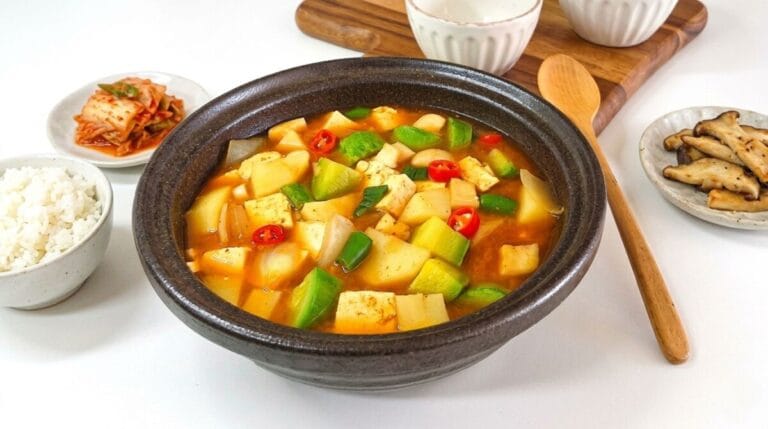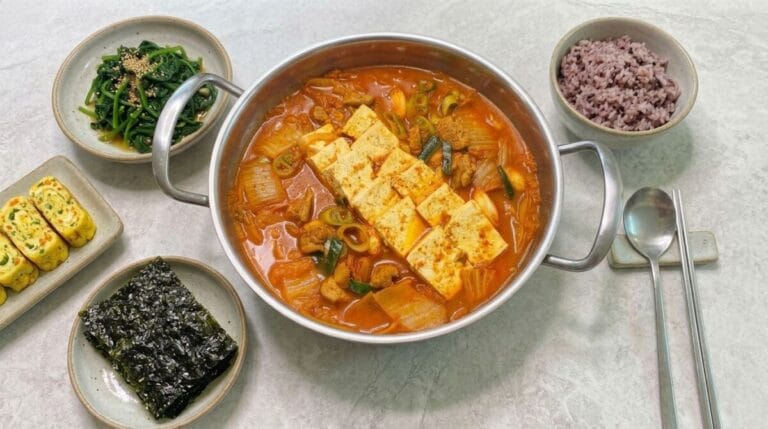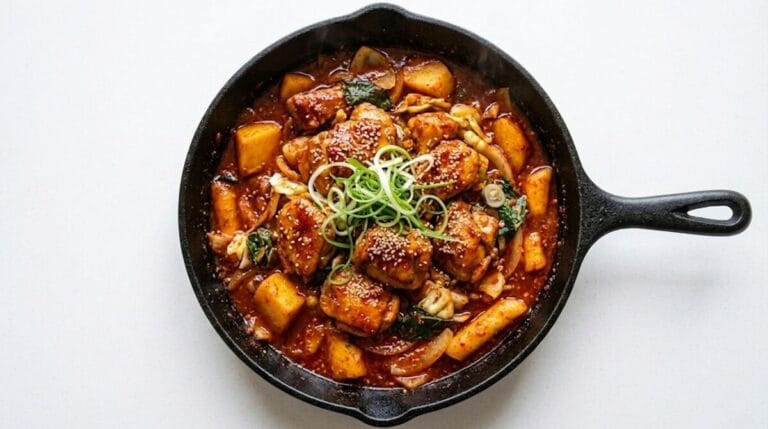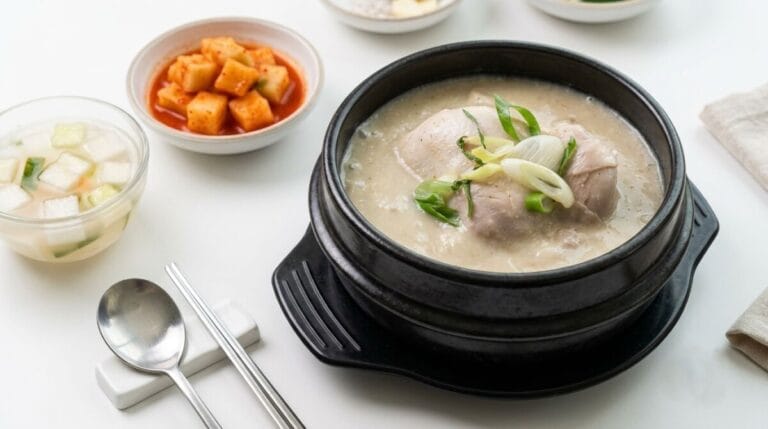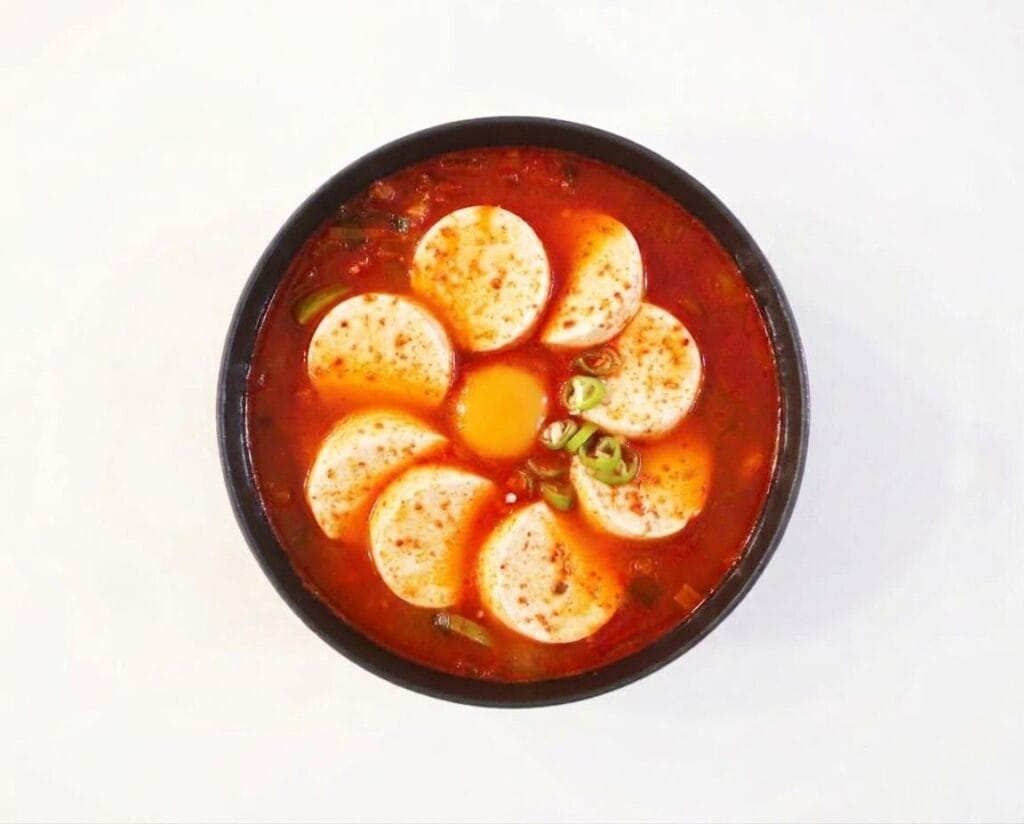
If there’s one Korean dish that feels like a warm hug on a cold day, it’s Sundubu Jjigae — a bubbling, fiery soft tofu stew that hits every comfort food note at once. Rich, silky tofu floats in a deeply savory broth made red with gochugaru, finished with a cracked egg right in the pot.
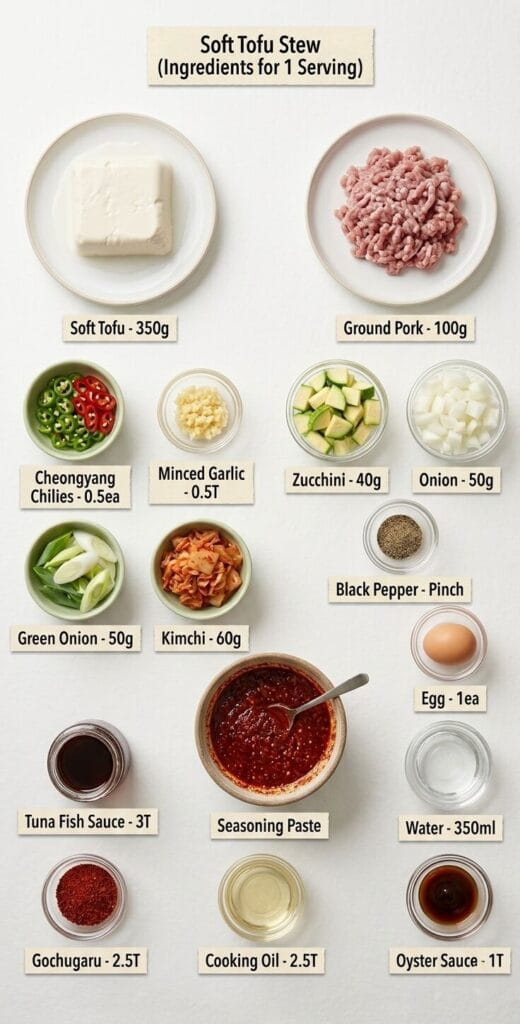
The best part? You don’t need to be a seasoned chef to nail this. With a handful of pantry staples and about 20 minutes, you can have a restaurant-quality Korean stew on your table tonight. This beginner-friendly recipe uses exactly the ingredients shown above — nothing more, nothing less.
Sundubu Jjigae Recipe (Soft Tofu Stew)
Servings: 1 | Prep Time: 10 min | Cook Time: 15 min | Total: ~25 min
Ingredients
- Soft tofu (순두부) — 350g
- Ground pork — 100g
- Kimchi — 60g, roughly chopped
- Zucchini — 40g, diced
- Onion — 50g, diced
- Green onion — 50g, sliced (save some for garnish)
- Cheongyang chili — ½ piece, sliced (or substitute green chili)
- Minced garlic — ½ tablespoon
- Gochugaru (Korean red pepper flakes) — 2.5 tablespoons
- Tuna fish sauce (멸치액젓) — 3 tablespoons
- Oyster sauce — 1 tablespoon
- Cooking oil — 2.5 tablespoons
- Seasoning paste — as prepared (see tip below)
- Water — 350ml
- Egg — 1, cracked in at the end
- Black pepper — a pinch
How to Make Sundubu Jjigae — Step-by-Step
Step 1 — Make Your Seasoning Paste
In a small bowl, mix together gochugaru, tuna fish sauce, oyster sauce, and minced garlic. Stir until it forms a thick, fragrant paste. Set aside.
Step 2 — Sauté the Pork
Heat a stone pot (dolsot) or small heavy-bottomed pot over medium-high heat. Add cooking oil, then add the ground pork. Stir-fry for 2–3 minutes until the pork is mostly cooked through.
Step 3 — Add Aromatics and Kimchi
Toss in the diced onion, zucchini, and chopped kimchi. Stir-fry everything together for another 2 minutes until the vegetables start to soften.
Step 4 — Add the Seasoning Paste
Spoon in your prepared paste and stir to coat everything evenly. Let it cook for 1 minute so the gochugaru can bloom in the oil — this is where that deep red color comes from.
Step 5 — Pour in the Water
Add 350ml of water and bring to a boil over high heat. Let it bubble vigorously for about 3–4 minutes.
Step 6 — Add the Tofu
Gently spoon the soft tofu directly into the pot in large chunks — no need to cut it perfectly. Lower the heat to medium and let it simmer for 3–4 minutes.
Step 7 — Crack in the Egg
Make a small well in the center of the stew and crack your egg in. Do not stir. Let it cook for 1–2 minutes until the white just sets but the yolk stays runny.
Step 8 — Finish and Serve
Scatter sliced green onion and chili on top. Add a pinch of black pepper. Serve immediately in the pot — it should still be bubbling.
Ingredients You Can Skip (Optional)
This recipe is pretty forgiving. Here’s what you can leave out without wrecking the dish:
- Cheongyang chili — Skip if you’re sensitive to heat. The stew gets plenty of spice from gochugaru.
- Zucchini — A nice texture addition but totally optional. Mushrooms or baby spinach work as substitutes.
- Oyster sauce — Adds depth, but you can omit it if you don’t have any on hand.
- Kimchi — Technically optional, but it adds an incredible layer of fermented, sour flavor. Highly recommended.
Ingredients You Must Not Skip
These are the non-negotiables — the soul of the dish:
- Soft tofu (순두부) — This is the star. Firm or silken tofu won’t give you the same creamy, melt-in-your-mouth texture.
- Gochugaru — Korean red pepper flakes are essential. Regular chili powder or paprika is not a substitute — the flavor profile is completely different.
- Tuna fish sauce (멸치액젓) — This is the main seasoning and the secret to that savory, oceanic depth. Don’t skip it.
- Egg — Cracked in at the end, it enriches the broth and is visually iconic. Trust the process.
- Garlic — Non-negotiable in essentially all Korean cooking.
What to Eat with Sundubu Jjigae
In Korea, Sundubu Jjigae is always served with a bowl of steamed white rice on the side — never mixed in. You scoop rice into your spoon, then ladle some stew on top. That’s the move. Beyond rice, here are some classic Korean side dishes (banchan) that pair beautifully:
- Kimchi — Whether it’s already in your stew or not, a small dish of freshly fermented kimchi is the classic companion.
- Gyeran-mari (계란말이) — A rolled Korean omelette that adds a mild, eggy contrast to the spicy stew.
- Japchae — Sweet potato glass noodles stir-fried with vegetables. A little sweet, a little savory — perfect balance.
- Steamed rice — Short-grain white rice is the essential pairing. The stew’s broth soaks into every grain.
Tips & Tricks for the Best Sundubu Jjigae
Use a Stone Pot If You Can
A traditional Korean dolsot (stone pot) retains heat like nothing else and keeps the stew bubbling all the way to the table. If you don’t have one, a small cast iron pot is a great alternative. The key is using something that can go straight from stovetop to table.
Don’t Overcook the Tofu
Soft tofu is delicate. Add it in the last few minutes of cooking — never at the beginning. Overcooked soft tofu becomes rubbery and loses its signature silky texture.
Adjust the Spice Level
The recipe as written is medium-spicy. For a milder version, reduce the gochugaru to 1 tablespoon and skip the Cheongyang chili. For extra heat, add a spoonful of gochujang (Korean chili paste) along with the seasoning paste.
Make the Seasoning Paste in Advance
The seasoning paste (양념장) is the heart of this dish. You can make a bigger batch and keep it in the fridge for up to a week. It also works great as a marinade for pork or chicken.
Try It with Seafood
Ground pork is traditional, but Sundubu Jjigae is also wonderful with clams, shrimp, or a mix of both. Seafood versions are actually more common in coastal Korean regions. Simply swap the pork for your choice of seafood and skip the oyster sauce if using clams.
Where to Find Ingredients
Soft tofu, gochugaru, and tuna fish sauce can be found at any Korean or Asian grocery store. If you’re outside Korea, look for brands like CJ or Sempio for fish sauce and gochugaru. Many large supermarkets now stock these in the international foods aisle.