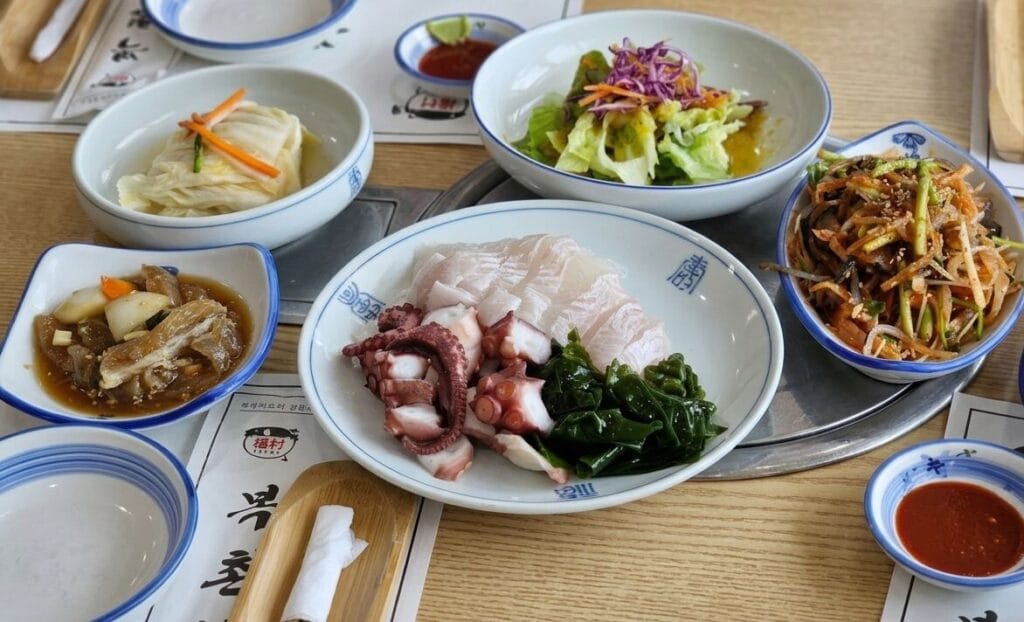
When people think of Korean food, dishes like Korean BBQ, bibimbap, and fried chicken usually come to mind. But Korea has a much wider variety of traditional dishes that many international visitors have never tried.
One of them is pufferfish, known as bok (복) in Korean.
Pufferfish might sound like an unusual choice, especially if you’ve never eaten it before. However, it has a long history in Korean cuisine and is commonly served in soups, stews, and fried dishes.
I recently visited Bokchon (복촌), a local pufferfish restaurant in Incheon, and tried their signature set meal.
For just 18,000 KRW, the meal included a variety of dishes, from crispy fried pufferfish to a refreshing clear soup and traditional Korean side dishes.
What impressed me most was not only the variety but also the flavors and textures.
The fresh minari in the soup, the crispy fried pufferfish, and the overall value made this a memorable meal.
If you’re interested in exploring Korean food beyond the usual tourist favorites, here’s what you can expect at Bokchon.
A Local Pufferfish Restaurant in Incheon
Bokchon specializes in traditional Korean pufferfish cuisine.
Unlike restaurants that mainly cater to international tourists, Bokchon offers a more local Korean dining experience.
Pufferfish is considered a specialty ingredient in Korean cuisine. It is often prepared in a clear soup called bokjiri (복지리), a spicy soup called bokmaeuntang (복매운탕), or as fried pufferfish known as boktwigim (복튀김).
At Bokchon, I ordered the Bokchon Set Meal (복촌 정식).
Rather than trying just one dish, this set meal allowed me to experience pufferfish prepared in several different ways.
And considering the price, I thought it offered excellent value.
What Comes with the Bokchon Set Meal?
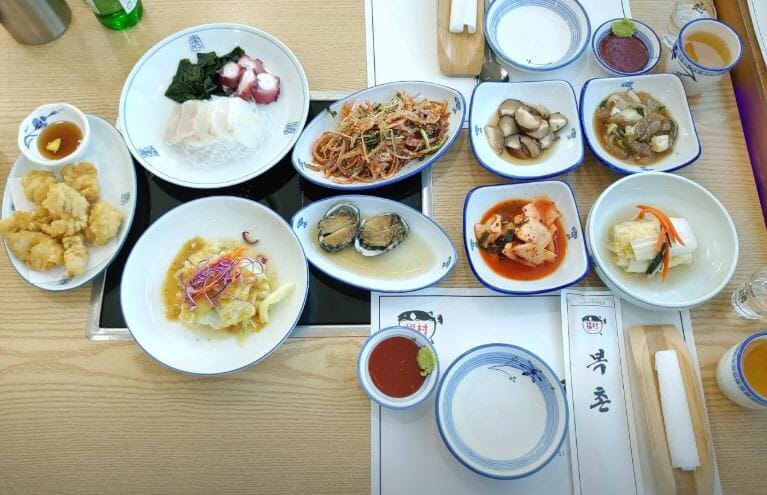
The Bokchon Set Meal costs 18,000 KRW per person, based on the restaurant’s listed menu in October 2026.
It includes nine different dishes, offering a combination of seafood, vegetables, soup, and traditional Korean side dishes.
| Korean Dish | English Description |
|---|---|
| 복껍질무침 | Seasoned pufferfish skin salad |
| 복튀김 | Fried pufferfish |
| 버섯장 | Seasoned mushrooms |
| 생선회 | Sliced raw fish (sashimi) |
| 샐러드 | Fresh salad |
| 백김치 | White kimchi |
| 깍두기 | Cubed radish kimchi |
| 복지리 | Clear pufferfish soup |
| 복어죽 | Pufferfish rice porridge |
For 18,000 KRW, I was able to enjoy several different preparations of pufferfish in one meal.
The combination of fried fish, fresh vegetables, clear soup, and rice porridge made the meal feel varied and satisfying.
I also appreciated that the set included traditional Korean side dishes.
If you’re unfamiliar with Korean seafood cuisine, this kind of set meal is an interesting way to discover several flavors and textures without having to choose individual dishes.
Note: Menu items and prices may change, so check the latest information before visiting.
The Clear Pufferfish Soup: Fresh Minari Was the Highlight
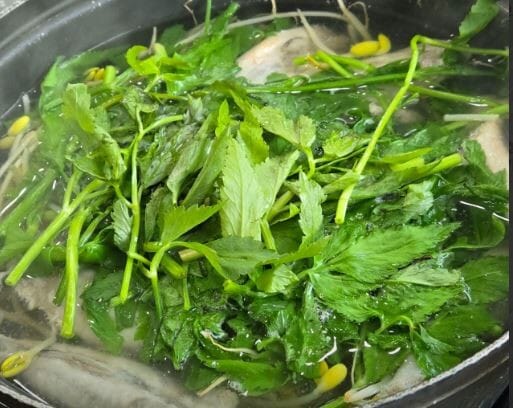
One of my favorite parts of the entire meal was the clear pufferfish soup, known as bokjiri (복지리).
Unlike spicy Korean seafood soups, bokjiri is typically prepared with a clear broth that allows the natural flavors of the ingredients to stand out.
But surprisingly, what I enjoyed most wasn’t just the fish.
It was the minari (미나리), Korean water parsley.
Minari is a fragrant green vegetable commonly used in Korean soups and seafood dishes.
It has a distinctive fresh, slightly herbal flavor that pairs particularly well with seafood.
At Bokchon, the minari was especially delicious.
I particularly enjoyed eating it with the accompanying sauce. The combination brought out the vegetable’s fresh flavor and made the soup even more enjoyable.
For international visitors, minari might look like an ordinary leafy vegetable.
However, in Korean cooking, it plays an important role in balancing the flavors of rich or delicate seafood dishes.
If you try the pufferfish soup at Bokchon, I recommend paying attention to the minari rather than focusing only on the fish.
It was one of the most memorable parts of my meal.
Fried Pufferfish: Crispy Outside, Tender Inside
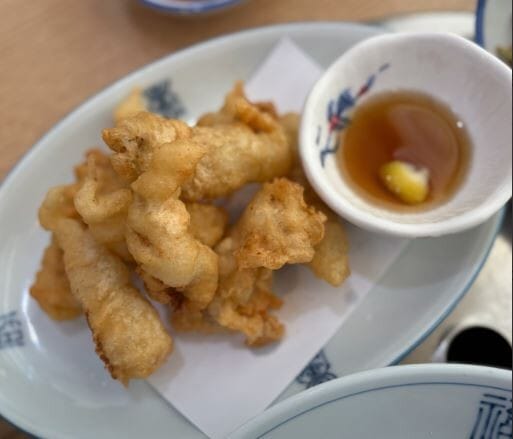
Another standout dish was the fried pufferfish (복튀김).
This was easily one of the most enjoyable parts of the set meal.
The outside was crispy, while the fish inside remained soft and tender.
I really liked the contrast between the crunchy coating and the delicate texture of the fish.
Compared with some traditional Korean seafood dishes, fried pufferfish is relatively easy to enjoy, even if you’re unfamiliar with Korean cuisine.
If you like fried fish, tempura, or other crispy seafood dishes, this could be a great introduction to pufferfish.
The flavor wasn’t overwhelming, and the texture was particularly satisfying.
For someone trying pufferfish for the first time, I think the fried version is one of the most approachable preparations.
Seasoned Pufferfish Skin: A Unique Korean Seafood Texture
One of the more unusual dishes in the set meal was seasoned pufferfish skin (복껍질무침).
This dish might be unfamiliar to many international visitors.
Unlike fried fish, pufferfish skin has a chewy, slightly gelatinous texture.
In Korean cuisine, these kinds of textures are commonly enjoyed in various seafood dishes.
However, if you’re used to eating only fish fillets, the texture might feel a little surprising.
Personally, I enjoyed the different dishes included in the set meal, but I can understand why some people might need time to get used to pufferfish skin.
I think this is one of the interesting aspects of exploring traditional Korean cuisine.
Sometimes, it’s not just the flavor that’s different.
The texture itself can be a new experience.
If you’re an adventurous eater, this dish is worth trying.
The Other Dishes: A Complete Korean Set Meal
Besides the main pufferfish dishes, the set meal included several traditional Korean side dishes.
There was sliced raw fish, seasoned mushrooms, fresh salad, white kimchi, and cubed radish kimchi.
These dishes added variety to the meal.
White kimchi, known as baek-kimchi (백김치), is particularly interesting for visitors who associate all Korean kimchi with spicy flavors.
Unlike the more familiar red kimchi, white kimchi is generally made without red chili pepper powder.
It has a refreshing, mildly tangy flavor.
The cubed radish kimchi, called kkakdugi (깍두기), offers a different texture with its crunchy pieces of fermented radish.
The set meal also included pufferfish rice porridge (복어죽).
Rice porridge is a familiar comfort food in Korea, and it provides a gentle contrast to the other seafood dishes.
Together, these dishes made the meal feel more complete than simply ordering a bowl of soup.
Is the Bokchon Set Meal Worth 18,000 KRW?
For me, the answer is yes.
One of the biggest advantages of eating at Bokchon was the value for money.
For 18,000 KRW, the set meal included:
- Seasoned pufferfish skin
- Fried pufferfish
- Seasoned mushrooms
- Sliced raw fish
- Fresh salad
- White kimchi
- Cubed radish kimchi
- Clear pufferfish soup
- Pufferfish rice porridge
That’s a substantial variety of dishes for a single meal.
Of course, the value of a restaurant depends on personal preferences.
But considering that pufferfish is a specialty ingredient, I felt the price was reasonable for the amount and variety of food served.
I especially appreciated being able to try different pufferfish preparations without ordering multiple separate dishes.
For travelers interested in traditional Korean seafood, I think the set meal is worth considering.
What International Visitors Should Know Before Visiting
Bokchon is a local Korean restaurant, and international travelers may find it less familiar than restaurants in major tourist areas.
If you don’t speak Korean, understanding the menu might be one of the challenges.
Here are some useful Korean food terms to know before visiting.
| Korean | Pronunciation | Meaning |
|---|---|---|
| 복촌 | Bokchon | Restaurant name |
| 복 | Bok | Pufferfish |
| 복촌 정식 | Bokchon Jeongsik | Bokchon set meal |
| 복지리 | Bokjiri | Clear pufferfish soup |
| 복튀김 | Boktwigim | Fried pufferfish |
| 복껍질무침 | Bok Kkeopjil Muchim | Seasoned pufferfish skin |
| 복어죽 | Bokeo Juk | Pufferfish rice porridge |
| 미나리 | Minari | Korean water parsley |
If you’re planning to visit, I recommend saving the restaurant’s Korean name, 복촌, on your phone.
You can use it to search for the restaurant on Naver Map or KakaoMap, two popular navigation services in South Korea.
It may also be helpful to show the Korean menu name, 복촌 정식, when ordering.
Is Pufferfish Safe to Eat?
Pufferfish is known for containing potentially dangerous toxins in certain organs and tissues.
For this reason, proper handling and preparation are extremely important.
Pufferfish should only be prepared by professionals with the appropriate training and qualifications.
If you’re interested in trying it in Korea, choose an established restaurant that follows the relevant food safety requirements.
Who Should Visit Bokchon?
Based on my experience, I think Bokchon is particularly suitable for travelers who enjoy exploring traditional Korean cuisine.
You might enjoy this restaurant if you love seafood, want to try something beyond Korean BBQ, or are curious about traditional Korean ingredients.
It’s also an interesting option for travelers who prefer discovering local restaurants rather than visiting only well-known tourist spots.
However, there are a few things to consider.
Some dishes, especially seasoned pufferfish skin, have textures that may be unfamiliar to first-time visitors.
If you prefer familiar flavors and simple meals, you might find certain dishes challenging.
But if you enjoy trying new foods and learning about different food cultures, Bokchon could be an interesting dining experience.
Bokchon Restaurant Information


Here is some practical information for anyone planning a visit.
Restaurant Name: Bokchon (복촌)
Address: 33 Gueup-ro, Jung-gu, Incheon, South Korea
Phone: 032-751-3321
Cuisine: Traditional Korean pufferfish dishes
Recommended Menu: Bokchon Set Meal (복촌 정식)
Set Meal Price: 18,000 KRW (October 2026 menu listing)
Location: Incheon, South Korea
For the latest menu information, opening hours, and directions, check the restaurant’s listing on Naver Map before visiting.
My Final Thoughts: Is Bokchon Worth Visiting?
After trying the Bokchon Set Meal, I left with a positive impression.
The food was enjoyable, the variety was satisfying, and the price felt reasonable.
Among all the dishes, two things stood out the most.
The first was the fresh minari in the clear pufferfish soup.
I particularly enjoyed its refreshing flavor and how well it paired with the accompanying sauce.
The second was the fried pufferfish.
Its crispy exterior and soft, tender interior made it one of the most satisfying dishes of the meal.
I also appreciated the opportunity to try different preparations of pufferfish, including some that may be unfamiliar to international visitors.
Not every dish will appeal to everyone, especially if you’re not used to traditional Korean seafood textures.
But for me, that’s part of what makes exploring local Korean restaurants interesting.
You get to discover flavors, ingredients, and cooking styles that aren’t always featured in popular travel guides.
Would I recommend Bokchon?
Yes.
If you enjoy seafood and want to explore a more traditional side of Korean cuisine, I think Bokchon is worth considering.
For 18,000 KRW, the set meal offered a satisfying introduction to several different pufferfish dishes.
And sometimes, the most memorable Korean food experiences aren’t found in the most famous restaurants.
They’re found in local places where you can discover something new.
This review is based on my personal dining experience at Bokchon in Incheon. Menu information and prices reflect the restaurant’s listed menu in October 2026 and may change.