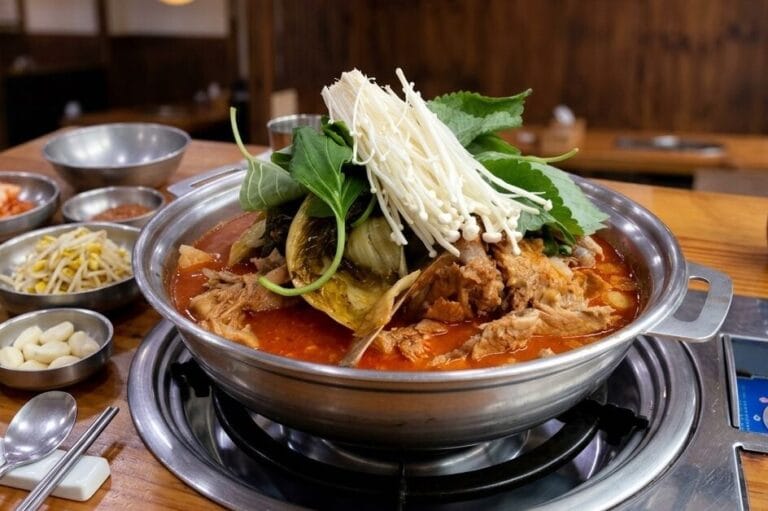
If you’ve ever walked through the chilly streets of Korea, you’ve likely caught the rich, earthy aroma of Gamjatang (감자탕 – Pork Spine Potato Stew) wafting from local restaurants. Known as the ultimate Korean comfort food, this hearty, deeply savory soup features tender, fall-off-the-bone pork backbones, soft potatoes, and melt-in-your-mouth greens.
While it looks like a complex dish you can only get at a specialty restaurant, you can easily recreate that authentic flavor right at home. The secret lies in seasoning the Ugeoji (우거지 – dried cabbage greens) beforehand and finishing the stew with an aromatic punch of perilla seeds. Let’s dive into making this deeply satisfying, rich Korean classic!
🍳 Recipe Overview
- ⏱️ Prep Time: 20 mins (plus soaking time for pork)
- 🔥 Cook Time: 1 hour 30 mins
- 🥗 Total Time: 1 hour 50 mins
- 👥 Servings: 3-4 servings
- 🌶️ Spice Level: 🌶🌶🌶 (Spicy & Savory)
🛒 Ingredients You’ll Need
Main Ingredients
- 1 kg (2.2 lbs) Pork Backbones (Spine), pre-boiled and cleaned
- 1.2 Liters (6 cups) Pork Bone Broth
- 350g (12 oz) Ugeoji (Boiled Cabbage Greens/Outer Leaves)
- 400g (14 oz) Whole Potatoes, boiled and peeled
- 100g (3.5 oz) Large Green Onions (Leeks), diagonally sliced
- 35g (1.2 oz) Fresh Perilla Leaves (Kkaenip)
- ½ cup Wild Perilla Seed Powder (Deulkkae-garu)
The Savory Seasoning Paste
- 4 tbsp Korean Chili Powder (Gochugaru)
- 3 tbsp Korean Chili Paste (Gochujang)
- 3 tbsp Minced Garlic
- 2 tbsp Soup Soy Sauce (Guk-ganjang)
- 2 tbsp Tuna Fish Sauce (Chamchi-aekjeot)
- 4 tbsp Rice Wine (Cheongju) or Cooking Wine
- 2 tsp Minced Ginger
- 1 tsp Sugar
- 1 tsp Black Pepper
👩🍳 Step-by-Step Guide
Step 1: Prep the Cabbage Greens (Ugeoji) (10 mins)
Chop your boiled Ugeoji (cabbage greens) into comfortable, bite-sized pieces. In a mixing bowl, combine all the seasoning ingredients: Gochugaru, Gochujang, garlic, soup soy sauce, tuna sauce, rice wine, ginger, sugar, and black pepper. Add the chopped Ugeoji into this paste and massage it thoroughly with your hands so the greens absorb the deep flavors.
Step 2: Combine and Simmer (15 mins)
In a large, heavy-bottomed pot, arrange the pre-boiled pork backbones and the seasoned Ugeoji. Pour in 1.2 liters of rich pork backbone broth and add your pre-boiled whole potatoes. Bring the stew to a boil over medium-high heat and let it simmer for about 10 minutes to allow the flavors to marry.
Step 3: Add Fresh Aromatics (5 mins)
Once the stew has boiled nicely and the potatoes have soaked up some of the reddish broth, throw in the diagonally sliced large green onions. Let it cook for another 2 minutes until the onions soften slightly and release their natural sweetness.
Step 4: The Perilla Seed Finish (2 mins)
Right before turning off the heat, add the perilla leaves and pour in the half-cup of wild perilla seed powder. Give it a gentle stir and let it come to a final brief boil. The perilla powder will instantly thicken the broth and add an incredible, earthy, nutty depth. Transfer to a bowl and serve hot!
💡 Subtitles Note: The video audio is in Korean. Feel free to use the YouTube ‘Auto-translate’ feature to follow along in English.
💡 Chef’s Pro Tips for the Perfect Gamjatang
- The Secret to Flavorful Greens: Don’t just throw the Ugeoji into the soup! Massaging the greens directly with the seasoning paste beforehand ensures that every bite of the vegetable is packed with flavor rather than tasting bland.
- The Timing of Perilla Seeds: Always add the perilla seed powder and perilla leaves at the very end. If you boil perilla seeds for too long, they can lose their distinct aroma and make the broth overly muddy.
❓ Frequently Asked Questions (FAQ)
Q: Where can I find Pork Backbones, and how do I prep them?
A: You can easily find pork backbones (pork neck bones or spine) at your local Asian grocery store or butcher shop. Before cooking the stew, make sure to soak them in cold water for a few hours to drain the blood, then parboil them with some ginger and rice wine for 10 minutes, rinsing thoroughly in cold water to remove any impurities.
Q: Can I substitute Ugeoji (Cabbage Greens)?
A: Yes! If traditional Korean Ugeoji is hard to find, you can substitute it with boiled Napa cabbage leaves, regular green cabbage outer leaves, or even dried radish greens (Siraegi).
Want to watch the Chef assemble this ultimate comfort food step-by-step? Watch the quick video tutorial below!