A plate of Korean pork bulgogi costs around ₩13,000 near Hongdae, while a bowl of Thai beef noodles is listed at a similar price. If you’re traveling with friends, you could share cheese dakgalbi cooked at your table or order several Korean-Chinese dishes to try together.
These meals offer very different experiences, even though the restaurants are all within the broader walking area of Hongik University Station.
Choosing where to eat in Hongdae isn’t just about finding a highly rated restaurant. Your budget, group size, preferred flavors, and available time can make a bigger difference.
This guide introduces five restaurants around Hongdae and Yeonnam-dong, covering traditional Korean set meals, spicy chicken, Korean-Chinese cuisine, Thai noodles, and Japanese-style pork cutlets.
You’ll find representative menu prices, food recommendations, and practical ordering tips to help you decide which restaurant suits your plans.
Price information: Menu prices were researched on October 17, 2026, using publicly available restaurant listings. Some prices are approximate or differ between sources. They have not all been independently confirmed against current in-store menus.
1. Gamnamujip Gisa Sikdang (감나무집 기사식당): Traditional Korean Comfort Food
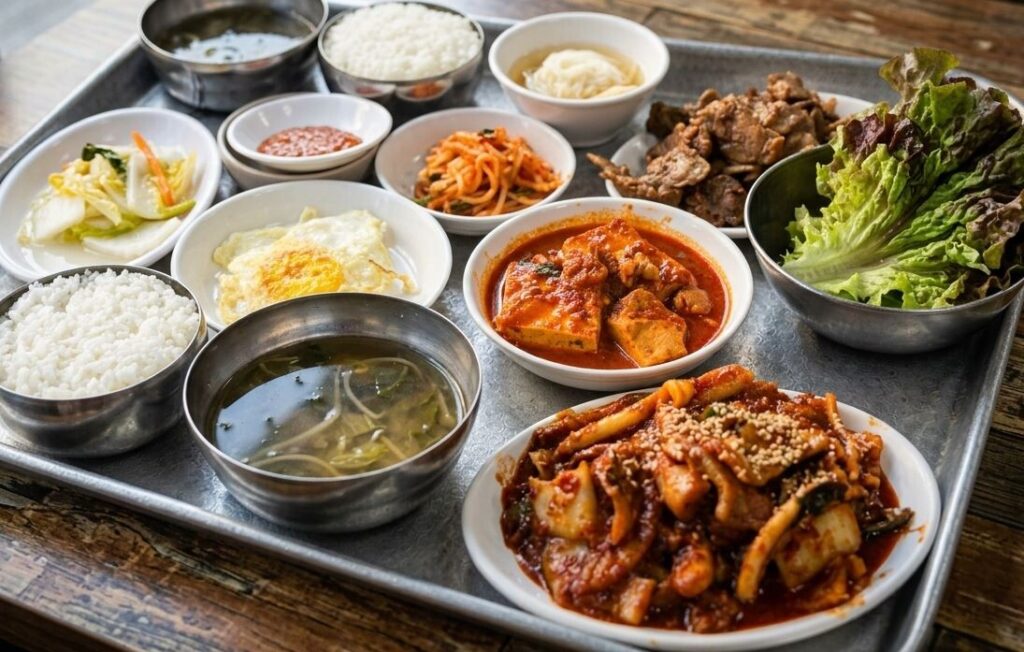
Best for: Traditional Korean meals, rice dishes, and travelers interested in everyday Korean dining.
Address: 25 Yeonnam-ro, Mapo-gu, Seoul
Korean address: 서울 마포구 연남로 25
Nearest subway station: Hongik University Station
What Makes Gamnamujip Worth Considering?
Gamnamujip belongs to a category of Korean restaurants known as gisa sikdang (기사식당).
The term originally referred to restaurants serving taxi drivers and other professional drivers who needed affordable, filling meals during their working day.
Over time, these restaurants became associated with straightforward Korean cooking, rice-based meals, and a casual dining atmosphere.
Unlike Korean barbecue restaurants where customers cook meat themselves, a gisa sikdang generally serves prepared dishes accompanied by rice and side dishes.
Gamnamujip is associated with Korean pork dishes and traditional set meals.
For travelers who have already tried Korean barbecue, this style of restaurant offers another way to experience everyday Korean food.
Menu and Prices at Gamnamujip
| Menu | Korean Name | Listed Price |
|---|---|---|
| Pork Bulgogi | 돼지불고기 | ₩13,000 |
| Soft Tofu Stew | 두부찌개 | ₩11,000 |
| Beef Bulgogi | 소불고기 | ₩14,000 |
| Grilled Fish | 생선구이 | ₩13,000 |
Prices are based on publicly available menu listings and may change.
What Should You Order?
Pork Bulgogi (돼지불고기) — ₩13,000
Pork bulgogi is a Korean dish made with thinly sliced pork and a seasoned marinade.
The seasoning commonly includes soy sauce, garlic, sugar, and other ingredients, although recipes vary.
At Korean set-meal restaurants, pork bulgogi is typically eaten with rice and side dishes.
It is a useful choice if you enjoy Korean meat dishes but prefer not to cook at the table.
Soft Tofu Stew (두부찌개) — ₩11,000
Soft tofu stew is a Korean soup or stew centered on tofu.
Depending on the preparation, it may include vegetables, seafood, meat, or chili seasoning.
Because tofu stews vary considerably, ask about the ingredients and spice level before ordering.
This is worth considering if you prefer a warm, soup-based meal.
Grilled Fish (생선구이) — ₩13,000
Grilled fish is a familiar part of Korean home-style dining.
It is commonly served with rice and small side dishes.
Fish can contain small bones, so eat carefully if you are unfamiliar with this style of preparation.
How Much Should You Budget?
Based on the listed menu prices:
- One person: Approximately ₩11,000–₩14,000 for one of the meals above.
- Two people: Approximately ₩26,000 for two pork bulgogi meals.
- Three people: Approximately ₩39,000 for three pork bulgogi meals.
These examples assume each person orders one main dish and do not include drinks or additional items.
Understanding Korean Set Meals
A Korean set meal often includes several small dishes called banchan (반찬).
These may include kimchi, seasoned vegetables, or other preparations.
The exact selection depends on the restaurant and may change.
Rice, soup, meat, fish, and side dishes are generally eaten together rather than served as separate courses.
If you’re visiting Korea for the first time, understanding this dining style can make ordering traditional meals much easier.
Practical Visiting Tips
Gamnamujip is located in Yeonnam-dong, north of the main Hongdae shopping area.
Hongik University Station Exit 3 is a useful starting point.
Search for 감나무집 기사식당 in Naver Map or KakaoMap to confirm the location and current operating hours.
Individual rice-based meals can be convenient for solo travelers, although current ordering requirements should be checked.
Choose Gamnamujip if: You want a traditional Korean meal with rice, meat or fish, and side dishes.
2. Sinmigyeong Hongdae Dakgalbi (신미경 홍대닭갈비): Spicy Chicken With Melted Cheese
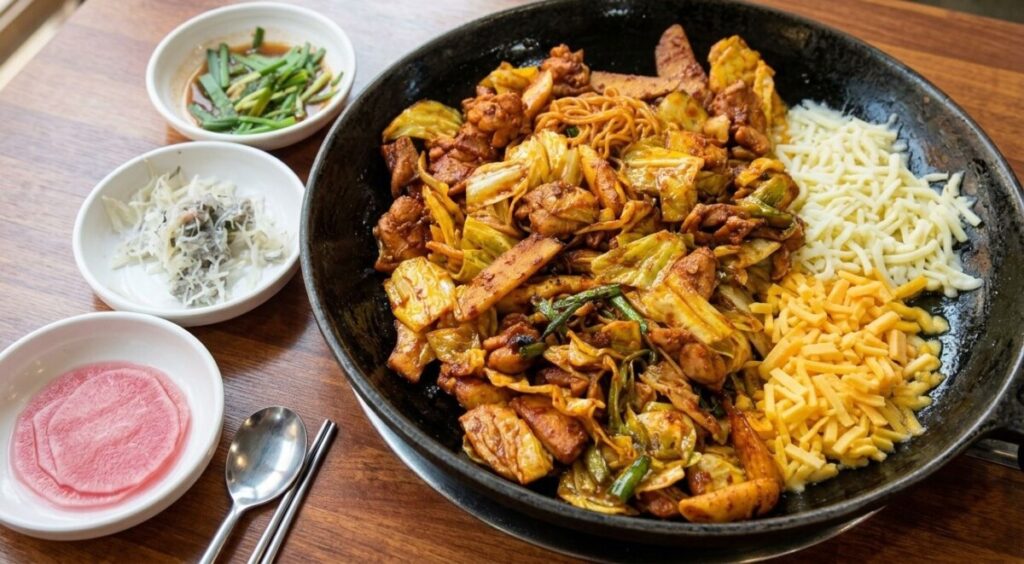
Best for: Couples, groups of friends, and travelers who enjoy spicy Korean food.
Address: 31-10 Wausan-ro 21-gil, Mapo-gu, Seoul
Korean address: 서울 마포구 와우산로21길 31-10
Nearest subway station: Hongik University Station
Why Try Dakgalbi in Hongdae?
Dakgalbi (닭갈비) is a Korean dish made by stir-frying marinated chicken with vegetables and other ingredients.
Although galbi often refers to ribs, dakgalbi generally uses pieces of chicken rather than chicken ribs.
A typical preparation includes cabbage, rice cakes, sweet potatoes, and a spicy seasoning sauce.
The ingredients are cooked together in a large pan.
At many dakgalbi restaurants, the cooking takes place directly at the table.
Sinmigyeong Hongdae Dakgalbi is known for combining this style of spicy chicken with melted cheese.
Menu and Prices at Sinmigyeong
| Menu | Korean Name | Approximate Price |
|---|---|---|
| Vegetable Dakgalbi | 야채닭갈비 | ₩14,000 per serving |
| Cheese Dakgalbi | 치즈닭갈비 | ₩16,000 per serving |
These are approximate prices from public listings. Confirm the current menu, portion sizes, and minimum order before visiting.
What Should You Order?
Cheese Dakgalbi (치즈닭갈비) — Approximately ₩16,000
Cheese dakgalbi combines spicy marinated chicken with melted cheese.
The cheese provides a creamy contrast to the chili-seasoned chicken and vegetables.
For travelers unfamiliar with dakgalbi, this combination offers an introduction to one of Korea’s popular shared meals.
However, cheese does not necessarily make the dish mild.
If you are sensitive to spicy food, ask whether a less spicy option is available.
Vegetable Dakgalbi (야채닭갈비) — Approximately ₩14,000
Vegetable dakgalbi generally combines marinated chicken with vegetables cooked together on a heated pan.
Despite the name, it is not a vegetarian dish.
It may be a better choice if you prefer the chicken and vegetable combination without additional cheese.
Don’t Forget the Fried Rice
One of the most recognizable parts of eating dakgalbi is ordering bokkeumbap (볶음밥) toward the end of the meal.
After most of the chicken has been eaten, rice can be added to the remaining sauce and ingredients.
The mixture is then cooked on the same pan.
This creates a second part of the meal using the flavors left from the dakgalbi.
If you want to try fried rice, consider leaving a little room after eating the chicken.
The current fried rice price should be checked at the restaurant.
How Much Should You Budget?
Based on the approximate prices:
| Order | Estimated Total |
|---|---|
| Two servings of vegetable dakgalbi | ₩28,000 |
| Two servings of cheese dakgalbi | ₩32,000 |
| Three servings of cheese dakgalbi | ₩48,000 |
These totals exclude drinks, fried rice, and extra toppings.
Dakgalbi is commonly ordered as a shared meal, and some restaurants require a minimum number of servings.
For two people, budgeting around ₩32,000 for two servings of cheese dakgalbi before extras is a reasonable estimate based on the available listings.
How to Eat Dakgalbi
If you’ve never tried dakgalbi before, the process is relatively simple.
- Choose your preferred dakgalbi option.
- Confirm the number of servings and spice level.
- Allow the chicken and vegetables to cook thoroughly.
- Follow staff instructions about when the food is ready.
- Eat the chicken and vegetables together.
- Consider adding fried rice at the end.
At some restaurants, staff handle most of the cooking.
At others, customers may be expected to participate.
Do not assume that the chicken is fully cooked when it first arrives at the table.
Practical Visiting Tips
Sinmigyeong is located in the main Hongdae entertainment district.
Hongik University Station Exit 9 is a convenient starting point.
Because dakgalbi is commonly served in shared portions, it is particularly suitable for couples and groups.
Solo travelers should check whether single-person orders are available.
Choose Sinmigyeong if: You want spicy Korean food, melted cheese, and a shared meal cooked at the table.
3. Hongdae Ranglang (홍대 랑랑): Korean-Chinese Food Near Hongdae
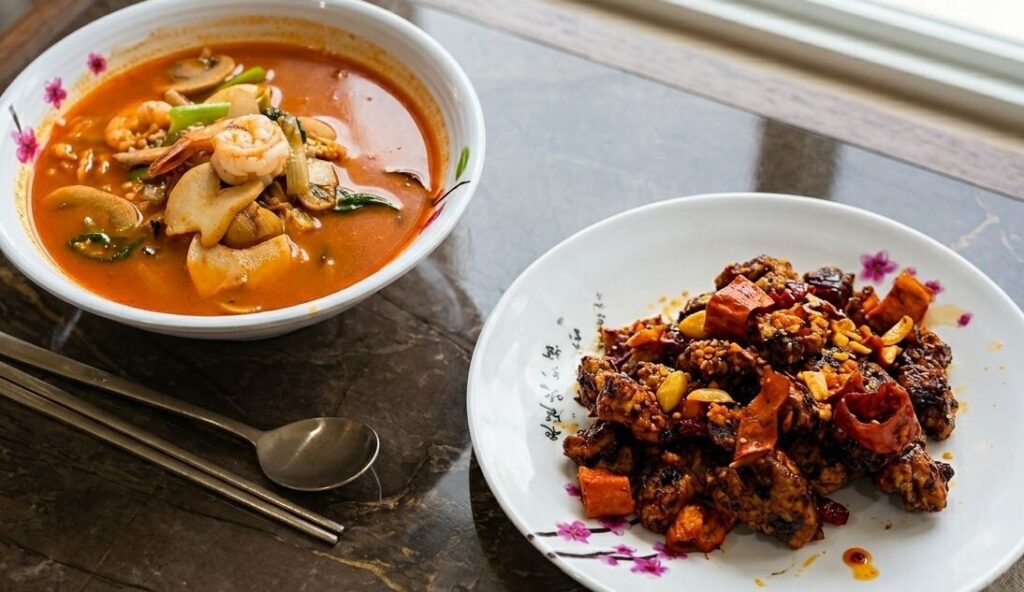
Best for: Noodle lovers, casual meals, and travelers interested in Korean-Chinese cuisine.
Address: 41 World Cup buk-ro, 1F, Mapo-gu, Seoul
Korean address: 서울 마포구 월드컵북로 41 1층
Nearest subway station: Hongik University Station
What Is Korean-Chinese Cuisine?
Korean-Chinese cuisine, commonly called Junghwa yori (중화요리), developed from Chinese culinary traditions adapted to Korean ingredients and preferences.
Today, it is a familiar part of everyday dining in South Korea.
Two of its most recognizable dishes are jajangmyeon and jjamppong.
Although these dishes have connections to Chinese cuisine, their Korean versions have developed distinctive characteristics.
Ranglang offers an opportunity to explore this style of food near Hongdae.
Korean-Chinese restaurants commonly serve both individual meals and larger dishes designed for sharing.
Menu and Prices at Ranglang
| Menu | Korean Name | Listed Price |
|---|---|---|
| Ranglang Fried Rice | 랑랑볶음밥 | ₩9,000 |
| Yusanseul | 유산슬 | ₩35,000 |
| Palbochae | 팔보채 | ₩38,000 |
Online listings differ on the fried rice price, with some showing ₩8,000 instead of ₩9,000. Confirm the current price before ordering.
Prices for jajangmyeon, jjamppong, and tangsuyuk were not reliably established in the available information and are therefore not included.
What Should You Order?
Ranglang Fried Rice (랑랑볶음밥) — Listed at ₩9,000
Fried rice is a familiar option at Korean-Chinese restaurants.
It is generally convenient for diners who prefer rice rather than noodles.
At approximately ₩9,000 according to one public listing, Ranglang’s fried rice is among the lower-priced dishes identified in this guide.
However, the restaurant’s current price should be confirmed because online listings differ.
Jajangmyeon (짜장면)
Jajangmyeon consists of noodles served with a thick black bean-based sauce.
The sauce commonly contains chunjang, vegetables, and meat.
Its flavor is generally savory with some sweetness.
Unlike noodle soups, jajangmyeon is usually mixed with its sauce before eating.
It can be a practical option for travelers who prefer less spicy food.
However, the sauce may contain pork, wheat, or soy ingredients.
Jjamppong (짬뽕)
Jjamppong is a spicy Korean-Chinese noodle soup.
It commonly contains vegetables, seafood, and a chili-seasoned broth.
The exact ingredients vary between restaurants.
Compared with jajangmyeon, jjamppong provides a very different eating experience.
Choose jajangmyeon if you prefer thick sauce and generally milder flavors.
Choose jjamppong if you enjoy hot soup and chili-based seasoning.
Yusanseul (유산슬) — ₩35,000
Yusanseul is a Korean-Chinese stir-fried dish commonly prepared with ingredients such as seafood, mushrooms, and vegetables.
It is usually served as a larger dish rather than an individual noodle meal.
This makes it worth considering when dining with other people.
Palbochae (팔보채) — ₩38,000
Palbochae is another Korean-Chinese stir-fried dish.
It commonly combines several ingredients, including seafood and vegetables, in a seasoned sauce.
The name is associated with a mixture of multiple ingredients.
Because the dish can contain several types of seafood, travelers with allergies should confirm the ingredients before ordering.
How Much Should You Budget?
Ranglang offers a substantial difference between individual meals and shared dishes.
For example:
- One person: Fried rice is listed at approximately ₩9,000.
- Two people: Two fried rice dishes would total approximately ₩18,000.
- Three people: One ₩35,000 yusanseul shared equally would represent about ₩11,700 per person, before individual rice or noodle dishes.
The third example is not a complete meal estimate because it excludes additional food.
Large Korean-Chinese dishes are often intended for sharing, so check portion sizes before ordering.
A Korean Dining Detail: Bumeok vs. Jjigmeok
If you order tangsuyuk, a Korean-Chinese fried meat dish, you may encounter two expressions.
Bumeok (부먹) means pouring the sweet-and-sour sauce over the fried meat.
Jjigmeok (찍먹) means dipping the fried pieces into the sauce.
Both methods are common.
If you want to preserve the crispness of the fried coating, dipping may be preferable.
Practical Visiting Tips
Ranglang is located outside the busiest section of Hongdae’s shopping streets.
Search for 랑랑 together with its Korean address in a Korean map application.
For solo travelers, an individual rice or noodle dish may be more convenient than ordering a large shared plate.
If you want to explore another Korean-Chinese restaurant in the area, see our guide to Michelin Bib Gourmand restaurants near Hongdae, which also covers Jin Jin.
Choose Ranglang if: You enjoy Korean-Chinese food and want the flexibility of ordering an individual meal or sharing larger dishes.
4. Soi Yeonnam (소이연남): Thai Beef Noodles in Yeonnam-dong
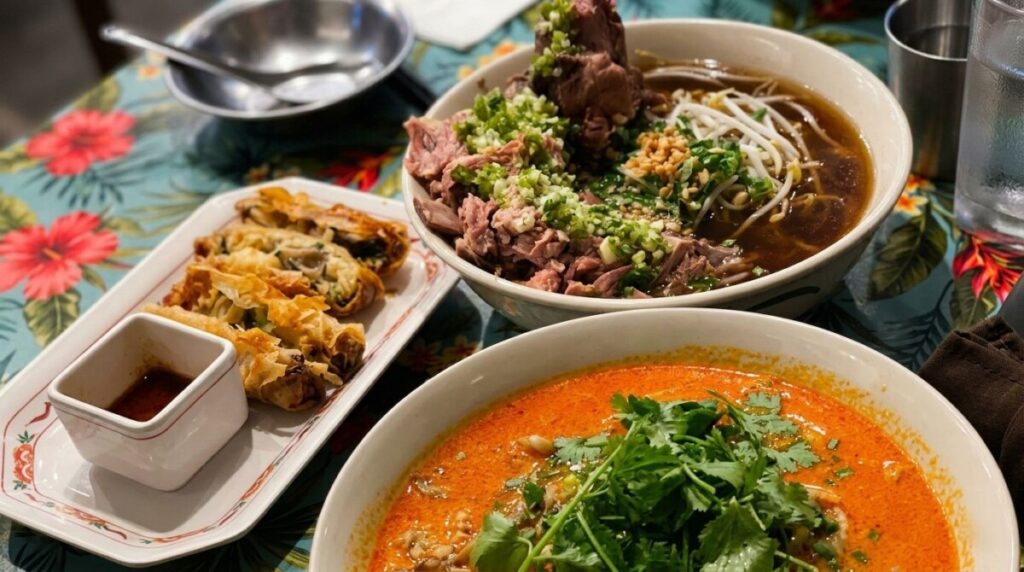
Best for: Solo diners, noodle soup lovers, and travelers interested in Hongdae’s international food scene.
Address: 267 Donggyo-ro, Mapo-gu, Seoul
Korean address: 서울 마포구 동교로 267
Nearest subway station: Hongik University Station
Why Visit a Thai Restaurant Near Hongdae?
Not every worthwhile restaurant near Hongdae serves Korean food.
Yeonnam-dong has a varied dining scene that includes Korean, Japanese, Chinese, Thai, and other international cuisines.
Soi Yeonnam is an established Thai restaurant known for its beef rice noodle soup.
It offers a different dining experience for travelers who have already spent several days eating Korean barbecue, stews, and fried chicken.
Rather than being an undiscovered restaurant, Soi Yeonnam is better described as a recognized dining destination in the neighborhood.
Menu and Prices at Soi Yeonnam
| Menu | Korean Name | Listed Price |
|---|---|---|
| Beef Rice Noodle Soup | 소고기쌀국수 | ₩13,000 |
| Tom Yum Rice Noodles | 똠얌쌀국수 | ₩14,900 |
| Soi Popia | 소이뽀삐아 | ₩15,000 |
| Som Tam | 쏨땀 | ₩14,000 |
Prices are based on publicly available restaurant listings and may change.
What Should You Order?
Beef Rice Noodle Soup (소고기쌀국수) — ₩13,000
Soi Yeonnam is particularly associated with Thai-style beef rice noodle soup.
The dish combines rice noodles, beef, and a seasoned broth.
Rice noodles have a different texture from the wheat noodles commonly used in many Korean dishes.
A bowl of beef noodles can be a complete individual meal, making it a convenient option for solo travelers.
Tom Yum Rice Noodles (똠얌쌀국수) — ₩14,900
Tom yum is a Thai soup style associated with sour, spicy, and aromatic flavors.
Tom yum noodle soup combines these flavors with rice noodles.
If you enjoy citrus-like acidity and chili seasoning, this may be more appealing than a conventional beef noodle soup.
However, the exact spice level and ingredients should be confirmed before ordering.
Soi Popia (소이뽀삐아) — ₩15,000
Popia refers to a spring roll-style dish.
Soi Yeonnam’s version is a side dish that can be shared alongside noodle soup.
It provides a different texture from the soft rice noodles.
For two people, ordering individual noodle bowls and sharing popia can add variety to the meal.
Som Tam (쏨땀) — ₩14,000
Som tam is a Thai green papaya salad.
It is commonly associated with sour, spicy, salty, and sweet flavors.
The salad can provide a contrast to richer noodle soups.
If you are sensitive to chili, ask about the spice level before ordering.
How Much Should You Budget?
Here are several example orders based on the listed prices.
| Order | Estimated Total |
|---|---|
| One beef rice noodle soup | ₩13,000 |
| One tom yum rice noodle soup | ₩14,900 |
| Two beef noodle soups | ₩26,000 |
| Two beef noodle soups + Soi Popia | ₩41,000 |
| Two beef noodle soups + Som Tam | ₩40,000 |
For two people, a meal consisting of two beef noodle soups and one shared side dish would cost approximately ₩40,000–₩41,000.
This is an estimate based on the listed menu prices, excluding drinks and additional items.
How to Season Thai Noodle Soup
Thai noodle restaurants may provide condiments that allow customers to adjust their soup.
Depending on the restaurant, these may include chili, vinegar, sugar, or fish sauce.
A useful approach is to taste the broth before adding anything.
Then adjust the flavor gradually.
Adding too much seasoning immediately can overwhelm the original balance of the soup.
Practical Visiting Tips
Soi Yeonnam is located in Yeonnam-dong, north of Hongik University Station.
Exit 3 is a convenient starting point.
The restaurant may have different operating hours and break times depending on the day.
Check the current schedule before visiting.
If you have dietary restrictions, remember that Thai broths and sauces may contain fish sauce, shellfish ingredients, or other animal products.
Do not assume that a vegetable-based dish is automatically vegetarian.
Choose Soi Yeonnam if: You enjoy Thai noodles, beef broth, and individual meals that do not require shared ordering.
5. Kawakatsu (카와카츠): Japanese-Style Pork Cutlets
Best for: Tonkatsu lovers and travelers who prefer a meal centered on one main dish.
Address: 126 Donggyo-ro, Mapo-gu, Seoul
Korean address: 서울 마포구 동교로 126
Nearest subway station: Hongik University Station
What Makes Japanese-Style Tonkatsu Different?
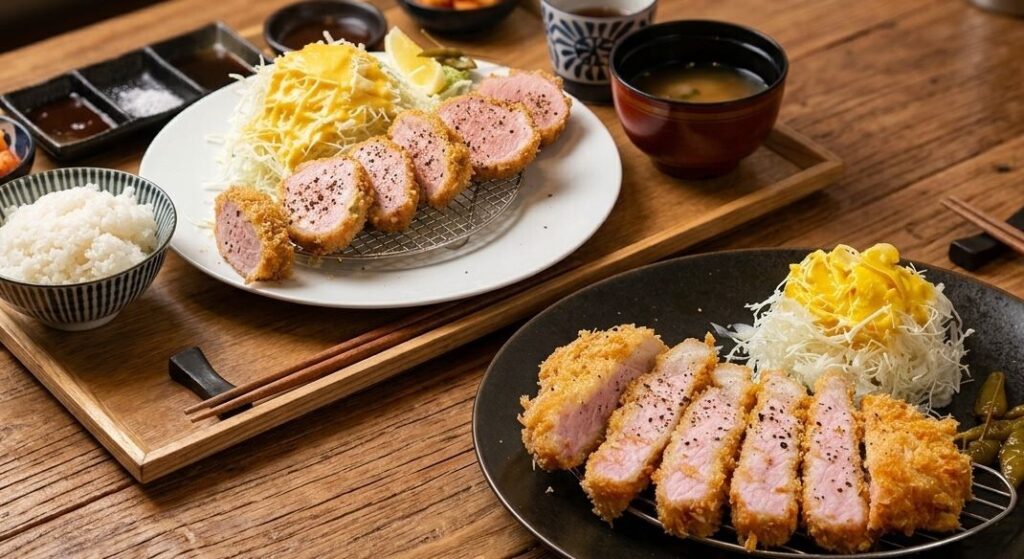
Tonkatsu is a Japanese-style breaded pork cutlet that has also become popular in South Korea.
It differs from many traditional Korean meat dishes because the pork is coated in breadcrumbs and fried rather than grilled or simmered.
Korean restaurants serve several styles of pork cutlets.
Some specialize in thin, wide cutlets served with sauce, while others focus on thicker cuts of pork.
Kawakatsu is associated with the thicker Japanese-style approach.
For travelers interested in comparing food traditions, this is an opportunity to explore how Japanese-style pork cutlets fit into Seoul’s restaurant scene.
Menu and Prices at Kawakatsu
| Menu | Korean Name | Listed Price |
|---|---|---|
| Pork Loin Cutlet Set | 로스카츠 정식 | ₩16,000 |
| Pork Tenderloin Cutlet Set | 히레카츠 정식 | ₩17,000 |
| Premium Pork Loin Cutlet | 특로스카츠 | ₩19,000 |
Some public listings show slightly lower prices. The figures above are reference prices, not independently confirmed current in-store prices.
What Should You Order?
Rosu Katsu (로스카츠) — ₩16,000
Rosu katsu is made from pork loin.
Depending on the cut, it may include a strip of fat.
This gives it a different balance of lean meat and richness compared with tenderloin.
If you enjoy pork with some fat, loin may be the better choice.
Hire Katsu (히레카츠) — ₩17,000
Hire katsu is made from pork tenderloin.
Tenderloin is generally leaner than pork loin and contains relatively little visible fat.
It is a useful option if you prefer a leaner cut of meat.
Premium Rosu Katsu (특로스카츠) — ₩19,000
Premium pork loin cutlets are generally intended as an upgraded option compared with the standard loin cutlet.
However, the exact cut, portion size, and preparation can vary.
Check the restaurant’s current menu to understand what distinguishes the premium version.
How Much Should You Budget?
Based on the listed prices:
| Order | Estimated Total |
|---|---|
| One rosu katsu set | ₩16,000 |
| One hire katsu set | ₩17,000 |
| One premium rosu katsu | ₩19,000 |
| Two rosu katsu sets | ₩32,000 |
| One rosu katsu + one hire katsu | ₩33,000 |
For a couple ordering one pork cutlet meal each, the estimated cost would be approximately ₩32,000–₩36,000 for standard loin or tenderloin choices, depending on the combination.
Drinks and additional dishes would increase the total.
How to Eat Tonkatsu
Tonkatsu restaurants may serve pork cutlets with sauce, salt, mustard, rice, cabbage, or other accompaniments.
The exact arrangement depends on the restaurant.
If salt is provided, try a small piece with salt before adding sauce.
This allows you to experience the pork and fried coating separately.
Some restaurants serve thick pork cutlets with a slightly pink interior.
Color alone does not establish whether pork has been safely cooked. If you are concerned about doneness, ask the restaurant about its preparation.
Practical Visiting Tips
Kawakatsu is located south of the main Hongdae shopping district.
Search for 카와카츠 using the Korean address to identify the correct location.
Restaurants specializing in freshly prepared cutlets may have limited seating or sell out of particular menu items.
Because Kawakatsu’s current operating status and menu have not been fully independently verified, check the latest business listing before making a special trip.
Choose Kawakatsu if: You enjoy Japanese-style pork cutlets and prefer an individual meal rather than shared tabletop cooking.
Which Hongdae Restaurant Offers the Best Value?
The answer depends on what you want to eat.
A lower menu price does not automatically mean better value, especially when restaurants serve different types of food.
Based on the representative prices available, here is how the five restaurants compare.
For a Meal Around ₩10,000
Ranglang is worth considering.
Its fried rice is listed at approximately ₩9,000, although another online listing shows ₩8,000.
This makes it one of the lower-priced individual dishes identified in this guide.
For a Traditional Korean Meal Under ₩15,000
Gamnamujip offers several listed dishes between ₩11,000 and ₩14,000.
These include pork bulgogi, tofu stew, beef bulgogi, and grilled fish.
For travelers who want a Korean rice-based meal, these are practical budget options.
For a Noodle Meal Around ₩13,000
Soi Yeonnam offers beef rice noodle soup listed at ₩13,000.
The tom yum version is listed at ₩14,900.
Both are individual meals, making them convenient for travelers who do not want to share dishes.
For a Shared Dinner Around ₩30,000–₴35,000 for Two
Sinmigyeong Hongdae Dakgalbi is worth considering.
Two servings of cheese dakgalbi are estimated at ₩32,000 before extras.
The shared cooking experience is part of the appeal.
For Japanese-Style Pork Cutlets Around ₩16,000–₩19,000
Kawakatsu offers listed pork cutlet options within this range.
Choose between loin and tenderloin based on your preference for fat and texture.
These comparisons use representative menu prices rather than a standardized value-rating system.
Practical Tips for Eating Near Hongdae Station
1. Use the Right Subway Exit
Hongik University Station has several exits, and the surrounding streets extend in different directions.
Exit 3 is useful for reaching Yeonnam-dong.
Exit 9 provides access to the main Hongdae shopping and entertainment district.
Other exits may be more convenient depending on the restaurant’s exact address.
A restaurant described as being near Hongdae Station may still require a longer walk than expected.
Check the walking route before leaving the station.
2. Search Using Korean Restaurant Names
Korean map applications are useful for navigating smaller streets.
Search for these names:
| English Name | Korean Search Term |
|---|---|
| Gamnamujip Gisa Sikdang | 감나무집 기사식당 |
| Sinmigyeong Hongdae Dakgalbi | 신미경 홍대닭갈비 |
| Hongdae Ranglang | 랑랑 |
| Soi Yeonnam | 소이연남 |
| Kawakatsu | 카와카츠 |
Naver Map and KakaoMap can help you locate the correct restaurant.
Always confirm the address and branch.
3. Check Restaurant Break Times
Some Korean restaurants close temporarily between lunch and dinner.
This is called break time (브레이크타임).
For example, a restaurant may serve lunch, close for several hours, and reopen for dinner.
Last-order times can also be earlier than closing times.
Check the latest schedule before visiting, particularly if you plan to eat in the afternoon.
4. Understand Minimum Orders
Not all Korean restaurants use the same ordering system.
Individual rice and noodle dishes are generally straightforward to order for one person.
Shared dishes such as dakgalbi may require a minimum number of portions.
Before ordering, check whether the displayed price is for:
- One person
- One serving
- One complete shared dish
- An additional topping or side dish
This is particularly important when comparing restaurant prices.
5. Check Whether Side Dishes Are Included
At many Korean restaurants, rice and small side dishes are included with certain set meals.
However, this is not universal.
Some restaurants charge separately for rice, soup, or additional items.
If you’re unsure, ask before ordering.
A useful Korean phrase is:
공깃밥 포함인가요?
Gonggitbap poham-ingayo?
“Is a bowl of rice included?”
6. Be Careful With Allergens
Korean and Korean-Chinese dishes may contain ingredients that are not obvious from the menu name.
Examples include:
- Soy and wheat in sauces
- Seafood ingredients in soup broths
- Pork in noodle sauces
- Fish sauce in Thai dishes
- Dairy in cheese dakgalbi
If you have a food allergy, ask staff to confirm the ingredients and possible cross-contact.
Translation applications can help with basic communication, but they cannot guarantee that a dish is safe for a particular allergy.
More Food Guides Near Hongdae
If you’re planning several meals around Hongdae, you may want to explore different restaurant categories rather than visiting similar places repeatedly.
Michelin Bib Gourmand Restaurants
For travelers interested in restaurants recognized for good cooking at reasonable prices, see our guide to Michelin Bib Gourmand restaurants near Hongdae.
This guide focuses on Michelin-recognized restaurants rather than general neighborhood dining.
Korean Fried Chicken
If you want to try Korean fried chicken, our guide to fried chicken restaurants near Hongdae explores different chicken styles and dining options.
Fried chicken is particularly worth considering for an evening meal with friends.
Bakeries and Dessert Cafés
After lunch or dinner, you can explore the neighborhood’s dessert options.
Our guide to bakeries and dessert cafés near Hongdae offers additional ideas for a coffee or dessert stop.
Quick Comparison: 5 Restaurants Near Hongdae Station
| Restaurant | Main Specialty | Indicative Budget Per Person | Best For |
|---|---|---|---|
| Gamnamujip Gisa Sikdang | Korean pork and set meals | ₩11,000–₩14,000 | Traditional Korean food |
| Sinmigyeong Hongdae Dakgalbi | Spicy chicken with cheese | Around ₩16,000 before extras | Couples and groups |
| Hongdae Ranglang | Korean-Chinese cuisine | From around ₩9,000 for fried rice | Noodles and shared dishes |
| Soi Yeonnam | Thai beef rice noodles | ₩13,000–₩14,900 for noodle dishes | Solo diners and soup lovers |
| Kawakatsu | Japanese-style pork cutlets | ₩16,000–₩19,000 | Tonkatsu lovers |
These prices refer to selected menu items, not the full price range at each restaurant. Additional dishes, drinks, and toppings cost extra.
If you want a traditional Korean meal with rice and side dishes, Gamnamujip is worth considering.
For a more interactive dining experience, Sinmigyeong specializes in dakgalbi, a spicy chicken dish typically cooked and shared at the table.
Ranglang offers Korean-Chinese dishes, while Soi Yeonnam is an option for Thai-style noodle soup.
Kawakatsu focuses on Japanese-style pork cutlets.
Each restaurant offers a different reason to explore the area beyond Hongdae’s main shopping streets.
Final Thoughts: Where Should You Eat Near Hongdae?
You don’t need to visit every restaurant on this list to enjoy the food around Hongdae.
The better approach is to choose based on the type of meal you want.
For traditional Korean comfort food, Gamnamujip offers rice-based meals and familiar Korean dishes.
For a shared dinner with friends, Sinmigyeong specializes in spicy dakgalbi with cheese.
Ranglang provides Korean-Chinese food, including individual rice dishes and larger shared plates.
Soi Yeonnam is an option for Thai beef noodles, while Kawakatsu focuses on Japanese-style pork cutlets.
Based on the representative prices in this guide, an individual meal can cost around ₩9,000–₩19,000, depending on the restaurant and dish. Shared meals and additional orders may cost more.
Before visiting, check the restaurant’s current menu, operating hours, and location.
A little planning can help you spend less time comparing restaurants and more time enjoying your meal.
Information researched on October 17, 2026. Menu prices and restaurant details may change. Some listed prices are approximate and have not been independently confirmed against current in-store menus.