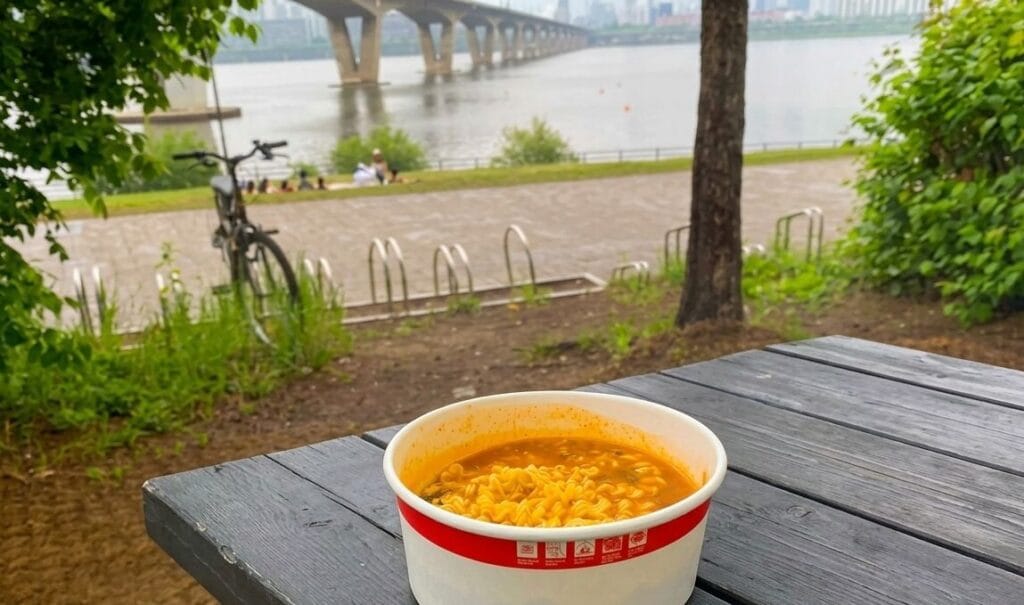
Have you ever seen those videos of people enjoying steaming, delicious Ramyeon by the Han River in Seoul? The secret isn’t just the location—it’s the perfectly calibrated cooking method! You don’t need a special machine to get that authentic, chewy-yet-firm texture. Follow this simple guide to recreate the famous “Han River Ramyeon” experience in your own kitchen.
If you’d rather skip the stovetop and get the real riverside experience first, check out our guide to the best Han River Ramyeon spots in Seoul — but if you’re not in Korea right now, here’s exactly how to recreate it at home.
🕒 The 4-Step Han River Ramyeon Recipe
The key to replicating this iconic taste is precise measurements. Follow these steps exactly:
| Step | Instruction |
|---|---|
| 1. Measure Water | Pour 400–450ml of water into your pot. (Using slightly less water than the standard instruction makes the soup base richer and more flavorful!) |
| 2. Boil & Add | Once the water reaches a rolling boil, add the noodles, dehydrated vegetable flakes, and soup powder all at once. |
| 3. Cook Time | Boil for exactly 3 minutes and 30 seconds. |
| 4. The “Wait” Factor | Turn off the heat and wait for 30 seconds before you start eating. This allows the noodles to absorb the perfect amount of soup! |
💡 Pro Tips for an Elevated Experience
Choose the Right Noodle Brand
For your first time, go with Shin Ramyun Cup (신라면) — Korea’s best-selling instant noodle brand since 1986, and there’s a reason it still tops every convenience store shelf. It has a rich, spicy beef broth and perfectly balanced heat.
If you want something milder, try Yukgaejang Cup. If you are after extreme spice, Buldak Ramen (불닭볶음면) is the challenge version beloved by heat lovers worldwide.
To take your homemade Han River Ramyeon to the next level, try these popular Korean add-ons:
- The “Egg Drop” Trick: If you like a richer texture, crack an egg into the pot during the last minute of boiling. Don’t stir it! Let the egg cook whole (or poached) for a creamy, golden yolk that pairs perfectly with the spicy broth.
- Green Onion Kick: Add a handful of freshly chopped green onions during that final 30-second “wait” time. The residual heat will soften them just enough to release a fresh, sharp aroma.
- The “Perfect Pair”: In Korea, Ramyeon is almost always served with well-fermented kimchi — if you want a quick homemade side to go with it, try our Kimchi Jeon recipe. The tanginess perfectly balances the spicy, salty, savory profile of the noodles.
- The “Double Up” (For the Brave): If you are really hungry, add a slice of processed American cheese right when you turn off the heat. The cheese will melt into a rich, velvety sauce that creates a unique “fusion” flavor.
Do Not Skip the 30-Second Rest
It sounds trivial, but this step genuinely matters. I’ve made Han River Ramyeon more times than I can count since splitting my time between Seoul and my hometown of Iksan, and trust me — skipping that 30-second rest is the one mistake almost everyone makes on their first try. Noodles that rest briefly after cooking absorb the broth more evenly, and the soup thickens just slightly to cling to each strand. Locals swear by it — and once you try it both ways, you will notice the difference.
Watch the Water Level
The fill line inside the cup exists for a reason. Undershooting by even 50 ml can make the broth too salty and the noodles too dense. Overshooting makes everything watery. Trust the line.
Best Spots to Eat Han River Ramen in Seoul
Yeouido Hangang Park (여의도한강공원)
The most iconic and popular Han River park. Massive convenience stores, wide open lawns, and a front-row view of the city’s skyline make this the go-to spot. Subway: Yeouinaru Station (Line 5).
Banpo Hangang Park (반포한강공원)
Famous for the Moonlight Rainbow Fountain — a light and water show on Banpo Bridge that runs on weekend evenings. Eating ramen while watching the fountain is a full Seoul experience. Subway: Express Bus Terminal Station (Lines 3, 7, 9).
Ttukseom Hangang Park (뚝섬한강공원)
A favorite among locals for its slightly less touristy feel. Great lawn space, good convenience store options, and a nice view of the Han. Subway: Ttukseom Resort Station (Line 7).
Frequently Asked Questions
Can I make Han River ramen at home?
Absolutely. The Han River Ramyeon recipe is identical — just use a kettle or microwave to bring water to a full boil, and follow the same 3 minutes 30 seconds + 30 second rest timing. The taste will be the same; you will just be missing the river.
How spicy is Korean instant ramen?
It depends on the brand. Shin Ramyun is moderately spicy — most people with any spice tolerance handle it fine. Buldak Ramen is significantly hotter and genuinely challenging even for regular spice eaters. If you are heat-sensitive, go with a non-spicy option like Doong-Ji Cold Noodles (which are served cold and need no hot water) or a mild soup variety.
Is there a vegetarian or vegan option?
Most Korean instant ramen uses beef or seafood-based stock, so options are limited. Look for Nongshim Soon Veggie Noodle Soup — it is certified vegan and available at most Korean convenience stores. Check the packaging for the green vegan label.
What time is best to visit Han River for ramen?
Anytime works, but evenings and late nights are when the atmosphere peaks. The city lights come on after sunset, temperatures cool down, and the parks fill with locals — which is exactly when Han River Ramyeon feels most authentic.