Kimchi Jeyuk bokkum: A Weeknight Staple
Whenever I long for the comforting, soul-warming flavors of Seoul, Kimchi Jeyuk bokkum is the first dish I make. It’s an absolute staple in Korean homes—partly because it’s incredibly satisfying, but mostly because it’s the absolute best way to use up that jar of deeply sour, over-fermented kimchi sitting in the back of the fridge.
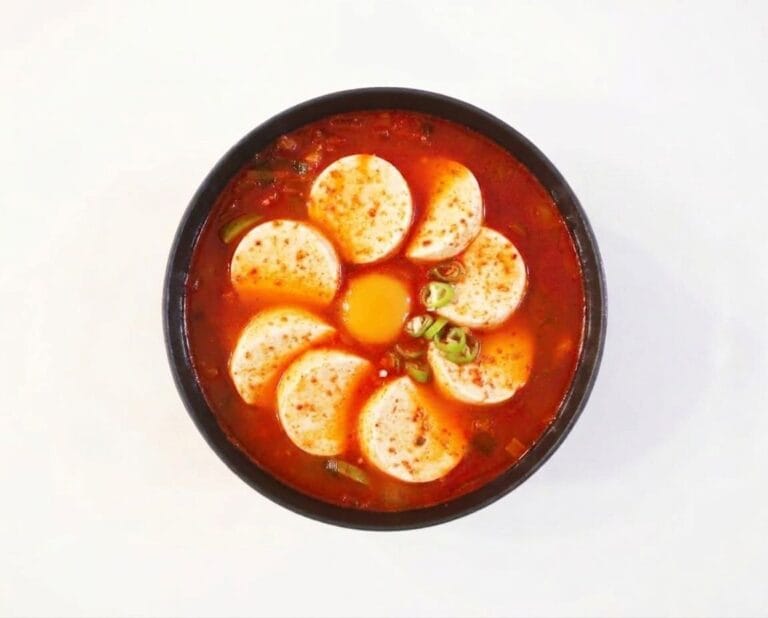
While many recipes just throw pork and kimchi into a pan with chili paste, the real secret to a truly spectacular Kimchi Jeyuk bokkum lies in two things: properly treating the meat first and adding a tiny, unexpected spoonful of traditional Korean soybean paste (Doenjang). It grounds the whole dish, tames the sharp sourness of the kimchi, and gives the pork an incredible, rich depth. If you love how Doenjang deepens a dish, you’ll also enjoy it in its starring role in Doenjang Jjigae.
Let’s get into my kitchen and make a plate that will have you reaching for a second bowl of rice!
🕒 Recipe Details
- Prep Time: 15 minutes
- Cook Time: 10 minutes
- Servings: 2 servings
🛒 Ingredients You’ll Need
The balance between the acidity of the kimchi and the richness of the pork is what makes or breaks a good Kimchi Jeyuk bokkum. Here is exactly what I use in my kitchen:
The Main Elements
- 200g (approx. 7 oz) Pork Belly (Samgyeopsal): Medium-thin slices (about 1/8-inch thick) work best. They crisp up beautifully at the edges and absorb the marinade much faster than thick cuts.
- 400g (approx. 14 oz) Well-Fermented (Sour) Kimchi: It should be heavily fermented—the kind that makes your mouth water just smelling it. That sourness comes from beneficial lactic acid bacteria built up over weeks of fermentation, which is exactly what gives Kimchi Jeyuk bokkum its signature tang. Chop it into bite-sized, roughly 1-inch pieces.
- 20g Scallions (Green Onions): Sliced diagonally into thick pieces so they don’t completely disappear during the high-heat stir-fry.
- 1 Fresh Cheongyang Chili Pepper: (Substitute with a jalapeño if needed). Sliced diagonally for a sharp, clean kick of heat.
- 3 tbsp Water
- 1 tbsp Cooking Oil: Any neutral oil like canola, vegetable, or grapeseed works perfectly.
For Prepping the Meat
- 1 tbsp Korean Rice Wine (Cheongju): Or Mirin. This is crucial for tenderizing the pork fibers and eliminating any gamey undertones.
My Secret Sauce Blend
- 1 tbsp Gochugaru (Korean Chili Flakes)
- 1 tbsp Gochujang (Korean Chili Paste)
- 1 tsp Doenjang (Korean Fermented Soybean Paste): Trust me on this one. It won’t make your dish taste like soup; it just adds a profound, earthy umami base.
- 1 tsp Freshly Minced Ginger: Provides a subtle brightness that cuts through the heavy pork fat.
- 1 tbsp Minced Garlic
- 1 tbsp Sugar: Essential for balancing out the sharp lactic acid of the sour kimchi.
- A generous pinch of Black Pepper
- 1 tsp Toasted Sesame Seeds
- 1 tbsp Toasted Sesame Oil
🍳 Step-by-Step Instructions
Step 1: Prep and Cleanse the Pork
Place your sliced pork belly into a clean mixing bowl. Drizzle 1 tablespoon of rice wine over the meat and gently massage it with your hands. Let it sit for just a couple of minutes while you mix the sauce. This simple step ensures the pork tastes remarkably clean and tender.
Step 2: Build the Flavor Base
In a small bowl, whisk together the Gochugaru, Gochujang, Doenjang, minced ginger, minced garlic, sugar, black pepper, sesame seeds, and sesame oil. Mix until it forms a smooth, rich, dark red paste. Take a quick sniff—the earthiness of the Doenjang combined with the sweet heat of the chili paste is exactly the flavor base that makes Kimchi Jeyuk bokkum so addictive.
Step 3: Divide and Marinate
Take exactly half of that beautiful red sauce and set it aside in a separate small dish (we’ll save this to coat the kimchi later). Pour the remaining half directly over your prepped pork belly. Use your hands to work the marinade into every fold of the meat so that no spot is left bare.
Step 4: Sear and Sizzle
Heat your skillet or wok over medium-high heat and add 1 tablespoon of cooking oil. Once the pan is nice and hot, slide the marinated pork belly in. You should hear a loud, satisfying sizzle immediately. Stir-fry the pork frequently. As the pork fat begins to render and mix with the sweet marinade, you’ll smell an incredible caramelized aroma. Cook until the meat is mostly cooked through and slightly browned.
Step 5: Bring in the Kimchi
Now, toss in your chopped sour kimchi along with the reserved half of the marinade we set aside earlier. Turn the heat up slightly and stir-fry everything vigorously. Watch as the translucent kimchi leaves begin to soak up that rendered pork fat and turn a gorgeous, glossy orange-red. This usually takes about 2 to 3 minutes.
Step 6: Add Freshness and Steam
Scatter your sliced scallions and chili peppers across the pan. Immediately pour in 3 tablespoons of water. This small splash of water creates a burst of steam that loosens the thick glaze from the bottom of the pan, distributing the sauce evenly and cooking the fresh aromatics without drying out the meat. Stir-fry for one more minute until the scallions soften slightly but keep their vibrant green color.
Step 7: The Aromatic Finish
Turn off the heat completely. Drizzle a final touch of sesame oil over the top and throw in a handful of toasted sesame seeds. Give the pan one final, gentle toss. The residual heat will instantly wake up the toasted sesame notes, wrapping the entire dish in a comforting fragrance.
Step 8: Plate and Serve
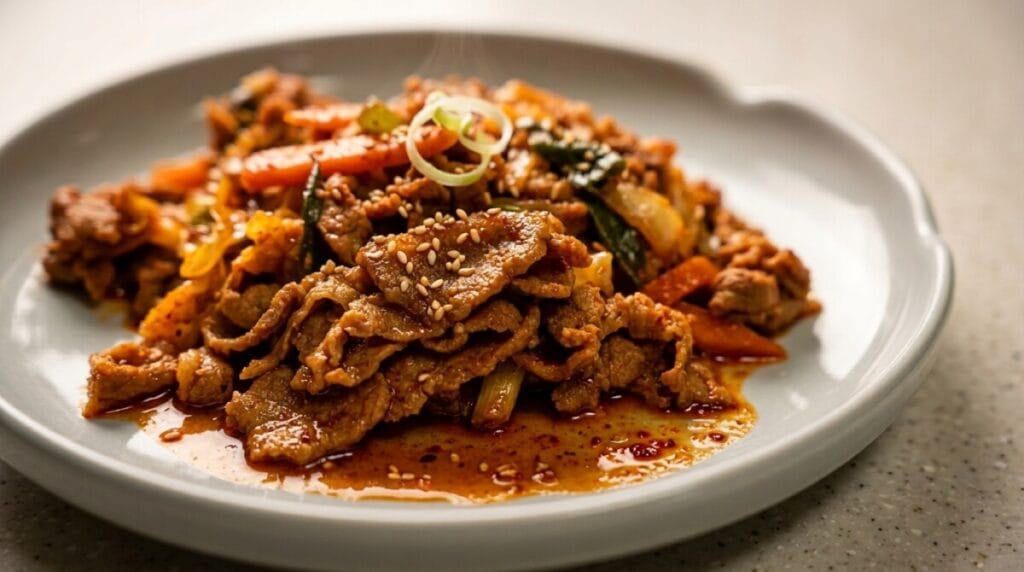
Pile the hot, steaming Kimchi Jeyuk bokkum onto a shallow plate, letting the pieces stack high in the center. Make sure to spoon every last bit of the glossy sauce over the top.
🧪 Why This Works: The Culinary Science
- The Doenjang Secret: Traditional Korean soybean paste (Doenjang) is packed with natural binding molecules that lock onto trimethylamine—the compound responsible for the raw, gamey odor in pork. By adding just a teaspoon, we chemically neutralize the odor while building a savory foundation.
- The Role of Water (Step 6): When stir-frying with heavy pastes like Gochujang and sugar, the pan dries out quickly, leading to scorched spices. The 3 tablespoons of water trigger deglazing, pulling up the deeply caramelized sugars stuck to the pan and wrapping them back around the meat as a smooth, velvet glaze.
❓ Recipe FAQ & Substitutions
Q: Can I use fresh, crunchy kimchi instead?
A: Freshly made kimchi contains too much water and lacks the sour lactic acid punch needed for a great Kimchi Jeyuk bokkum. If your kimchi isn’t sour enough, the dish will taste flat. To fix this, add 1/2 teaspoon of white vinegar to the pan when you add the water in Step 6. It mimics that aged, tangy bite beautifully! And if you end up with extra super-sour kimchi after this recipe, it’s also perfect for a pot of Kimchi Jjigae.
Q: Can I use a different cut of meat?
A: While pork belly (Samgyeopsal) provides the best fat-to-meat ratio that makes the cooked kimchi taste incredibly rich, you can absolutely use pork shoulder (moksal) or lean tenderloin. If using a leaner cut, add an extra tablespoon of cooking oil to keep the pan moist.
Q: How do I store and reheat leftovers?
A: Store it in an airtight container in the fridge for up to 3 days. When reheating, avoid the microwave if possible. Toss it back into a hot skillet with 1-2 tablespoons of water, and stir-fry until the pork fat melts back into a glossy sauce. It’s also incredible when chopped up with a bowl of cold rice to make instant Jeyuk Fried Rice!