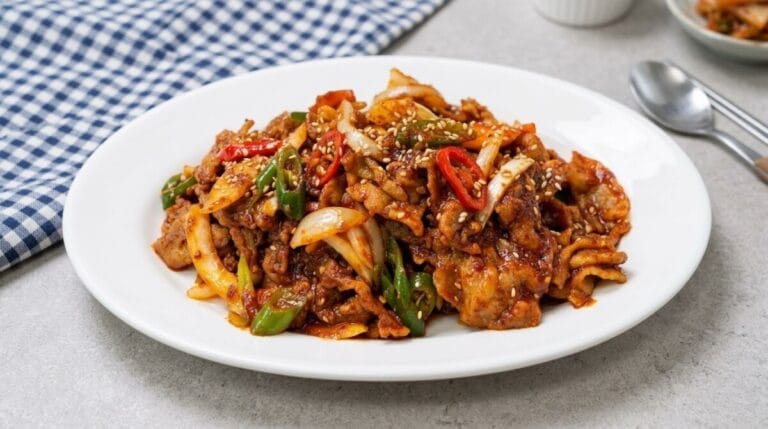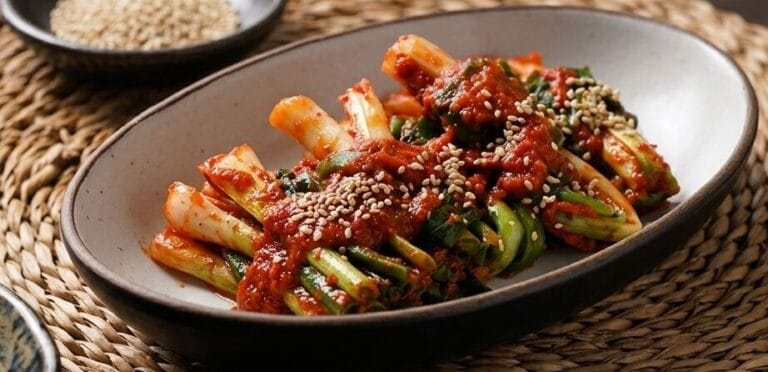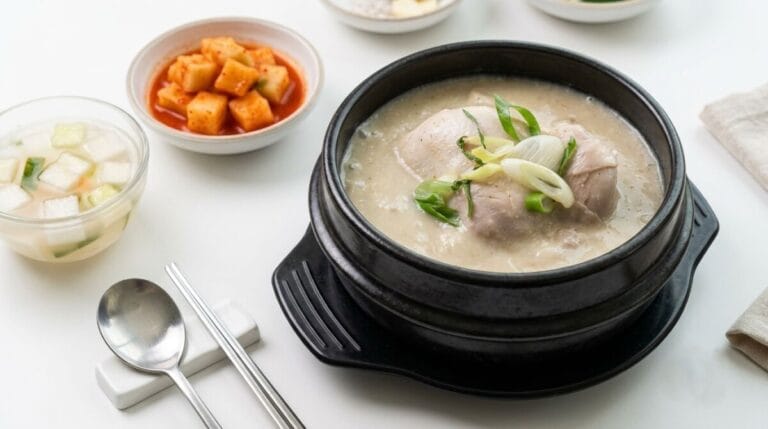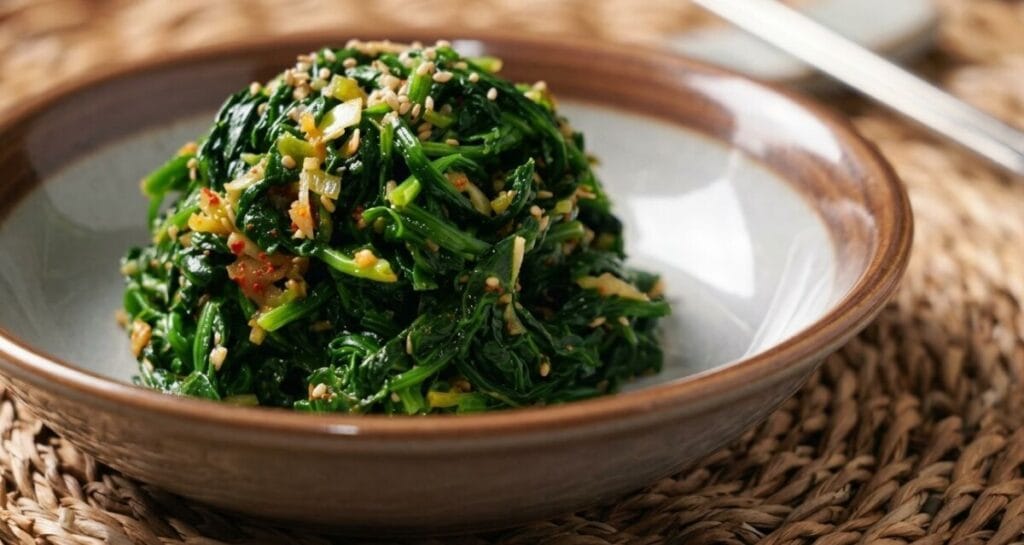
If you have ever stepped into an authentic Korean restaurant or watched a Korean BBQ mukbang, you have probably noticed an array of small, delightful vegetable side dishes surrounding the main course. These are called Banchan (반찬). Among them, Sigeumchi Doenjang Muchim (Seasoned Spinach with Soybean Paste) is an absolute staple in every local household.
As a Korean local who grew up enjoying authentic home-cooked meals and has spent years replicating traditional family recipes, this spinach side dish is one of my weekly go-tos.
Unlike western spinach salads or sauteed variants, this traditional Korean method offers an incredible depth of umami thanks to Doenjang (fermented Korean soybean paste). It is naturally vegan, low-calorie, nutrient-dense, and gluten-free (when using the right soybean paste) — and according to Healthline, the leafy green itself is packed with iron, folate, and vitamins A, C, and K1, making it the ultimate healthy side dish for anyone interested in wellness or clean eating.
The Local Expertise: Western vs. Korean Spinach
Through my culinary journey, I realized that many expatriates and international home cooks fail at making Korean spinach salad for one simple reason: they use the wrong spinach or cook it using western parameters.
1. The Spinach Variety Matters
In western supermarkets, you will often find Baby Spinach. While you can use it, the leaves are incredibly delicate, contain high water content, and turn into mush if overcooked.
- The Local Secret: If you can, visit an Asian grocery store and look for mature, bunch-bundled greens with red or pink roots. The roots hold a unique, concentrated natural sweetness that completely transforms the dish.
2. The Golden Rule of Blanching (Time is Everything)
Amateurs often boil the leaves like a standard vegetable. If you boil it too long, you destroy the texture and wash away all vitamins.
- For Korean Bunch Spinach: Blanch in heavily salted boiling water for exactly 20 to 30 seconds.
- For Western Baby Spinach: Reduce the blanching time to a mere 5 to 10 seconds—just enough to let it wilt.
Master the “Gentle but Firm Squeeze” Technique
The real difference between a generic online recipe and a local’s kitchen comes down to the handling of the blanched leaves.
After shocking them in ice-cold water to stop the cooking process, you must squeeze out the excess water.
- If it’s too wet: The natural water will dilute your seasoned Doenjang paste, making the dish taste watery and bland within hours.
- If it’s too dry: If you squeeze it with excessive force (what I call “extracting its soul”), the fibers break, becoming tough, stringy, and losing their pleasant juicy crunch.
- The Local Method: Gather the spinach into a ball roughly the size of a baseball. Cup it between both palms and give it a gentle but firm, steady squeeze. It should still retain a hint of moisture but should not be dripping.
Ingredients & Substitute Shopping Guide for Foreigners
Since authentic traditional Korean condiments can be intimidating, here is exactly what to buy and how to pivot if your local market has a limited selection.
Essential Ingredients
- Fresh Spinach: 1 large bunch (approx. 250g–300g / 10 oz).
- Korean Soybean Paste (Doenjang / 된장): 1 tablespoon. Doenjang is earthier, saltier, and more robust than Japanese miso.
- Minced Garlic: 1/2 teaspoon. (Use fresh garlic; garlic powder will ruin the fresh Banchan profile).
- Toasted Sesame Oil: 1 tablespoon.
- Toasted Sesame Seeds: 1 teaspoon (crushed slightly between your fingers for maximum aroma).
- Green Onion / Scallion: 1 tablespoon, finely chopped.
- Sugar or Oligosaccharide Syrup: 1/4 teaspoon (just a tiny pinch to round out and balance the sharp saltiness of the fermented paste).
💡 Expat Shopping Tip & Substitute: If you do not have an H-Mart or Asian grocery nearby and absolutely cannot find traditional Doenjang, you can substitute it with Japanese Awase Miso (a blend of red and white miso). Because miso is milder and slightly sweeter than Korean Doenjang, skip the pinch of sugar and add an extra pinch of sea salt to mimic the deep, savory umami punch of a local Korean kitchen.
Step-by-Step Cooking Instructions
Step 1: Blanch and Cool
- Bring a large pot of water to a rolling boil and add 1 tablespoon of sea salt (this keeps the spinach bright green).
- Drop the spinach into the boiling water, pushing it down with tongs. Blanch for 20-30 seconds (or 5-10 seconds for baby spinach).
- Immediately transfer the wilted spinach into a large bowl filled with ice-cold water to shock it.
Step 2: Trim and Squeeze
- Gently rinse the cooled spinach to remove any dirt from the roots.
- Gather it, cut off the very tip of the root base (leaving the beautiful pink junction intact if using bunch spinach), and chop it into comfortable 3-inch, bite-sized sections.
- Apply the Gentle but Firm Squeeze technique to remove excess water. Fluff up the squeezed ball gently in a mixing bowl so the leaves are separated.
Step 3: Season with Your Hands (Son-mat)
- In a small bowl, thoroughly mix the Doenjang, minced garlic, chopped green onion, toasted sesame oil, and a tiny pinch of sugar until smooth.
- Pour the seasoned paste over the fluffed spinach.
- The Ultimate Local Tip: Do not use a spoon or tongs to mix. Put on a food-safe glove and mix it gently with your fingers. Massage the paste into the spinach leaves lightly so every layer absorbs the umami.
- Finish by sprinkling the toasted sesame seeds over the top. Serve immediately or store in an airtight container in the fridge for up to 3-4 days.
How to Eat and Pair Sigeumchi Doenjang Muchim
In a traditional Korean household, this banchan is incredibly versatile.
- The Ultimate Bibimbap Ingredient: If you have leftovers, throw this spinach into a bowl with some warm rice, a fried egg, a dollop of Gochujang (Korean chili paste), and an extra drizzle of sesame oil. It provides the essential freshness and texture that makes a classic Bibimbap shine.
- The BBQ Palate Cleanser: When eating rich, fatty proteins like grilled pork belly (Samgyeopsal), beef short ribs (Galbi), or a spicy stir-fry like Jeyuk Bokkeum, a bite of this savory, earthy green cuts through the grease beautifully, acting as a clean, refreshing palate cleanser between savory meat wraps.