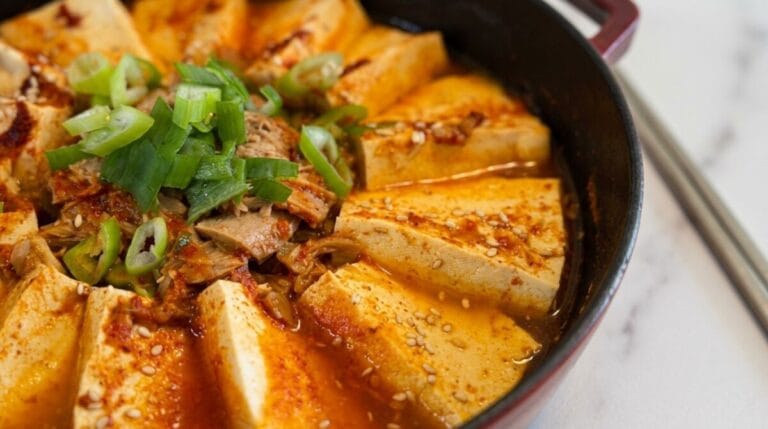
When international food lovers think of Kimchi, the classic Napa cabbage version (Baechu-Kimchi) is usually the first thing that comes to mind. However, as a Korean local who grew up enjoying authentic home-cooked meals and has spent years replicating traditional family recipes, my absolute favorite for an instant flavor punch is Pa-Kimchi (Korean Scallion Kimchi).
Made with fresh, slender green onions marinated in a bold, spicy, and savory chili paste, Pa-Kimchi is celebrated for its signature sharp, pungent bite that mellows into a beautiful sweet-and-savory umami flavor as it ferments.
Unlike cabbage kimchi, which requires hours of salting and intense labor, Pa-Kimchi is incredibly beginner-friendly and fast to make. If you want to elevate your home-cooked Korean meals, this authentic local guide will show you exactly how to capture that deep, craving-worthy local flavor.
The Local Expertise: Sourcing the Right Scallions
Through my culinary journey sharing recipes with international friends, I found that many people end up with a bitter or overly tough Pa-Kimchi for one simple reason: they choose the wrong type of green onions.
The Golden Rule of Thin Bulbs
In western supermarkets, green onions (scallions) can sometimes be incredibly thick and fibrous, with large, round white bulbs.
- The Local Secret: For the best Pa-Kimchi, you want to source thin, slender scallions with small, elongated white bulbs. Thick bulbs take too long to ferment, retain a harsh, tear-inducing bite, and become stringy. If your local Asian market has Sil-pa (thin scallions) or smaller spring onions, grab those immediately!
Master the “Diagonal Liquid Amine Salting” Technique
The defining line between a generic, watered-down internet recipe and a true Korean grandma’s kitchen lies entirely in how the scallions are salted. Never use dry sea salt to wilt green onions for Pa-Kimchi.
Because the white bulb parts are dense and thick, while the green hollow tops are delicate, they require different curing times.
- The Local Method: Place the cleaned and dried scallions in a large tray, propping up the green tops slightly so the tray is at an angle. Pour high-quality Korean Fish Sauce (Anchovy or Sandfish sauce) exclusively over the white bulbs.
- The Timing: Let the bulbs sit in the pool of fish sauce for 20 minutes, flipping them halfway through. In the last 5 to 10 minutes, submerge the green tops into the sauce. This ensures the entire scallion wilts perfectly even, without turning the green tips into a salty, mushy mess.
Ingredients & Substitute Shopping Guide for Foreigners
Kimchi paste requires a few highly specific Korean pantry staples. Here is your ultimate shopping checklist:
Essential Ingredients
- Fresh Scallions (Green Onions): 500g (approx. 1.1 lbs), washed, roots trimmed, and thoroughly dried.
- Korean Fish Sauce: 1/2 cup (Anchovy sauce / Myeolchi-Aekjeot is preferred for its deep, rich umami).
The Secret Kimchi Paste Base
- Korean Chili Flakes (Gochugaru / 고춧가루): 3/4 cup. Note: Do not use western chili powder or cayenne pepper; Gochugaru has a unique smoky sweetness and mild heat.
- Minced Garlic: 1.5 tablespoons.
- Minced Ginger: 1/2 teaspoon.
- Sugar: 1 tablespoon.
- Plum Syrup (Maesil-cheong / 매실청): 1 tablespoon. (Adds a beautiful fruity sweetness that helps fermentation. Use extra sugar or honey if unavailable).
The Glutinous Rice Glue (The Secret Binder)
- Glutinous Rice Flour (Sweet Rice Flour): 1 tablespoon.
- Water: 1/2 cup.
- Why do we use this? Cooking this mixture into a thin porridge acts as a natural glue that helps the spicy Gochugaru stick to the slippery, smooth skin of the scallions. It also feeds the healthy lactic acid bacteria during fermentation!
💡 Expat Shopping Tip & Substitute: If you absolutely cannot find glutinous rice flour, you can substitute it with regular wheat flour or even finely mashed cold cooked white rice blended with a splash of water. For the fish sauce, if Korean anchovy sauce is out of stock, high-quality Thai or Vietnamese fish sauce (like Three Crabs brand) works beautifully as an accessible alternative.
Step-by-Step Cooking Instructions
Step 1: Clean and Dry
- Thoroughly wash the scallions, ensuring no dirt is trapped in the white root bases.
- Trim off the roots and any withered green tips.
- Crucial: Let them dry completely on a towel. Water on the scallions will dilute the paste and cause the kimchi to spoil instead of ferment.
Step 2: Liquid Salting & Making the Glue
- Arrange the scallions in a tray, pouring the 1/2 cup of fish sauce over the white bulbs. Salt for 20-30 minutes, tossing occasionally.
- While salting, mix 1 tablespoon of glutinous rice flour with 1/2 cup of water in a small saucepan. Whisk over medium-low heat for 2-3 minutes until it thickens into a translucent paste. Let it cool completely.
Step 3: Mix the Kimchi Paste
- Once the scallions are salted, pour the fish sauce out of the tray and into a mixing bowl. Do not discard it! This seasoned fish sauce is the liquid gold base of our paste.
- To this fish sauce, add the cooled rice glue, Gochugaru, minced garlic, ginger, sugar, and plum syrup. Mix thoroughly until it forms a thick, rich, glossy paste. Let it rest for 5 minutes to let the chili flakes hydrate.
Step 4: Coating the Scallions (The Hand Massage)
- Put on food-safe gloves. Take a handful of the spicy paste and gently stroke it along the scallions, starting from the white bulbs and working down to the green tips.
- The Ultimate Local Tip: Do not rub aggressively. Treat the scallions gently so they don’t develop a grassy smell.
- Grab a small bundle of 4 to 5 seasoned scallions, fold them neatly in half, and wrap the green tips around the center to form a neat, individual bundle. Pack them tightly into an airtight container.
- Leave the container at room temperature for 1 day, then transfer to the refrigerator to mature.
Local Guide: The Ultimate Pa-Kimchi Pairings
In Korea, Pa-Kimchi is rarely eaten by itself; it is the ultimate flavor multiplier that transforms specific comfort foods into gourmet experiences.
- The Legendary Ramyeon / Jajangmyeon Combo: If you watch Korean creators, you’ve seen this. The rich, sweet, and oily profile of instant black bean noodles (Chapagetti) or a spicy bowl of Shin Ramyun pairs flawlessly with the sharp, acidic crunch of matured Pa-Kimchi. It completely cuts through the grease.
- The Stew-Booster Trick: Once your Pa-Kimchi has fully matured and turned sour, don’t just eat it as a side — chop it up and toss it straight into a bubbling pot of Kimchi Jjigae. The extra fermentation adds a deeper, tangier layer of flavor that fresh cabbage kimchi alone can’t match.
- The Samgyeopsal (Pork Belly) Companion: When grilling pork belly at home, lay a few strands of matured Pa-Kimchi directly onto the pork fat on the skillet. Grilled Pa-Kimchi develops a caramelized, sweet, and smoky depth that makes it the absolute best topping for a meat wrap.