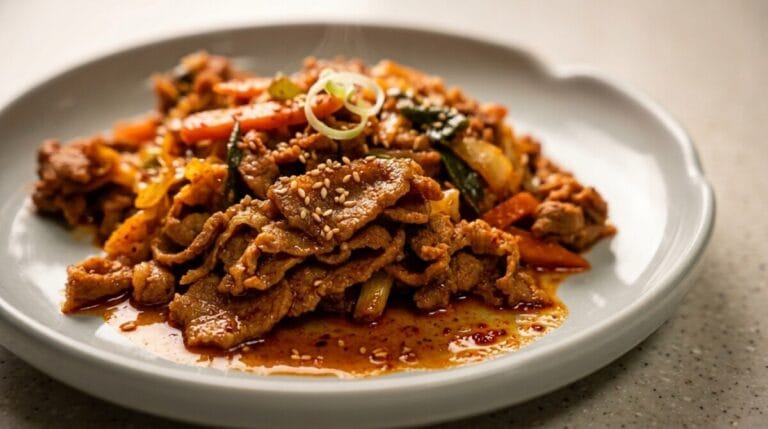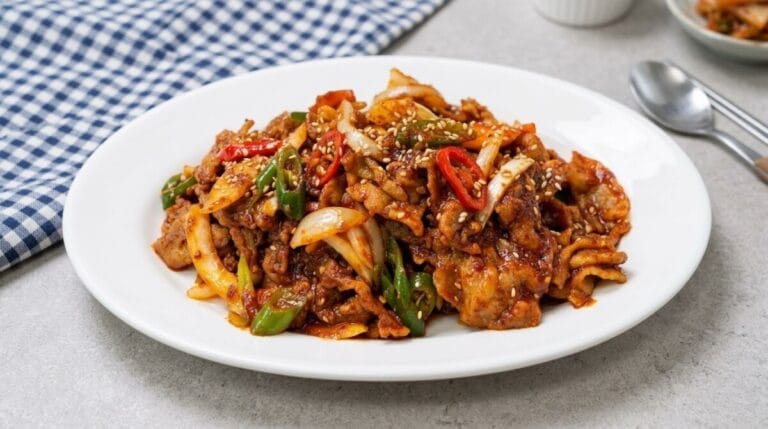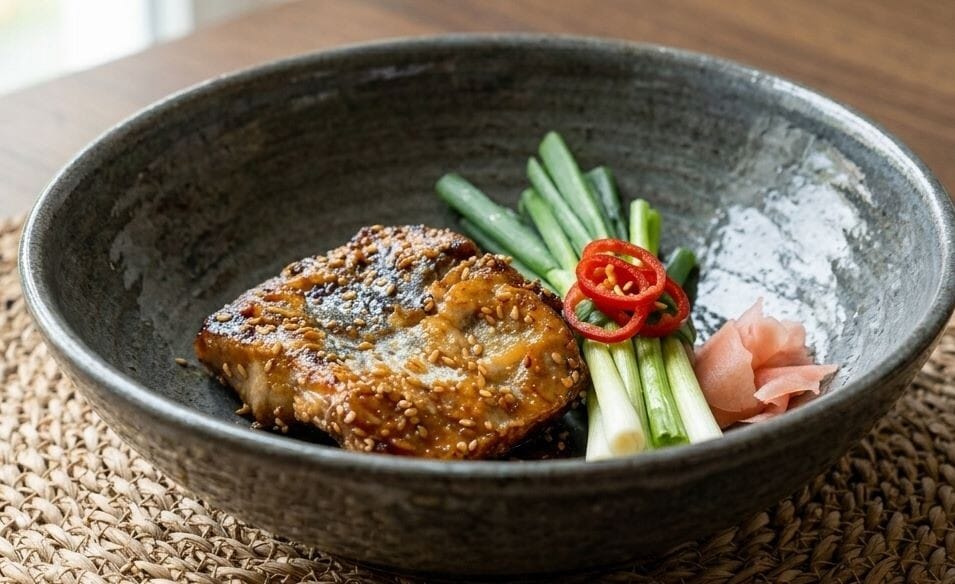
When most people think of Korean Bulgogi (불고기), their minds instantly drift to thinly sliced beef or spicy pork marinated in a sweet and savory sauce. However, as a Korean local who grew up enjoying authentic home-cooked meals and has spent years replicating traditional family recipes, I want to introduce you to a hidden gem from the local coastal kitchens: Samchi Bulgogi (Korean Fish Bulgogi).
Samchi (삼치) refers to King Mackerel (or Spanish Mackerel), a beloved fish in Korea prized for its thick, meaty texture and rich nutrition. This Fish Bulgogi variation has become one of my go-to weeknight dishes whenever I want the comfort of bulgogi without the heaviness of red meat.
By applying the iconic sweet, savory, and garlicky Bulgogi marinade to this flaky white fish, you get a Fish Bulgogi that is crispy on the outside, incredibly tender on the inside, and completely bursting with umami. King mackerel is also a genuinely smart choice nutritionally — according to NOAA Fisheries, it’s rich in omega-3 fatty acids and a very good source of protein, riboflavin, and vitamin B12. If you love Korean flavors but want a lighter, omega-3-rich alternative to red meat, this authentic local guide to Fish Bulgogi is the perfect culinary adventure.
The Local Expertise: How to Prep Mackerel Without the Fishy Odor
The biggest challenge international home cooks face when making Fish Bulgogi is the mackerel’s natural oiliness, which can lead to a strong, fishy smell if not handled correctly. I learned these two tricks from watching my mother prep mackerel in our kitchen growing up in Iksan, and they still make the biggest difference in the final dish.
To achieve that pristine, melt-in-your-mouth texture with a clean flavor profile, you must use these two essential local techniques before marinating:
1. The Cooking Wine Soak (or Rice Water)
Before adding any sauce, gently pat the fish fillets dry with a paper towel. Then, lightly sprinkle them with Mirin (cooking wine) and a tiny pinch of ginger juice (or ginger powder). Let it sit for 5 to 10 minutes. The alcohol and ginger work together to neutralize the volatile fishy compounds completely.
2. The Crispy Coating Secret
Never throw raw fish directly into the sauce and simmer it like beef. Mackerel meat breaks apart easily.
- The Local Method: Dust the prepped fish pieces lightly with a thin layer of potato starch (or cornstarch) and pan-fry them with a little oil first. This creates a crisp outer crust that locks in the juices and prevents the fish from disintegrating when tossed in the rich Bulgogi glaze.
Fish Bulgogi Ingredients & Substitute Shopping Guide for Foreigners
Since Samchi is a specific species highly popular in East Asia, let’s look at how to source it or substitute it seamlessly at your local western supermarket.
Essential Ingredients
- Samchi Fillets (King Mackerel / Spanish Mackerel): 400g (approx. 14 oz), boneless and cut into bite-sized pieces.
- Potato Starch (or Cornstarch): 3-4 tablespoons for dusting.
- Cooking Oil: 2 tablespoons for pan-frying.
The Signature Bulgogi Glaze
- Regular Soy Sauce: 3 tablespoons.
- Water: 2 tablespoons.
- Sugar: 1 tablespoon.
- Mirin (Cooking Wine): 1 tablespoon.
- Minced Garlic: 1 tablespoon (Korean food loves garlic!).
- Minced Ginger: 1/4 teaspoon.
- Toasted Sesame Oil: 1 tablespoon (added at the very end).
- Black Pepper: A generous pinch.
- Garnish: Finely chopped green onions and toasted sesame seeds.
💡 Expat Shopping Tip & Substitute: If you cannot find King Mackerel (Samchi) at your local market or H-Mart, do not worry. You can substitute it with Atlantic Mackerel (Godeungeo / 고등어), which is widely available. Atlantic mackerel is slightly oilier and has a stronger flavor, so make sure to double down on the ginger prep. Alternatively, any firm white-fleshed fish like Cod, Halibut, or Mahi-Mahi works beautifully as a mild, beginner-friendly alternative!
Step-by-Step Fish Bulgogi Cooking Instructions
Step 1: Prep and Neutralize the Fish
- Cut the boneless Samchi fillets into bite-sized chunks (about 2-inch pieces).
- Pat them thoroughly dry with a paper towel.
- Sprinkle with 1 tablespoon of Mirin and a tiny pinch of ginger juice. Let them rest for 10 minutes, then gently wipe away any excess moisture that surfaces.
Step 2: The Starch Dusting
- Place your potato starch in a shallow bowl or a ziplock bag.
- Toss the fish pieces gently until they are lightly and evenly coated with the starch. Shake off any excess powder—we want a thin, crisp veil, not a heavy batter.
Step 3: Pan-Sear to Golden Perfection
- Heat a non-stick skillet over medium-high heat and add 2 tablespoons of cooking oil.
- Place the fish pieces down, skin-side first if they have skin. Pan-fry for 3 to 4 minutes on each side until the crust turns a beautiful, crispy golden brown.
- Remove the fish from the pan and set them aside on a plate lined with paper towels to drain excess oil.
Step 4: Glaze and Toss (The Son-mat Technique)
- In the same skillet (wipe away any burnt starch crumbs first), pour in your mixed glaze ingredients: soy sauce, water, sugar, Mirin, minced garlic, and ginger.
- Bring the sauce to a simmer over medium heat until the sugar dissolves and the garlic becomes fragrant (about 1 minute).
- Lower the heat to low, and gently reintroduce the crispy pan-seared fish into the skillet.
- The Ultimate Local Tip: Do not aggressively stir with a spatula, or the fish will break. Gently swirl the pan or use a spoon to spoon the bubbling glaze over the fish pieces until they are beautifully coated and the sauce reduces into a shiny glaze.
- Turn off the heat, drizzle 1 tablespoon of toasted sesame oil, and garnish with chopped green onions and sesame seeds.
How to Eat and Pair Samchi Bulgogi
In a traditional Korean home, Fish Bulgogi is a highly celebrated Banchan (side dish) that pairs beautifully with a wholesome family spread.
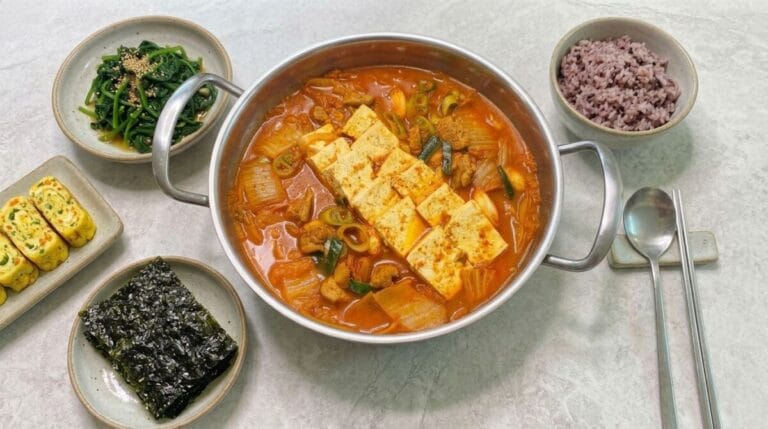
Perfect Balance with Soybean Stew: Because Samchi Bulgogi has a wonderfully rich, sweet, and salty flavor profile, it pairs flawlessly with a hot, comforting bowl of Doenjang Jjigae (Korean Soybean Paste Stew). The earthy, savory depth of the stew rounds out the sweetness of the fish marinade perfectly.
The Ssam (Lettuce Wrap) Experience: Just like beef bulgogi, you can eat this fish version as a wrap! Take a fresh lettuce leaf or a perilla leaf, place a piece of glazed Samchi Bulgogi in the center, add a small smear of Ssamjang (Korean soybean dip), and pop it into your mouth in one bite. The freshness of the greens contrasts beautifully with the savory, sweet glaze.
For a lighter, refreshing contrast on the side, a seasonal salad like Bomdong Geotjeori (Korean Spring Cabbage Salad) rounds out the table nicely.