Growing up in Iksan, one of the first side dishes I learned to help my mother make wasn’t kimchi — it was squid cabbage salad. This spicy, tangy, refreshingly crunchy banchan came together in minutes and always disappeared from the table just as fast.
Years later, after living across the Philippines, Japan, and China, I noticed variations of chilled squid salads everywhere — but nothing quite matches the sweet-and-sour punch of Korean Ojingeo Yangbaechu-muchim. If you want a dish that’s ready in 20 minutes, needs no fancy equipment, and instantly upgrades any rice-and-banchan spread, this is it.
What Is Ojingeo Yangbaechu-Muchim?
Ojingeo Yangbaechu-muchim (오징어양배추무침) literally means “squid and cabbage mixed dish.” It’s a classic Korean home-cooking recipe: briefly boiled squid tossed with crisp, thinly sliced vegetables in a gochujang-based dressing that balances spicy, sour, and sweet in every bite. Unlike heavier fried squid dishes, this squid cabbage salad is light, low in fat, and perfect served cold — especially in warmer months.
Ingredients
- 1 whole squid, cleaned (about 250–300g)
- 10 whole black peppercorns
- Cabbage, 180g (about 3 cups, thinly sliced)
- 1 small onion, 70g, thinly sliced
- 1 small carrot, 80g, julienned
- Perilla leaves (kkaennip), 10g, about 8–10 leaves, thinly sliced
- Gochujang (Korean red chili paste), 2 tablespoons
- Rice vinegar, 2 tablespoons
- Maesil-cheong (Korean green plum syrup), 2 tablespoons
- Honey, 1 tablespoon
- Gochugaru (Korean chili flakes), 1 tablespoon
- Toasted sesame salt (gaesosogeum) or toasted sesame seeds, 1/2 tablespoon
Substitute tip for foreigners: No maesil-cheong on hand? A mix of apple juice and a touch of honey works as a close substitute. If you can’t find fresh squid, thawed frozen squid tubes work fine here — just pat them very dry before boiling.
Step-by-Step Instructions
Step 1: Prep and Boil the Squid
Remove the innards, eyes, and beak from the squid, then rinse thoroughly under cold water. Bring a pot of water to a boil with the 10 whole peppercorns, then add the squid and boil for about 5 minutes, until it turns opaque and firms up. Drain, let cool slightly, and slice into bite-sized strips.
Step 2: Slice the Vegetables
While the squid cooks, thinly slice the cabbage, onion, and carrot into matchsticks. Slice the perilla leaves last and set them aside separately — they’re delicate and go in at the very end.
Step 3: Mix the Dressing
In a large mixing bowl, combine the gochujang, rice vinegar, maesil-cheong, honey, gochugaru, and sesame salt. Stir until smooth and glossy.
Step 4: Toss Everything Together
Add the sliced squid, cabbage, onion, and carrot to the dressing and toss well until every piece is coated. Add the perilla leaves last and toss gently just once or twice — over-mixing bruises the leaves and turns them bitter. Reserve a few leaves for garnish on top.
How to Serve Squid Cabbage Salad
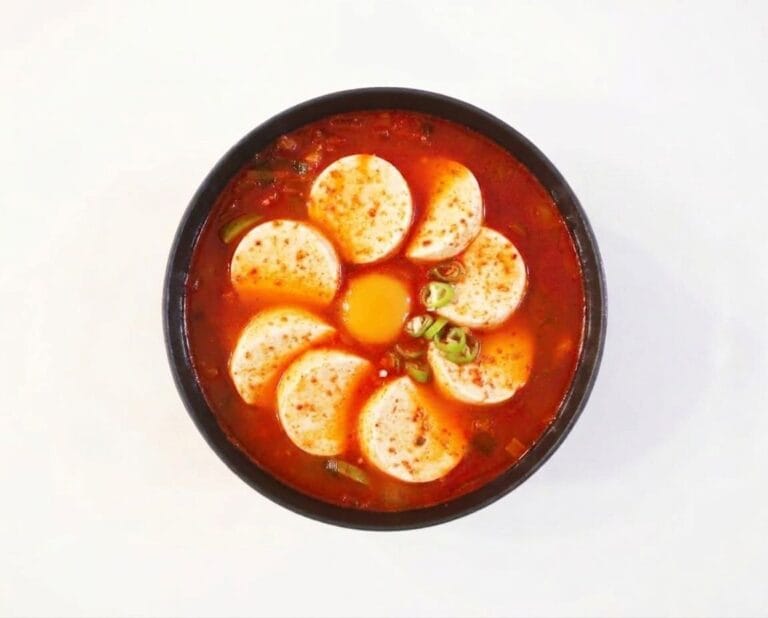
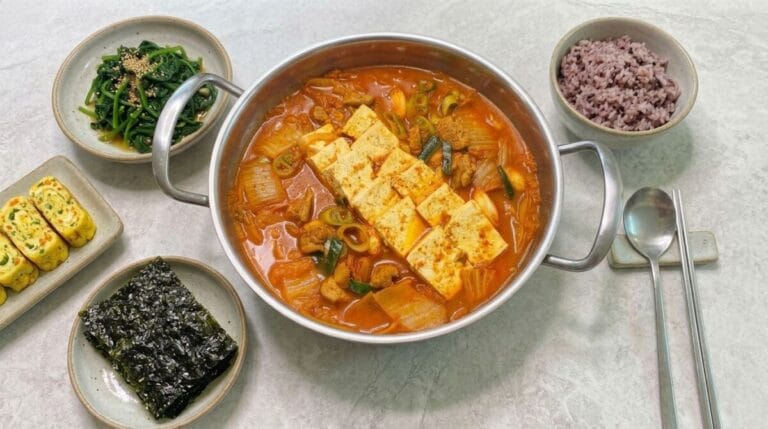
This dish shines as part of a full Korean table. Serve it cold alongside steamed rice and a bowl of Doenjang Jjigae for a complete, balanced meal — the mellow soybean stew is the perfect counterpoint to the sharp, spicy squid salad. It also works beautifully as an anju (drinking snack) alongside soju.
If you enjoyed the fresh, crunchy profile of this dish, you’ll also love our Crispy Bomdong Geotjeori (Korean Spring Cabbage Salad) — another quick, unfermented cabbage dish built on the same “toss right before serving” principle.
Why Squid Belongs in Your Regular Rotation
Beyond the flavor, squid is genuinely worth eating often. It’s a lean, high-protein seafood that’s naturally low in fat and calories, and it’s one of the richest food sources of taurine, an amino acid linked to cardiovascular and metabolic health. According to WebMD’s medically reviewed guide, a typical serving of squid delivers close to 18 grams of protein for just over 100 calories, along with meaningful amounts of vitamin B12 and omega-3 fatty acids. Cabbage adds fiber and volume without adding many calories, making this squid cabbage salad a genuinely light way to eat well.
Recipe Notes
- Don’t overcook the squid — 5 minutes is usually enough. Overcooked squid turns rubbery fast.
- Pat vegetables dry before mixing so the dressing doesn’t turn watery.
- Best eaten fresh, within the same day — the cabbage loses its crunch after resting too long in the dressing.
As of publishing, this recipe reflects standard home-cooking measurements used across Korean households and does not require specialty ingredients beyond gochujang and maesil-cheong, both widely available at Korean grocers or online.