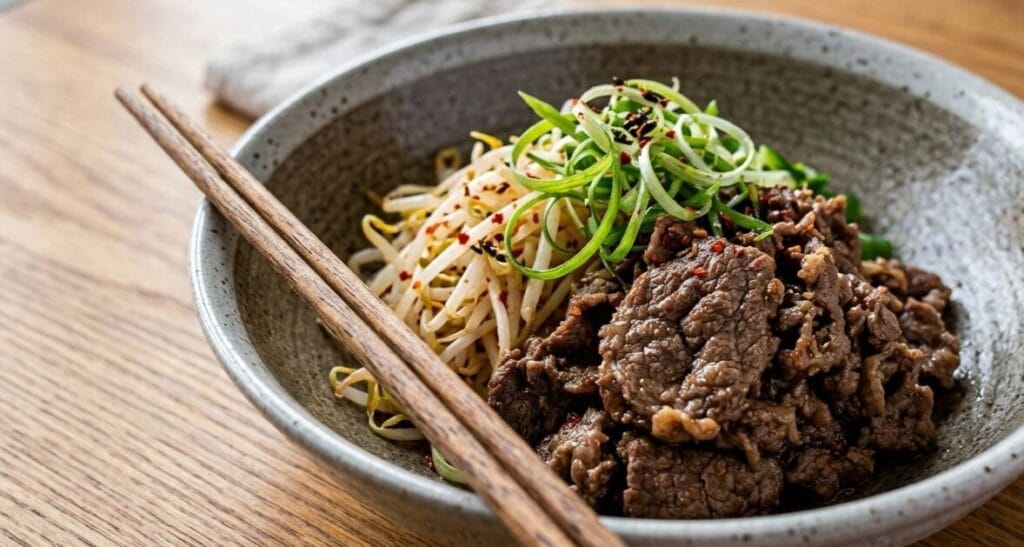
If you have ever tried Korean cuisine, chances are Beef Bulgogi was your delicious introduction. While the classic sweet-and-savory marinated beef is legendary, there is a modern, home-cooked variation that has captured the hearts of locals in Korea for its incredible texture and balanced nutrition: Sukju Bulgogi (Beef Bulgogi with Mung Bean Sprouts).
As a Korean local who grew up enjoying authentic home-cooked meals and has spent years replicating traditional family recipes, this dish is my ultimate weekday savior when I crave something rich yet refreshing.
By pairing thinly sliced, tender ribeye with a mountain of crisp, juicy mung bean sprouts, this dish transforms standard bulgogi into a dynamic stir-fry. The natural water content of the sprouts cuts through the richness of the beef, making every bite beautifully balanced. It is a spectacular, fast-cooking main course that brings the energy of a Korean restaurant directly to your dinner table.
The Local Expertise: The Secret to Velvet-Tender Beef
One common frustration for international home cooks when preparing beef bulgogi is ending up with meat that feels tough, chewy, or dry.
To achieve that signature melt-in-your-mouth texture, local home cooks rely on a few crucial preparation steps before the beef ever hits the pan:
1. Choose the Right Cut and Slice it Paper-Thin
Always look for shaved or thinly sliced ribeye, top sirloin, or brisket (often labeled as “Bulgogi meat” or “Shabu-Shabu meat” at Asian grocery stores). If you are slicing it yourself, freeze the block of beef for about 1 to 2 hours beforehand to make it firm enough to slice paper-thin against the grain.
2. Utilize Natural Fruit Enzymes
The secret to breaking down tough meat fibers in authentic Korean marinades isn’t chemicals—it is fruit juice.
- The Local Method: Blend a small amount of grated Korean pear (Bae) or a splash of grated sweet onion into your marinade base. These fruits contain natural enzymes that tenderize the beef beautifully while introducing a subtle, elegant sweetness that refined sugar alone cannot replicate.
The Master Class in Flash-Frying Sprouts
The invisible detail that separates a greasy, soggy pool of wilted meat from a beautifully stacked, crunchy Sukju Bulgogi comes down to precise temperature control. Mung bean sprouts are incredibly delicate and release water the second they encounter heat and salt.
- High Heat is Non-Negotiable: You must use a large, deep skillet or a wok over high heat. Cooking on medium or low heat will stew the meat in its own juices, turning the dish watery and boiling the sprouts instead of stir-frying them.
- The Two-Step Seeding: Cook the marinated beef first until it is about 80% done and caramelized on the edges. Only then do you toss in the massive mountain of fresh mung bean sprouts.
- The 60-Second Rule: Once the sprouts enter the pan, stir-fry vigorously for no more than 60 to 90 seconds, then turn off the heat immediately. The residual heat of the pan will finish softening the sprouts just enough to take away their raw edge while maintaining their signature, juicy crunch.
Ingredients & Substitute Shopping Guide for Foreigners
This comforting main course uses accessible staples that you can easily find at any local Asian grocery store or well-stocked supermarket.
Essential Ingredients
- Thinly Sliced Beef (Ribeye or Sirloin): 400g (approx. 14 oz).
- Fresh Mung Bean Sprouts (Sukju-namul / 숙주나물): 300g (approx. 10 oz), thoroughly rinsed.
- Green Onions / Scallions: 3 stalks, cut into 2-inch pieces.
- Cooking Oil: 1 tablespoon (with high smoke point, like avocado or canola oil).
The Classic Bulgogi Marinade
- Regular Soy Sauce: 4 tablespoons.
- Brown Sugar: 1.5 tablespoons.
- Mirin (Cooking Wine): 1 tablespoon.
- Minced Garlic: 1.5 tablespoons.
- Grated Korean Pear (or Sweet Onion): 2 tablespoons.
- Toasted Sesame Oil: 1 tablespoon.
- Toasted Sesame Seeds: 1 teaspoon.
- Black Pepper: A generous pinch.
💡 Expat Shopping Tip & Substitute: If you cannot find a traditional Korean pear, you can seamlessly substitute it with grated Asian pear, Fuji apple, or even 2 tablespoons of 100% pure apple juice. For the meat, if you want a budget-friendly or fat-trimmed alternative, thinly sliced pork loin or shaved chicken breast works beautifully with the exact same marinade and technique!
Step-by-Step Cooking Instructions
Step 1: Slice and Marinate
- Separate the thinly sliced beef layers and pat them dry with a paper towel to remove any excess moisture. Cut them into comfortable, bite-sized pieces.
- In a bowl, combine the soy sauce, brown sugar, Mirin, minced garlic, grated pear (or onion), sesame oil, sesame seeds, and black pepper. Whisk until the sugar dissolves.
- Add the beef to the marinade, massaging the liquid gently into the meat strands. Let it marinate in the refrigerator for at least 20 to 30 minutes (overnight is even better).
Step 2: Prep the Greens
- Rinse the mung bean sprouts in cold water, discarding any discolored stems, and drain them thoroughly. Crucial: Ensure they are dry before cooking; excess water causes the pan temperature to drop.
- Cut the green onions into 2-inch long matchsticks.
Step 3: Flash-Sear the Beef
- Heat your wok or large skillet over high heat until it is smoking hot, then add 1 tablespoon of cooking oil.
- Spread the marinated beef evenly across the hot surface. Let it sear without moving it for about 1 minute to get a beautiful caramelized char, then toss and stir-fry until the pink color is 80% gone.
Step 4: The 60-Second Sprout Finish
- Toss the green onions and the mountain of dry mung bean sprouts directly on top of the sizzling beef.
- Using tongs or two spatulas, toss everything vigorously together over high heat for exactly 1 minute. The sprouts will begin to soften slightly and absorb the savory glaze from the beef.
- Turn off the heat immediately. Transfer to a large serving plate, ensuring you pile the crunchy sprouts high on top of the savory meat. Garnish with an extra sprinkle of sesame seeds.
How to Eat and Pair Sukju Bulgogi
Sukju Bulgogi is an incredibly comforting family-style dish designed to be shared over a hot, traditional spread.
- The Aromatic Ssam (Greens Wrap): Grab a fresh lettuce leaf or, ideally, a Perilla Leaf (Kkaenip). Place a generous forkful of the savory beef and crunchy sprouts in the center, add a tiny dollop of Ssamjang (Korean seasoned soybean paste) or Gochujang, fold it into a packet, and enjoy it in one bite. The herbal brightness of the perilla leaf matches the sweet-savory beef flawlessly.
- The Ultimate Rice Bowl: Because the flash-fried sprouts and meat create a gorgeous, savory sauce at the bottom of the plate, spoon the leftovers and that delicious glaze directly over a hot bowl of white rice. Mix it together for an instant, deeply flavorful home-style rice bowl (Bulgogi Deopbap).
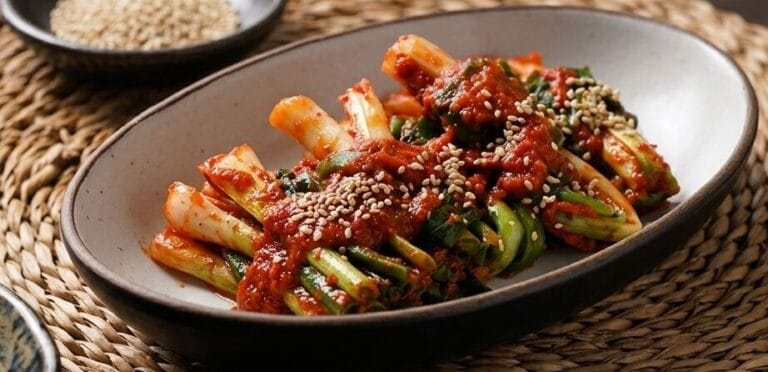
- The Perfect Cooling Side: Because Sukju Bulgogi is rich and savory, it pairs beautifully with something light and crisp on the side — a small bowl of Bomdong Geotjeori (Korean fresh cabbage salad) works wonderfully to cut through the richness.