Hongdae is famous for Korean barbecue, fried chicken, cafés, and late-night restaurants. But the neighborhood also has several Chinese restaurants that offer something beyond the familiar bowls of jajangmyeon and jjamppong.
One of the more distinctive names is Junghwa Bokchun (중화복춘), a Chinese restaurant known for elaborate shared dishes, regional Chinese cooking influences, and carefully presented seafood and meat specialties.
Rather than focusing exclusively on inexpensive noodles and fried rice, Junghwa Bokchun offers dishes such as cotton-battered cream shrimp, fish-fragrant eggplant, and lotus-leaf Dongpo pork.
These are meals worth considering when you want to sit down, order several dishes, and explore Chinese cuisine in Seoul beyond the usual takeaway-style options.
However, there is an important detail to understand before visiting: Junghwa Bokchun has different restaurant locations, and their menus, prices, and dining experiences are not necessarily identical.
This guide focuses on two locations near Hongdae: Junghwa Bokchun Yeonnam Park and Junghwa Bokchun Gold.
You’ll learn what makes each restaurant different, which dishes to consider, how much to budget, and what to check before visiting.
Junghwa Bokchun Hongdae: Quick Comparison
| Feature | Junghwa Bokchun Yeonnam Park | Junghwa Bokchun Gold |
|---|---|---|
| Korean Name | 중화복춘 연남공원 | 중화복춘 골드 |
| Area | Donggyo-dong / Yeonnam | Donggyo-dong / Hongdae |
| Main Focus | Chinese regional dishes and signature specialties | Premium Chinese dining and shared dishes |
| Signature Options | Cream shrimp, fish-fragrant eggplant, Dongpo pork | Dongpo pork, premium seafood, cold platters |
| Dining Style | Casual-to-upscale restaurant | More formal dining atmosphere |
| Best For | Couples and small groups | Celebrations and group meals |
| Nearest Station | Hongik University Station | Hongik University Station |
Important: Public sources currently show conflicting operating-status information for the Yeonnam Park location. Confirm that the restaurant is accepting customers before making a special trip.
Menu prices and operating hours may also change.
What Makes Junghwa Bokchun Different?
Korean-Chinese restaurants are a familiar part of everyday dining in South Korea.
Many serve dishes such as jajangmyeon, jjamppong, tangsuyuk, and fried rice.
These foods developed through Chinese culinary influences adapted to Korean tastes over generations.
Junghwa Bokchun takes a different approach.
Its menu includes dishes associated with regional Chinese cooking traditions, alongside familiar noodle and rice options.
Instead of concentrating mainly on inexpensive individual meals, the restaurant offers substantial dishes designed for sharing.
Examples include lotus-leaf Dongpo pork, fish-fragrant eggplant, and shrimp prepared with a distinctive cotton-like batter.
The restaurant’s presentation also differs from many neighborhood Chinese eateries.
Public customer reviews frequently mention its elaborate dishes, distinctive interior, and relatively high prices.
For international travelers, this makes Junghwa Bokchun a restaurant to consider for a longer meal rather than a quick, inexpensive lunch.
1. Junghwa Bokchun Yeonnam Park (중화복춘 연남공원)
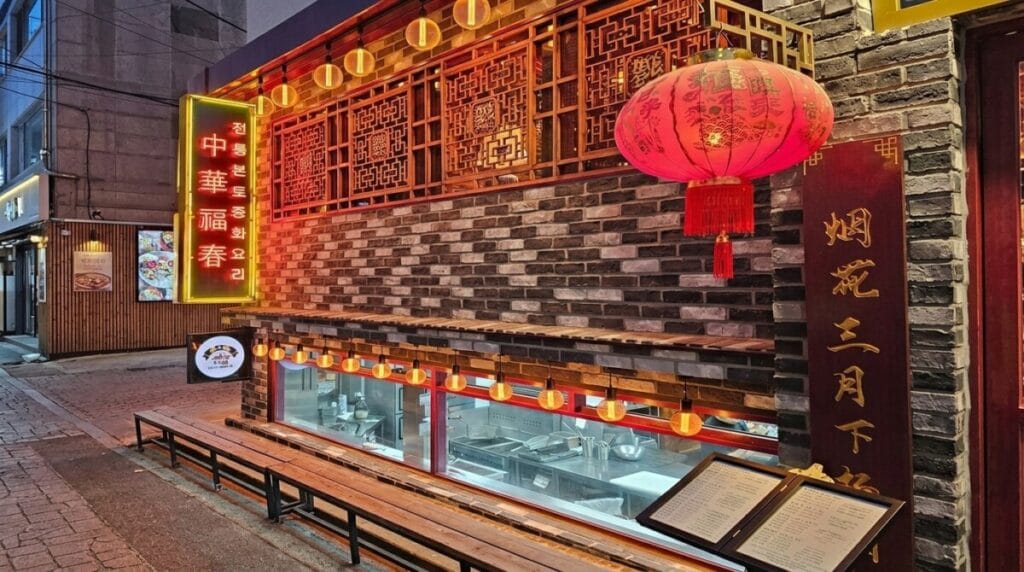
Best for: Travelers interested in signature Chinese dishes near Hongik University Station.
Address: 220-7 Donggyo-ro, Mapo-gu, Seoul
Korean address: 서울 마포구 동교로 220-7
Nearest station: Hongik University Station, Exit 3
Junghwa Bokchun Yeonnam Park is located near the Gyeongui Line Forest Park area, close to Hongik University Station.
The restaurant is known for a menu that goes beyond standard Korean-Chinese noodle dishes.
Public listings include seafood specialties, cold appetizers, meat dishes, and elaborate shared plates.
The restaurant has also been associated with a distinctive dining room and an open-kitchen presentation.
However, the current operating status requires confirmation because public sources are inconsistent.
What to Order at Junghwa Bokchun Yeonnam Park
Two dishes stand out as useful starting points for understanding the restaurant’s menu.
Cotton-Battered Cream Shrimp (목화솜 크림새우)
Published price: ₩45,000

Cream shrimp is one of Junghwa Bokchun’s recognizable signature dishes.
The Korean name mokhwasom means cotton, referring to the unusual appearance of the batter.
Unlike conventional lightly battered shrimp, this dish is associated with a puffed coating that creates a distinctive presentation.
The shrimp is paired with a creamy sauce.
Public reviews often describe the dish as rich and substantial.
For first-time visitors, it offers an example of how Junghwa Bokchun adapts familiar fried shrimp into a more elaborate restaurant specialty.
Who should order it?
Choose cream shrimp if you enjoy fried seafood and rich sauces.
Because it is a shared dish, it may be more practical for couples or groups than for someone ordering an individual meal.
The dish contains shellfish and may include dairy, egg, or other allergens. Ask the restaurant about ingredients if you have dietary restrictions.
Cotton-Battered Fish-Fragrant Eggplant (목화솜 어향가지)
Published price: ₩50,000
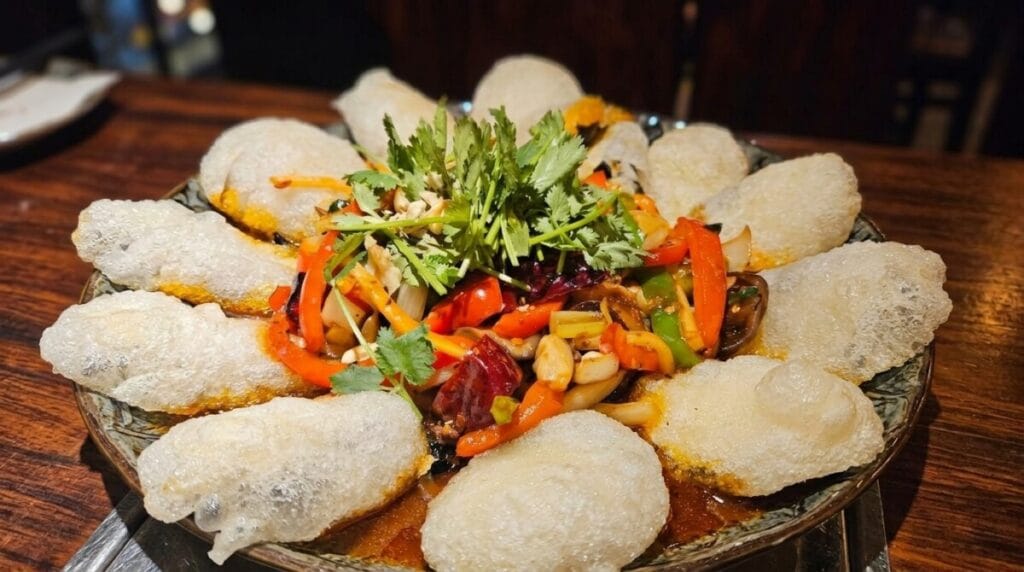
Fish-fragrant eggplant is another dish closely associated with the restaurant.
The term eohyang (어향) comes from the Chinese cooking style commonly known as fish-fragrant seasoning.
Despite its name, traditional fish-fragrant sauce does not necessarily contain fish.
Instead, the name refers to a particular combination of aromatic seasonings.
Common ingredients in fish-fragrant preparations include garlic, ginger, chili, and fermented seasonings.
At Junghwa Bokchun, the dish is presented as a substantial eggplant specialty.
The restaurant’s version is associated with a distinctive fried coating and a strongly seasoned sauce.
Who should order it?
This is worth considering if you enjoy eggplant and want to explore a Chinese dish beyond noodles or fried rice.
However, do not assume the dish is vegetarian.
Sauces and accompanying ingredients may contain meat, seafood, or other animal products.
Ask the staff before ordering if you avoid these ingredients.
Other Notable Dishes at Yeonnam Park
The restaurant’s published menu includes several additional specialties.
| Dish | Korean Name | Published Price |
|---|---|---|
| Lotus-Leaf Dongpo Pork | 쑤저우 연잎 동파육 | ₩85,000 |
| Bokchun Aged Duck | 복춘 숙성 보양 오리 | ₩40,000 |
| Bokchun Nine-Ingredient Cold Platter | 복춘 구품 량장피 | ₩80,000 |
| Bokchun Five-Spice Pork | 복춘특제 오향장육 | ₩70,000 |
These prices come from publicly available menu listings and are not guaranteed to match the current in-store menu.
For most first-time visitors, choosing one signature shared dish and one individual noodle or rice dish may be more manageable than ordering several expensive specialties.
2. Junghwa Bokchun Gold (중화복춘 골드)

Best for: Couples, families, and groups seeking a more formal Chinese dining experience.
Address: 42 World Cup buk-ro 6-gil, Mapo-gu, Seoul, 1F
Korean address: 서울 마포구 월드컵북로6길 42 1층
Nearest station: Hongik University Station
Junghwa Bokchun Gold is a separate location from the Yeonnam Park restaurant.
It is situated in Donggyo-dong, within walking distance of Hongik University Station.
Gold is generally presented as a more upscale dining option.
Public restaurant descriptions mention Chinese-inspired interiors, group seating, and premium shared dishes.
Its menu includes elaborate meat and seafood preparations.
This makes it more suitable for a planned meal than a quick stop for inexpensive noodles.
What to Order at Junghwa Bokchun Gold
Suzhou-Style Lotus-Leaf Dongpo Pork (쑤저우 정통 연잎 동파육)
Published price: ₩85,000
Dongpo pork is a Chinese dish associated with slow-cooked pork belly.
The meat is traditionally prepared with seasonings and cooked until tender.
Junghwa Bokchun Gold’s version is presented in a Suzhou-inspired style using lotus leaves.
The published menu description emphasizes an extended cooking process.
For travelers unfamiliar with Chinese regional dishes, Dongpo pork offers a very different experience from Korean grilled pork belly.
Instead of being grilled at the table, the pork is cooked slowly and served as a prepared dish.
Who should order it?
This is worth considering for a group that wants a substantial meat dish to share.
Because it is a premium menu item, check the portion size and price before ordering.
Traditional Jeongabok (본토 정통 전가복)
Published price: ₩110,000
Jeongabok is an elaborate Chinese-style dish associated with a combination of premium ingredients.
Junghwa Bokchun Gold’s menu describes a preparation involving seafood, vegetables, mushrooms, and other ingredients.
It is positioned as a premium shared dish rather than an everyday individual meal.
The high price makes it more appropriate for special occasions or group dining.
Travelers with seafood allergies should ask about the ingredients before ordering.
How Much Does Junghwa Bokchun Cost?
Junghwa Bokchun is considerably more expensive than many casual Korean-Chinese restaurants.
A neighborhood Chinese restaurant may offer relatively inexpensive individual noodle dishes.
At Junghwa Bokchun, signature shared dishes can cost tens of thousands of won, with some premium options exceeding ₩100,000.
Published Menu Price Comparison
| Dish | Branch | Published Price |
|---|---|---|
| Cotton-Battered Cream Shrimp | Yeonnam Park | ₩45,000 |
| Cotton-Battered Fish-Fragrant Eggplant | Yeonnam Park | ₩50,000 |
| Lotus-Leaf Dongpo Pork | Yeonnam Park | ₩85,000 |
| Lotus-Leaf Dongpo Pork | Gold | ₩85,000 |
| Traditional Jeongabok | Gold | ₩110,000 |
These are selected menu prices, not a complete price list.
The final cost depends on the number of dishes, drinks, and additional orders.
Budget Example for Two People
If two diners shared a ₩45,000 cream shrimp dish, the cost would be ₩22,500 per person before ordering anything else.
However, this does not necessarily represent a complete meal.
Adding noodles, rice, another shared dish, or drinks would increase the bill.
For a group of four, sharing several dishes may provide more variety.
Before ordering, ask whether the portion sizes are suitable for your group.
Which Junghwa Bokchun Branch Should You Choose?
The two locations serve different dining needs.
Choose Yeonnam Park if:
- You want to explore the restaurant’s signature dishes.
- You are already visiting Gyeongui Line Forest Park or Yeonnam-dong.
- You prefer a less formal setting than a premium group restaurant.
However, confirm its operating status before visiting.
Choose Gold if:
- You are planning a family gathering or celebration.
- You want a more formal dining atmosphere.
- You are interested in premium Chinese dishes designed for sharing.
- You are comfortable with a higher dining budget.
The most important difference is not simply which restaurant is better.
It is which location suits your budget, group size, and preferred dining style.
How to Get to Junghwa Bokchun
Both restaurants are located in the broader Hongdae area.
However, they have different addresses.
Junghwa Bokchun Yeonnam Park
Address: 220-7 Donggyo-ro, Mapo-gu, Seoul
Korean: 서울 마포구 동교로 220-7
Hongik University Station Exit 3 is a convenient starting point.
The restaurant is located near the Gyeongui Line Forest Park area.
Search for:
중화복춘 연남공원
Because some online listings use slightly different branch names, confirm the address before following directions.
Junghwa Bokchun Gold
Address: 42 World Cup buk-ro 6-gil, Mapo-gu, Seoul
Korean: 서울 마포구 월드컵북로6길 42
Hongik University Station Exits 1 and 2 are useful starting points.
Published walking estimates are approximately five to seven minutes, depending on the route.
Search for:
중화복춘 골드
Using the Korean business name can help you avoid navigating to the wrong branch.
Opening Hours and Reservations
Opening hours differ by location and may change.
Yeonnam Park
Some public restaurant listings show opening hours of approximately 11:30 AM to 10:00 PM.
Other sources provide different break times or closing-day information.
More importantly, public operating-status records are inconsistent.
Confirm that the restaurant is currently operating before visiting.
Gold
Recent public listings commonly show:
| Information | Published Schedule |
|---|---|
| Opening | 11:30 AM |
| Closing | 10:00 PM |
| Break Time | 3:30 PM–5:00 PM |
| Lunch Last Order | Approximately 2:40 PM |
| Dinner Last Order | Approximately 9:10 PM |
These hours should be treated as published guidance rather than guaranteed real-time information.
Holiday schedules may differ.
Should You Make a Reservation?
Reservations are mentioned in public listings for both locations.
For couples or groups planning a special meal, checking reservation options in advance is sensible.
However, booking availability has not been verified for a particular date or party size.
What Should First-Time Visitors Know?
1. Many Dishes Are Designed for Sharing
Unlike a typical noodle restaurant, Junghwa Bokchun offers numerous substantial shared dishes.
If you are dining with friends, ask about portion sizes before ordering.
One large dish may be enough to share as part of a meal with rice or noodles.
2. Not Every Dish Is Spicy
Chinese restaurant menus in Korea include a wide variety of flavors.
Some dishes emphasize chili, while others focus on savory sauces, aromatic seasonings, or creamy textures.
If you are sensitive to spicy food, ask the staff before ordering.
3. The Restaurant Is Not a Budget Noodle Shop
Junghwa Bokchun’s signature dishes are priced above those at many neighborhood Chinese restaurants.
If your priority is an inexpensive bowl of jajangmyeon, another restaurant may be more suitable.
If you want to try several elaborate Chinese dishes, Junghwa Bokchun may better match your plans.
4. Check Ingredients if You Have Allergies
Many Chinese dishes contain combinations of seafood, soy-based sauces, wheat, nuts, eggs, or other ingredients.
The exact recipes at Junghwa Bokchun may differ from standard versions.
Ask the restaurant directly about allergens and cross-contact.
Do not assume that fish-fragrant eggplant is seafood-free or vegetarian simply because of its name.
Useful Korean Ordering Phrases
| Korean | Pronunciation | Meaning |
|---|---|---|
| 크림새우 | Keurim saeu | Cream shrimp |
| 어향가지 | Eohyang gaji | Fish-fragrant eggplant |
| 동파육 | Dongpayuk | Dongpo pork |
| 짬뽕 | Jjamppong | Spicy seafood noodle soup |
| 짜장면 | Jjajangmyeon | Black bean noodles |
| 볶음밥 | Bokkeumbap | Fried rice |
| 예약 | Yeyak | Reservation |
| 맵다 | Maepda | Spicy |
| 나눠 먹다 | Nanwo meokda | To share food |
Useful Phrases
“Igeo myeot myeong-i meogeul su isseoyo?”
이거 몇 명이 먹을 수 있어요?
“How many people can share this dish?”
“Keulim saeu hana juseyo.”
크림새우 하나 주세요.
“One order of cream shrimp, please.”
“Igeo mani maewoyo?”
이거 많이 매워요?
“Is this very spicy?”
“Yeyak hal su isseoyo?”
예약할 수 있어요?
“Can I make a reservation?”
These expressions can be useful at other Chinese restaurants in Korea as well.
Frequently Asked Questions
Is Junghwa Bokchun a Korean or Chinese restaurant?
Junghwa Bokchun is a Chinese restaurant located in Seoul.
Its menu includes dishes influenced by regional Chinese cooking traditions, alongside foods familiar to Korean diners.
Is Junghwa Bokchun expensive?
Its signature shared dishes are relatively expensive compared with ordinary neighborhood Chinese restaurants.
Published prices for selected specialties range from approximately ₩45,000 to more than ₩100,000.
Is Junghwa Bokchun suitable for solo travelers?
Individual noodle and rice dishes may be more practical for solo diners.
However, many of the restaurant’s signature specialties are intended for sharing.
Check the menu and operating status before visiting.
What is the difference between Yeonnam Park and Gold?
Yeonnam Park is associated with the original restaurant’s signature dishes and a comparatively relaxed atmosphere.
Gold is positioned as a more formal dining option with premium shared dishes.
Their menus and prices should not be assumed to be identical.
Is Junghwa Bokchun near Hongik University Station?
Yes.
Both locations are in the broader Hongdae area.
Yeonnam Park is near Exit 3, while Gold is more conveniently approached from the Exit 1 or 2 side.
Do I need a reservation?
Reservations may be available, but policies can vary.
Checking in advance is advisable for larger groups or special occasions.
More Restaurants to Explore Near Hongdae
If you are exploring the Hongdae food scene, there are several other restaurants worth considering.
For a broader selection of casual meals, our guide to five restaurants near Hongdae Station introduces Korean, Chinese, Thai, and Japanese-style dishes.
If you are particularly interested in Chinese cuisine, our Michelin Bib Gourmand restaurants near Hongdae guide includes Jin Jin, a restaurant known for Chinese dishes designed for sharing.
For a completely different Korean dining experience, see our Jeil Gopchang Hongdae guide, which explains Korean grilled beef intestines and ordering tips.
And if you want dessert after dinner, our Hongdae bakery and dessert café guide introduces several options in the surrounding neighborhoods.
Final Thoughts
Junghwa Bokchun offers a different dining experience from the inexpensive Chinese noodle restaurants commonly found throughout Seoul.
Its signature dishes, including cotton-battered cream shrimp, fish-fragrant eggplant, and lotus-leaf Dongpo pork, make it particularly interesting for travelers who want to explore elaborate Chinese cuisine.
The Yeonnam Park and Gold locations have different atmospheres and menu selections, so choosing the right branch matters.
For first-time visitors, cream shrimp or fish-fragrant eggplant provides a useful introduction to the restaurant’s distinctive style.
For a more formal meal, Junghwa Bokchun Gold offers premium shared dishes suitable for groups and special occasions.
Before visiting, confirm the correct branch, current menu prices, opening hours, and operating status.
That preparation is especially important for Yeonnam Park, where publicly available business-status information is currently inconsistent.