Hiking Bukhansan is one of the most rewarding outdoor experiences in Seoul. But if you’re planning to climb Baegundae Peak, it’s worth thinking about where to eat before setting off and where to enjoy a proper meal afterward.
The Ui-dong neighborhood, near Bukhansan Ui Station, is a convenient starting point for hikers approaching the mountain from the eastern side.
Along the mountain access road, you’ll find small Korean restaurants serving everything from simple gimbap to hearty tofu dishes.
For many Korean hikers, sharing a meal after descending is part of the mountain experience. A warm stew or a plate of Korean food can be a welcome reward after several hours on rocky trails.
This guide focuses on three restaurants with different strengths: Eunjune Restaurant for pre-hike gimbap, Woorikong Sundubu for traditional Korean food after hiking, and Miseong Banjeom for Korean-Chinese cuisine.
The first two are in Ui-dong. The third is farther south, making it a better option if you’re willing to travel after your hike.
1. Eunjune Restaurant (은주네식당) — Gimbap Before Hiking Bukhansan
Best for: A quick breakfast, inexpensive Korean food, or gimbap before hiking.
Address: 25 Samyang-ro 173-gil, Gangbuk-gu, Seoul
Korean address: 서울 강북구 삼양로173길 25
Nearest subway: Bukhansan Ui Station (북한산우이역), Ui-Sinseol Line
A Small Korean Restaurant on the Way to Bukhansan
If you’re planning to climb Baegundae Peak, eating something before starting can make your morning more comfortable.
Eunjune Restaurant is a small Korean eatery along the road leading from Bukhansan Ui Station toward the mountain.
It isn’t a fashionable brunch café or an elaborate dining destination. Its appeal is much simpler: affordable Korean meals and gimbap in a location that makes sense for hikers.
What caught my attention when comparing local restaurant reviews was how often the side dishes mattered.
One visitor described stopping here before hiking and ordering a Korean set meal. Although the restaurant also served gimbap, the reviewer was particularly impressed by the vegetables, seasoned side dishes, and kimchi.
Another memorable observation was that the gimbap became especially enjoyable when eaten with the accompanying kimchi.
That’s a useful distinction.
You don’t necessarily need an expensive or elaborate breakfast before hiking. Sometimes a simple rice roll and well-prepared side dishes are enough.
What to Order
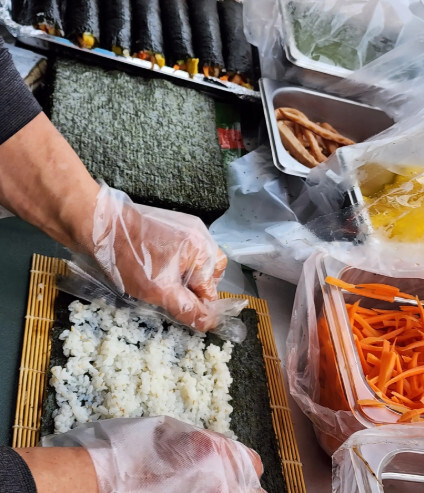
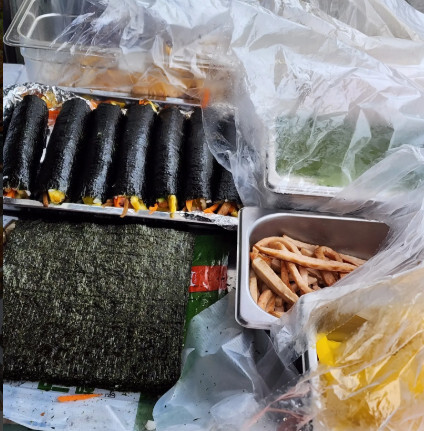
Gimbap (김밥) — ₩4,000
Gimbap is my first recommendation for hikers visiting Eunjune Restaurant.
This familiar Korean rice roll is made with rice and fillings wrapped in dried seaweed.
A customer review described the restaurant’s version as containing egg, cucumber, ham, fish cake, and imitation crab.
At the supplied price of ₩4,000, it’s an affordable option for travelers who want a light meal before hiking.
It’s also convenient to carry, although takeaway availability should be confirmed.
If you plan to eat it later on the mountain, keep it properly stored and avoid leaving it in warm conditions for extended periods.
2. Spicy Stir-Fried Pork (제육볶음)
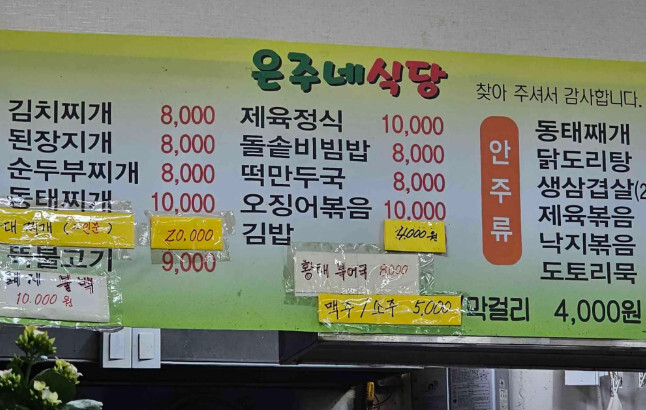
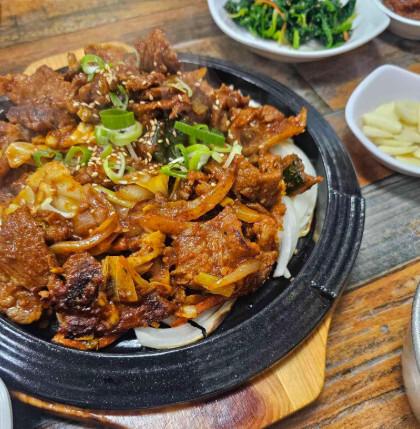
jeyuk bokkeum ₩10,000
If you’d prefer a more substantial Korean meal before hiking, consider jeyuk bokkeum, provided it is available on the current menu.
This popular Korean dish features pork stir-fried in a savory, typically spicy sauce. It’s a good choice for travelers who enjoy Korean meat dishes and want something more filling than gimbap.
For international visitors unfamiliar with Korean food, jeyuk bokkeum offers an introduction to the bold, spicy flavors commonly found in Korean home-style cooking.
The restaurant’s current availability and price for this dish have not been independently confirmed.
What to Know Before Visiting
Eunjune Restaurant is located along Samyang-ro 173-gil, the road used by travelers approaching Bukhansan from the Ui-dong side.
However, it is important to understand that the restaurant is not at the official Baegundae trailhead.
After eating, you’ll still need to continue uphill toward Baegundae Visitor Center.
One visitor also warned that the nearby road is narrow and unsuitable for casually stopping a vehicle.
If you’re arriving by subway, this is less of a concern.
Important: Reliable morning opening hours could not be independently confirmed. If you plan to buy gimbap before an early hike, check whether the restaurant will be open.
My recommendation: Choose Eunjune Restaurant if you want an inexpensive meal before hiking. The gimbap is the most practical option, while the soybean paste stew is worth considering if you prefer something warm.
2. Woorikong Sundubu (우리콩순두부) — Korean Tofu Dishes After Hiking
Best for: A comforting Korean meal after climbing Bukhansan, especially for couples or small groups.
Address: 46 Samyang-ro 173-gil, Gangbuk-gu, Seoul
Korean address: 서울 강북구 삼양로173길 46
Nearest subway: Bukhansan Ui Station (북한산우이역), Ui-Sinseol Line
Reported opening hours: 9:30 a.m.–7:00 p.m.
Reported last order: 6:30 p.m.
Opening hours and last-order times should be reconfirmed before visiting.
Why Woorikong Sundubu Is Worth Considering
After climbing Baegundae, a warm Korean meal can be particularly appealing.
Woorikong Sundubu specializes in dishes made with soybeans and tofu, making it a natural choice for hikers returning toward Bukhansan Ui Station.
The restaurant is also featured in Seoul’s official hiking tourism materials, which introduce its soybean-based dishes and use of Paju Jangdan soybeans.
Unlike restaurants that offer a wide variety of unrelated dishes, Woorikong Sundubu has a clear culinary focus.
Its menu includes tofu hot pot, soybean pulp stew, soft tofu dishes, and other familiar Korean meals.
What makes it particularly interesting is the combination of traditional soybean dishes and options for travelers who prefer meat.
One detailed customer review praised the tofu hot pot for its exceptionally soft tofu and satisfying side dishes.
The reviewer also ordered spicy stir-fried pork and grilled dried pollock, describing the overall meal positively while noting that the fish required some care because of its bones.
These are individual customer impressions, but they offer useful insight into the restaurant’s appeal.
For this guide, I would focus on three dishes that suit different types of travelers.
What to Order
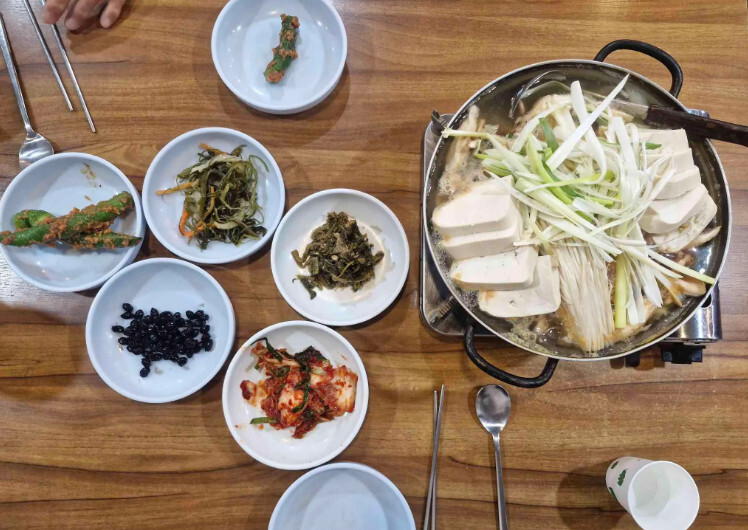
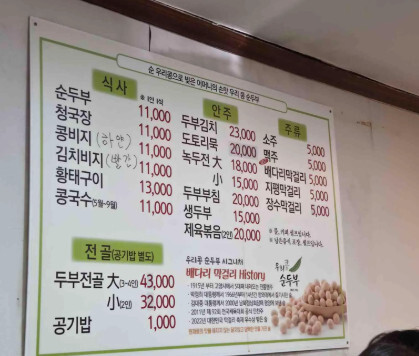
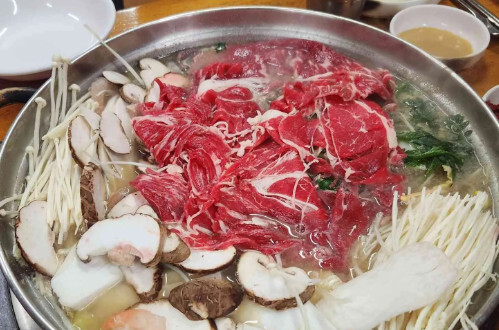
1. Tofu Hot Pot (두부전골) — ₩30,000 for Two
If you’re visiting with a hiking partner, tofu hot pot is my first recommendation.
Made with Korean-grown soybeans, the restaurant’s tofu hot pot is known for its soft tofu and mild, savory flavors.
A customer who ordered the dish particularly praised the tofu’s delicate texture and the accompanying Korean side dishes.
Unlike an individual bowl of stew, tofu hot pot is designed for sharing.
At the supplied price of ₩30,000 for two people, the cost works out to approximately ₩15,000 per person when shared equally.
For two hikers who want to relax over a substantial Korean meal after descending Bukhansan, this is an appealing option.
2. Tofu with Stir-Fried Kimchi (두부김치) — ₩23,000
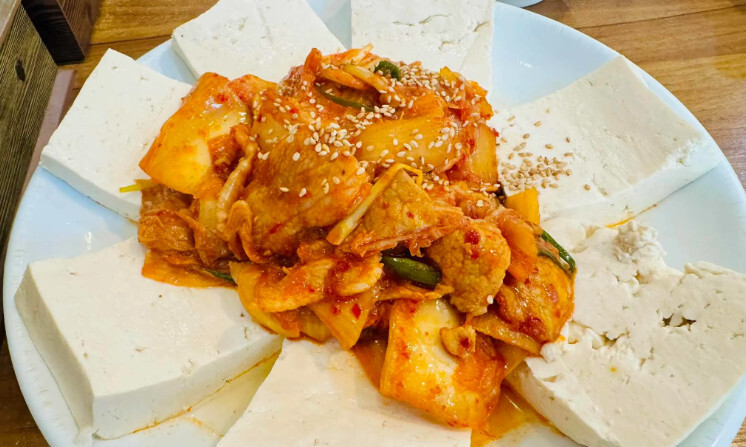
If you’re interested in trying a classic Korean dish, consider dubu kimchi.
This dish typically combines sliced tofu with seasoned or stir-fried kimchi, creating a contrast between the tofu’s mild flavor and the kimchi’s tangy, spicy taste.
It’s a particularly interesting option for international visitors who want to experience how tofu and fermented vegetables are enjoyed together in Korean cuisine.
At ₩23,000, it’s worth checking the serving size before ordering, especially if you’re dining alone.
3. Mung Bean Pancake (녹두전) — ₩18,000
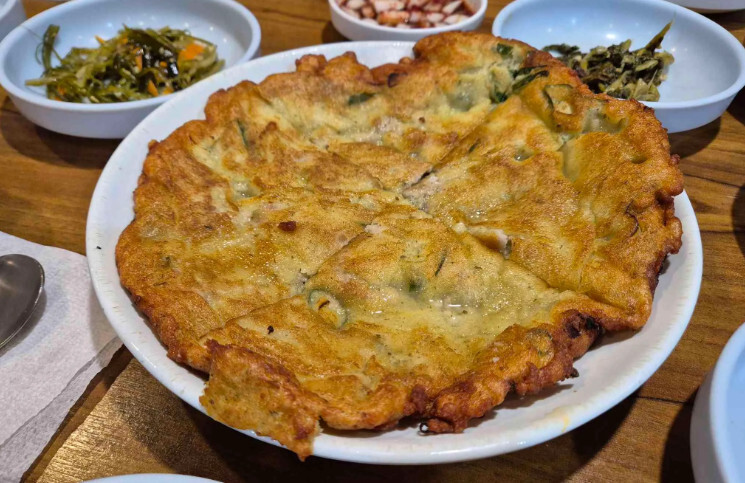
For travelers interested in Korean traditional pancakes, nokdujeon is worth considering.
Made primarily from ground mung beans, this savory pancake is cooked until golden on the outside while remaining tender inside.
Unlike sweet Western-style pancakes, Korean mung bean pancakes are savory and commonly enjoyed as a shared dish.
It’s a good option for hikers who want to try a traditional Korean side dish alongside their main meal.
4. Spicy Stir-Fried Pork (제육볶음) — ₩20,000
If you prefer meat to tofu, jeyuk bokkeum is a satisfying alternative.
This popular Korean dish features pork stir-fried in a savory, typically spicy sauce.
It offers a stronger, spicier flavor than the restaurant’s mild tofu-based dishes, making it a useful choice for travelers who enjoy Korean meat dishes.
If you’re visiting with a group, combining tofu hot pot with spicy stir-fried pork can provide a variety of flavors. However, check the portion sizes before ordering multiple dishes.
Good to Know Before Visiting
Woorikong Sundubu is located in the same Ui-dong dining area as Eunjune Restaurant.
This makes it particularly convenient for travelers returning toward Bukhansan Ui Station after hiking.
The supplied operating schedule is 9:30 a.m. to 7:00 p.m., with last orders at 6:30 p.m.
However, the restaurant may close earlier when ingredients sell out.
If you’re planning a late descent, it’s better not to assume the restaurant will still be serving food.
Another consideration is dietary restrictions.
Although tofu is made from soybeans, Korean stews may contain seafood, meat, or other animal-based ingredients.
Vegetarian travelers should confirm the ingredients before ordering.
My recommendation: For two people, choose the tofu hot pot. If you’re hiking alone, soybean pulp stew is a more practical option. If you’re traveling with someone who prefers meat, spicy stir-fried pork adds another choice.
Among the three restaurants in this guide, Woorikong Sundubu is my first recommendation for experiencing traditional Korean food after hiking Bukhansan.
3. Miseong Banjeom (미성반점) — Korean-Chinese Food After Hiking
Best for: Travelers who want Korean-Chinese noodles or crispy fried pork after hiking.
Address: 37, 4.19-ro, Gangbuk-gu, Seoul, 1st Floor
Korean address: 서울 강북구 4.19로 37 1층
Nearest subway: April 19th National Cemetery Station (4·19민주묘지역), Ui-Sinseol Line
Reported opening hours: 11:30 a.m.–9:00 p.m.
Reported break time: 3:00–5:00 p.m.
Reported last order: 8:00 p.m.
Check the current operating schedule before visiting.
A Different Option After Bukhansan
Traditional Korean food is a natural choice after hiking, but it isn’t the only option.
If you’re craving noodles, seafood, or crispy fried pork, Miseong Banjeom offers a different dining experience.
This Korean-Chinese restaurant is located in Suyu-dong, near April 19th National Cemetery Station.
It’s farther from the Baegundae approach than the first two restaurants, so you’ll need to make an additional trip after finishing your hike.
That extra distance is worth considering before choosing it.
The restaurant introduces its chef as having previous cooking experience associated with the Blue House and the presidential office.
While that background is part of the restaurant’s published identity, the food itself is the more useful reason to consider visiting.
Customer reviews particularly highlight the restaurant’s jjamppong and tangsuyuk.
One visitor described the jjamppong broth as lighter in color than expected, with a clean and balanced flavor.
The same reviewer praised the tangsuyuk for its thin, crispy coating and substantial pork filling.
For travelers who enjoy Korean-Chinese cuisine, these two dishes are worth considering.
What to Order
1. President’s Nourishing Jjamppong (대통령보양짬뽕) — ₩22,000
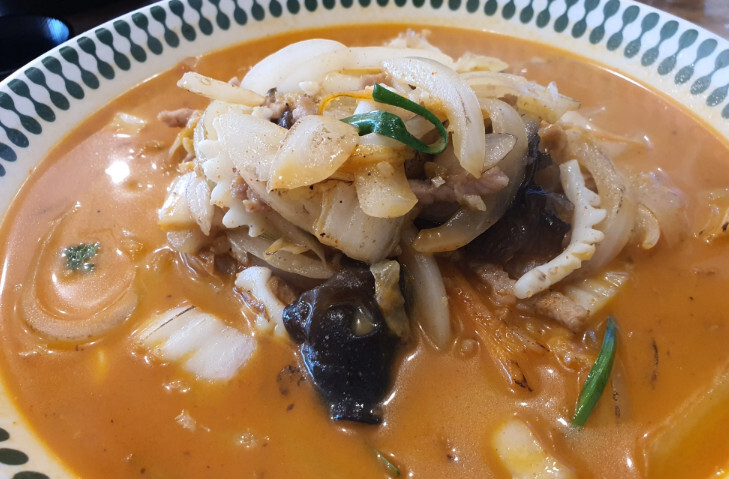
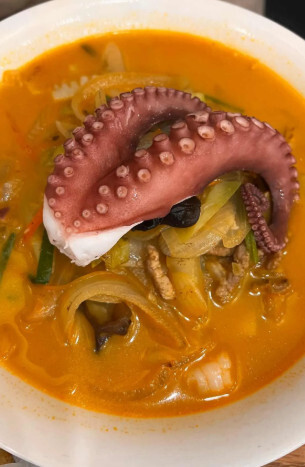
If you want to try one of the restaurant’s distinctive menu items, consider the President’s Nourishing Jjamppong.
Jjamppong is a Korean-Chinese noodle soup typically prepared with vegetables and seafood or meat in a seasoned broth.
This premium menu item is offered in noodle and rice versions, according to the supplied menu information.
At ₩22,000, it is considerably more expensive than an ordinary bowl of Korean-Chinese noodles.
That makes it a more deliberate dining choice rather than a quick budget meal.
A customer review praised the restaurant’s jjamppong for its clean-tasting broth and combination of ingredients, although that review does not establish that the customer ordered this specific premium version.
If you’re unfamiliar with Korean-Chinese food, ask about the ingredients and spice level before ordering.
2. Aged Pork Tangsuyuk (숙성등심탕수육) — ₩22,000
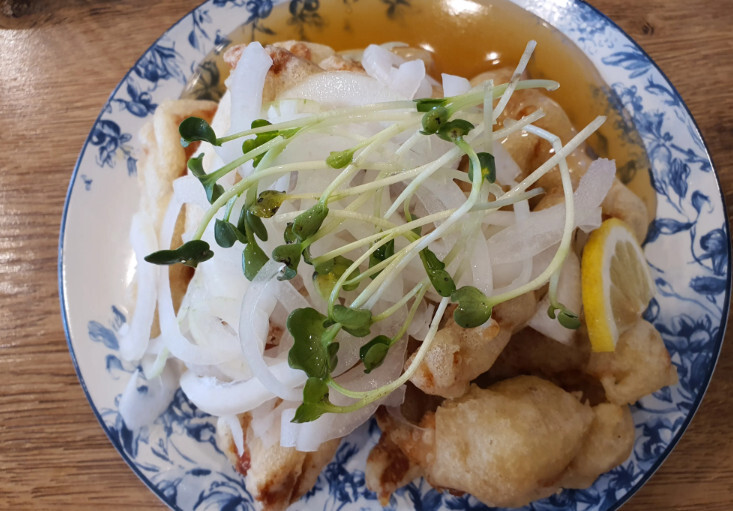
Tangsuyuk is one of Korea’s most recognizable Chinese-inspired dishes.
It consists of battered and fried pieces of meat, usually served with a sweet-and-sour sauce.
At Miseong Banjeom, a customer review specifically praised the tangsuyuk’s thin, crispy coating and generous pork filling.
The restaurant lists its aged pork tangsuyuk at ₩22,000.
For two travelers, this could be an appealing dish to share alongside noodles or fried rice.
If you’re dining alone, check the portion size before ordering.
Good to Know Before Visiting
Unlike Eunjune Restaurant and Woorikong Sundubu, Miseong Banjeom isn’t in the immediate Bukhansan Ui Station dining area.
It’s closer to April 19th National Cemetery Station.
If you’re returning from Baegundae via Ui-dong, you can travel south on the Ui-Sinseol Line and continue toward the restaurant.
The supplied business information lists an afternoon break from 3:00 to 5:00 p.m.
This is particularly relevant for hikers.
If you finish your descent in the middle of the afternoon, you may arrive during the restaurant’s break time.
Plan accordingly, and verify the schedule before making a special trip.
My recommendation: Choose Miseong Banjeom if you’re interested in Korean-Chinese food and don’t mind traveling beyond Ui-dong.
If your priority is finding a restaurant immediately after descending Bukhansan, Woorikong Sundubu is the more convenient option.
Where to Eat Before and After Hiking Baegundae Peak
The best restaurant depends on your hiking schedule, appetite, and where you finish your descent.
Before Hiking: Eunjune Restaurant
If you’re starting from Bukhansan Ui Station, Eunjune Restaurant is worth considering for a simple meal.
Its ₩4,000 gimbap is particularly practical for hikers who don’t want a heavy breakfast.
However, because reliable morning opening hours are unavailable, you should confirm that the restaurant will be open before relying on it.
After Hiking: Woorikong Sundubu
For hikers returning toward Ui-dong, Woorikong Sundubu is the most convenient post-hike choice among these three.
Its tofu hot pot is particularly suitable for two people, while soybean pulp stew offers a more affordable individual meal.
The restaurant’s focus on soybean dishes also makes it an interesting introduction to traditional Korean food culture.
If You Want Something Different: Miseong Banjeom
If you’re willing to travel farther, Miseong Banjeom offers Korean-Chinese cuisine instead of traditional Korean stews.
Its tangsuyuk is worth considering for travelers who enjoy crispy fried pork.
Just remember that the restaurant is near April 19th National Cemetery Station rather than Bukhansan Ui Station.
How These Restaurants Fit Into Your Bukhansan Hiking Route
If you’re planning to climb Baegundae Peak, understanding the difference between the subway station and the official trailhead is important.
Bukhansan Ui Station is a convenient public transportation starting point for hikers approaching the mountain from Ui-dong.
However, the official Baegundae summit trail begins farther uphill at Baegundae Visitor Center (백운대탐방지원센터).
From the visitor center, the route passes through Harujae Pass and continues toward Baegundae Peak.
The official summit trail is approximately 1.9 kilometers one way, with an estimated hiking time of around 1 hour and 30 minutes.
The final approach includes steep granite sections and exposed terrain, so it is not an easy beginner walk.
Travelers should allow additional time for reaching the visitor center, resting, and descending.
For official trail conditions and access notices, check the Korea National Park Service.
A Practical Food and Hiking Plan
For travelers approaching Baegundae from Ui-dong, I suggest the following sequence:
- Arrive at Bukhansan Ui Station.
- Stop at Eunjune Restaurant for breakfast or gimbap if it is open.
- Continue toward Baegundae Visitor Center.
- Hike to Baegundae Peak and return along the designated route.
- Descend toward Ui-dong and enjoy a Korean meal at Woorikong Sundubu.
If you’d rather eat Korean-Chinese food, continue toward April 19th National Cemetery Station and consider Miseong Banjeom instead.
This plan assumes you’re returning to the Ui-dong side of the mountain.
If you’re descending toward another Bukhansan entrance, such as the western side of the national park, these restaurants may no longer be convenient.
A Little About Korean Hiking Food Culture
Hiking in Korea is often more than a physical activity.
For many people, it is also an opportunity to spend time with friends, enjoy nature, and share a meal afterward.
Restaurants near popular mountains frequently serve familiar Korean dishes such as tofu, stews, pancakes, and grilled meat.
These foods are not exclusive to hikers, but they fit naturally into the social experience of spending a day in the mountains.
Ui-dong offers a chance to experience this side of Korean hiking culture.
You can start the morning with inexpensive gimbap, spend several hours exploring Bukhansan, and finish with a traditional Korean meal.
Of course, you don’t need to follow a particular tradition.
If a bowl of Korean-Chinese noodles sounds more appealing than tofu stew, that’s a perfectly reasonable way to end your day.
Frequently Asked Questions
Where can I buy gimbap before hiking Bukhansan?
Eunjune Restaurant in Ui-dong sells gimbap for ₩4,000 according to the supplied menu information.
It is located along the road leading toward Bukhansan from Bukhansan Ui Station.
However, confirm opening hours and takeaway availability before visiting.
Which restaurant is best after hiking Baegundae Peak?
If you’re descending toward Bukhansan Ui Station, Woorikong Sundubu is my preferred option among these three.
Its tofu hot pot is suitable for two people, while soybean pulp stew is a practical choice for solo travelers.
Is there a restaurant for solo hikers?
Yes.
Eunjune Restaurant offers inexpensive individual meals, including gimbap and soybean paste stew.
Woorikong Sundubu also offers individual dishes such as soybean pulp stew.
For Miseong Banjeom, an individual noodle or rice dish may be more practical than ordering a shared plate of tangsuyuk.
Are these restaurants close to Bukhansan Ui Station?
Eunjune Restaurant and Woorikong Sundubu are both in the Ui-dong area near the mountain approach.
Miseong Banjeom is farther south, near April 19th National Cemetery Station.
It requires additional travel and should not be confused with restaurants directly beside the Baegundae access road.
Quick Comparison: Which Restaurant Should You Choose?
| Restaurant | Best For | Recommended Dish | Price |
|---|---|---|---|
| Eunjune Restaurant | Breakfast or food before hiking | Gimbap | ₩4,000 |
| Woorikong Sundubu | A traditional Korean meal after hiking | Tofu hot pot | ₩30,000 for two |
| Miseong Banjeom | Korean-Chinese food after hiking | Aged pork tangsuyuk | ₩22,000 |
Prices reflect supplied menu information and may change.
If you’re hiking alone, Eunjune Restaurant offers the most economical option for a simple meal before climbing.
For two people returning from Baegundae, Woorikong Sundubu is my preferred recommendation among these three.
If you’re craving noodles or crispy fried pork instead of traditional Korean stew, Miseong Banjeom offers something different.
Final Thoughts
If you’re planning to hike Bukhansan from the Ui-dong side, choosing where to eat can make your day more enjoyable.
Eunjune Restaurant is a practical option for inexpensive gimbap or a simple Korean meal before hiking.
Woorikong Sundubu is my first recommendation for a traditional meal after descending, especially if you’re interested in tofu hot pot, soybean pulp stew, or spicy stir-fried pork.
Miseong Banjeom offers an alternative for travelers who prefer Korean-Chinese food and are willing to travel a little farther.
Rather than trying to visit all three, choose the restaurant that fits your schedule and appetite.
A good meal doesn’t need to be complicated. Sometimes it’s simply the right way to finish a memorable day on Bukhansan.