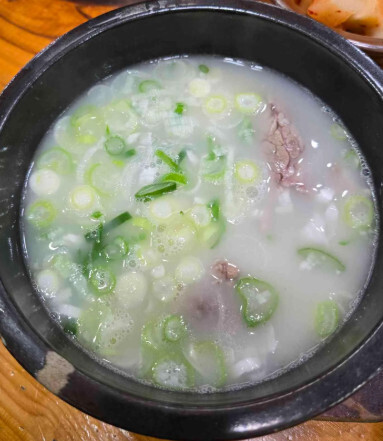
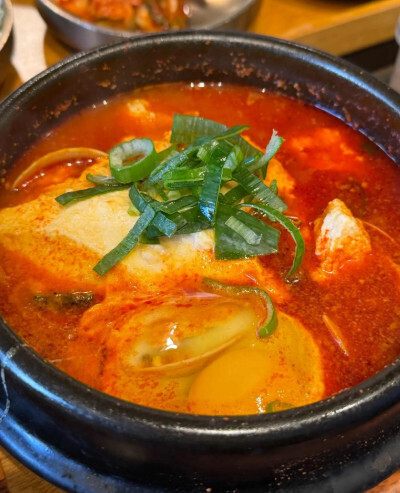
Hiking Gwanaksan is one of the most enjoyable ways to explore southern Seoul beyond its busy shopping streets and popular tourist attractions.
With forest trails, mountain streams, rocky slopes, and panoramic views, Gwanaksan offers a rewarding outdoor experience for travelers who want to discover a different side of the city.
But after spending several hours on the mountain, there’s another experience worth looking forward to: enjoying a satisfying Korean meal.
If you’re hiking from Gwanaksan Station on the Sillim Line, the surrounding Sillim-dong area offers several opportunities to explore traditional Korean food.
Two restaurants I’ve personally visited are Kongdujubaek Gwanak Branch (콩두주백 관악직영점) and Woori Seolleongtang (우리설렁탕).
Both are located on Sillim-ro, not far from each other, and each offers a different Korean dining experience.
Kongdujubaek specializes in tofu-based dishes, including seafood soft tofu stew, soybean pulp stew, and a set meal featuring several preparations of tofu.
Woori Seolleongtang serves traditional Korean beef soup. It’s a restaurant I find myself returning to during winter, particularly because I enjoy both the seolleongtang and the kimchi.
Rather than recommending restaurants simply because they are popular, I want to share what I’ve actually enjoyed at these two places and explain which dishes I would recommend to international visitors.
1. Kongdujubaek Gwanak Branch (콩두주백 관악직영점)
A Korean Tofu Restaurant Worth Visiting with Family or Friends
Korean name: 콩두주백 관악직영점
Address: 184 Sillim-ro, Gwanak-gu, Seoul, 1F
Korean address: 서울특별시 관악구 신림로 184, 1층
Cuisine: Traditional Korean tofu dishes
Best for: Families, couples, and small groups
My top recommendation: Kongdu Best Set Meal
When international visitors think about Korean food, dishes such as Korean barbecue, bibimbap, and kimchi stew often come to mind first.
However, Korean cuisine also has a long tradition of preparing dishes with soybeans and tofu.
Kongdujubaek Gwanak Branch is a restaurant where travelers can explore several of those preparations in one place.
I’ve visited this restaurant and enjoyed a variety of its tofu dishes.
The soybean pulp stew was good, the seafood soft tofu stew was enjoyable, and I also liked the tofu meatballs.
But the dish that made the strongest impression on me was the Kongdu Best Set Meal (콩두베스트정식).
I particularly enjoyed the combination of different tofu dishes and the pot rice.
If you’re visiting with family or friends, this is the menu I would recommend considering first.
What Makes Kongdujubaek Different?
One of the things I appreciate about Kongdujubaek is that tofu isn’t treated as just one ingredient in a soup.
Instead, the restaurant offers different ways to enjoy it.
You can try tofu in a hot pot, paired with kimchi, grilled, or prepared as tofu meatballs.
These dishes offer different textures and flavors, even though they share tofu as a main ingredient.
For international visitors unfamiliar with Korean tofu cuisine, this variety makes the restaurant particularly interesting.
It also makes Kongdujubaek a practical choice for families.
Rather than ordering several unrelated dishes, you can explore different preparations of a traditional Korean ingredient.
What to Order at Kongdujubaek
1. Kongdu Best Set Meal (콩두베스트정식) — ₩19,000 Listed Price
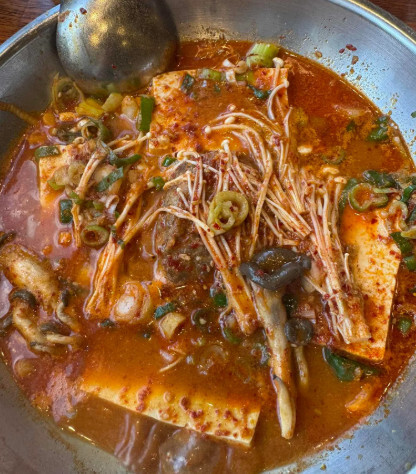
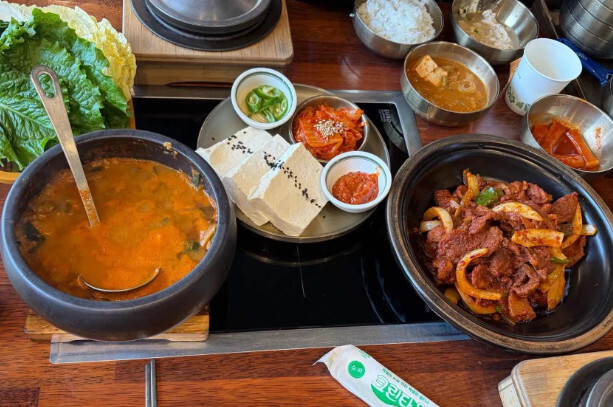
Minimum order: Two people
Of the dishes I’ve tried at Kongdujubaek, the Kongdu Best Set Meal is my favorite recommendation.
I genuinely enjoyed this meal, and the pot rice was particularly satisfying.
According to the restaurant’s supplied menu information, the set includes:
Tofu Dumpling Hot Pot (두부만두전골)
A shared hot pot featuring tofu dumplings, with a choice of mild or spicy broth.
The mild version may appeal to travelers who prefer gentler flavors, while the spicy option is worth considering if you enjoy Korean-style spicy soups.
Tofu Meatballs (두부완자)
Tofu meatballs offer a different way to enjoy tofu beyond soups and stews.
I’ve also tried the tofu meatballs at this restaurant and thought they were good.
Tofu with Kimchi (두부김치)
Dubu kimchi combines tofu with kimchi, creating a contrast between mild tofu and the stronger, fermented flavor of kimchi.
For international visitors, it’s an interesting example of how Korean cuisine combines ingredients with very different flavors.
Grilled Tofu (두부구이)
Grilled tofu offers a simpler preparation that allows the texture and flavor of the tofu to stand out.
It’s a useful contrast to the other dishes in the set.
Pot Rice (솥밥)
The set also includes pot rice, known as sotbap.
Sotbap is rice cooked in a traditional pot rather than served from a standard rice cooker.
Depending on the preparation, rice at the bottom may develop a lightly toasted layer.
I particularly enjoyed the pot rice as part of this meal.
For visitors unfamiliar with Korean set meals, this is one of the details worth paying attention to.
Why I Recommend the Set Meal
The biggest advantage of the Kongdu Best Set Meal is the variety.
Instead of trying only one tofu dish, you can experience several different preparations in one meal.
It’s also a convenient way for couples or families to share Korean food.
Personally, I found the set meal more memorable than ordering a single stew.
Ordering note: The set requires at least two diners. The supplied listing shows ₩19,000, but the price unit should be confirmed before ordering.
2. Seafood Soft Tofu Stew with Pot Rice (해물순두부 솥밥) — ₩11,000
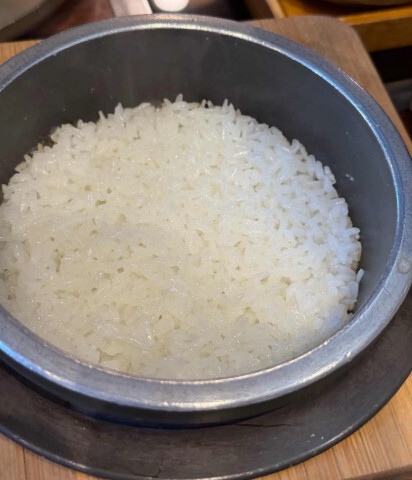
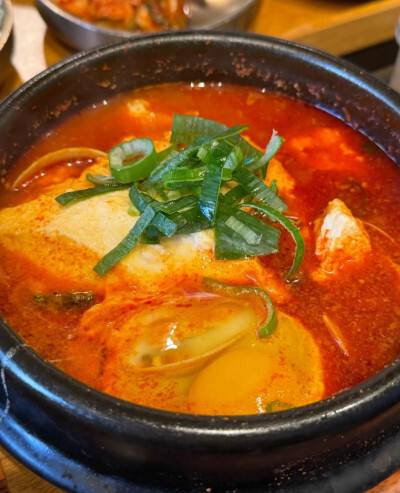
If you’re visiting alone, I would recommend the seafood soft tofu stew with pot rice.
I’ve tried the seafood sundubu here and enjoyed it.
Soft tofu, or sundubu, has a delicate texture that differs from firmer tofu used for grilling or pan-frying.
The seafood version combines soft tofu with seafood in a Korean-style stew.
For international visitors, this is an approachable way to experience Korean tofu cuisine.
It’s served with pot rice, making it a complete meal without requiring a large shared order.
If you’re hiking Gwanaksan alone and want something warm and filling afterward, this is the option I would consider at Kongdujubaek.
Other Tofu Dishes I’ve Enjoyed
Although I would prioritize the set meal and seafood soft tofu stew, two other dishes are worth mentioning.
Soybean Pulp Stew (콩비지찌개)
I’ve eaten the soybean pulp stew at Kongdujubaek and enjoyed it.
Known as kongbiji jjigae, this traditional Korean stew is made using soybean pulp.
It has a thicker, more textured consistency than soft tofu stew.
For travelers interested in Korean home-style cooking, it’s worth trying something beyond the more internationally familiar kimchi stew or sundubu-jjigae.
Tofu Meatballs (두부완자) — ₩11,000
The tofu meatballs are another dish I enjoyed.
They provide a different texture and preparation from the restaurant’s stews.
However, if you’re visiting for the first time with at least one other person, I would still recommend the Kongdu Best Set Meal over ordering tofu meatballs separately.
Is Kongdujubaek Suitable for Vegetarians?
Because Kongdujubaek specializes in tofu, vegetarian travelers may naturally be interested in visiting.
However, tofu dishes are not necessarily vegetarian.
Korean tofu stews and hot pots can contain meat, seafood, or animal-based broth.
The seafood soft tofu stew contains seafood, and the exact ingredients in the other dishes should be confirmed with the restaurant.
If you have dietary restrictions, ask about the ingredients before ordering.
My Personal Verdict on Kongdujubaek
What I remember most about Kongdujubaek is the variety of tofu dishes and how much I enjoyed the Kongdu Best Set Meal.
The soybean pulp stew and seafood soft tofu stew were both good, and the tofu meatballs were enjoyable.
But if I were recommending this restaurant to someone visiting Seoul for the first time, I would suggest going with another person and trying the set meal.
It offers a broader introduction to Korean tofu cuisine than ordering a single bowl of stew.
My recommendation: Choose Kongdujubaek for a shared Korean meal, especially if you’re visiting with family or friends after hiking Gwanaksan.
2. Woori Seolleongtang (우리설렁탕)
A Korean Beef Soup Restaurant I Keep Returning to Every Winter
Korean name: 우리설렁탕
Address: 190 Sillim-ro, Gwanak-gu, Seoul
Korean address: 서울특별시 관악구 신림로 190
Cuisine: Traditional Korean beef soup
Best for: Solo travelers, cold-weather hiking, and families
Reported opening hours: 24 hours
My top recommendation: Seolleongtang
Some restaurants become memorable because they serve unusual dishes.
Others become favorites because they prepare a familiar meal that you genuinely enjoy.
For me, Woori Seolleongtang belongs to the second category.
I’ve visited this restaurant more than once, and it’s a place I find myself thinking about whenever winter arrives.
The reason is simple.
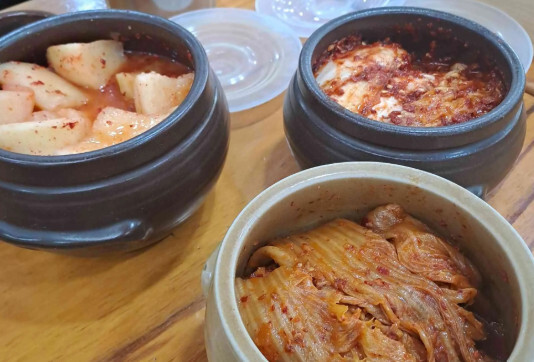
I enjoy the seolleongtang, but I also really like the kimchi.
The restaurant serves different kinds of kimchi, and that variety is one of the things I remember most clearly about eating here.
For me, the combination of warm beef soup and delicious kimchi makes Woori Seolleongtang worth returning to.
What Is Seolleongtang?
Seolleongtang is a traditional Korean soup made by simmering beef bones, often with other beef ingredients, over a long period.
The result is a milky-looking broth with a mild, savory flavor.
Unlike many spicy Korean stews, seolleongtang is generally served without a strong chili-based seasoning.
This makes it approachable for travelers who prefer less spicy food.
Seolleongtang is commonly enjoyed with rice, green onions, and kimchi.
Diners may also adjust the seasoning to their taste.
What makes the dish special is its simplicity.
Rather than relying on bold spices, it focuses on the flavor of the beef broth.
For me, it’s especially enjoyable during winter.
What to Order at Woori Seolleongtang
Woori Seolleongtang offers several variations of traditional Korean beef soup.
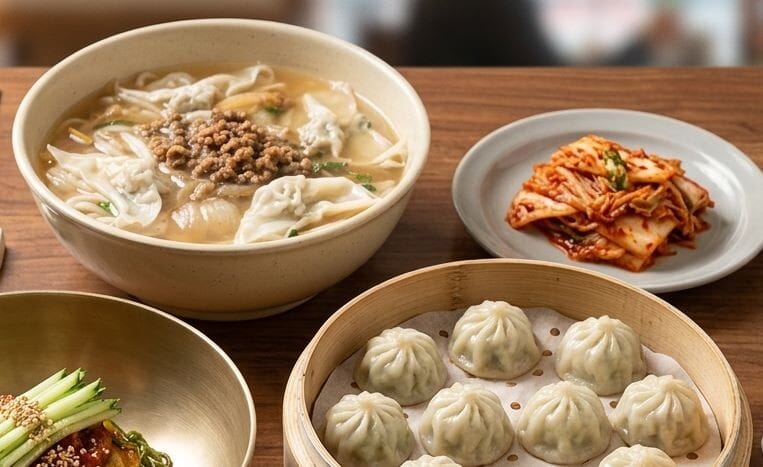
The menu includes rice noodle seolleongtang, versions with rice cakes and dumplings, larger portions, and set meals for groups.
However, I wouldn’t recommend ordering every variation simply because it’s available.
These are the options I would highlight for international visitors.
1. Seolleongtang with Rice Noodles (설렁탕 쌀국수) — ₩11,000
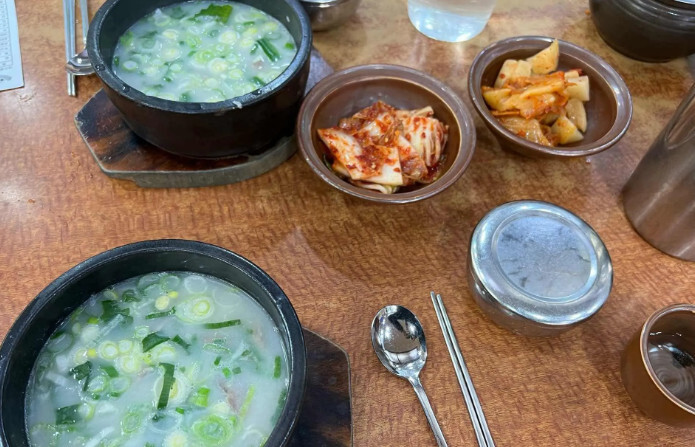
The restaurant lists a rice noodle version of its seolleongtang for ₩11,000.
This is an option for travelers who enjoy noodle soups.
Rice noodles provide a different texture from the traditional rice-based version of seolleongtang.
The mild beef broth makes the dish approachable for visitors who don’t enjoy spicy food.
Although I personally recommend the restaurant because I’ve enjoyed its seolleongtang, the rice noodle version is worth considering if you prefer noodles.
And whatever version you choose, I recommend trying the kimchi alongside the soup.
2. Seolleongtang with Rice Cakes and Dumplings (떡만두설렁탕) — ₩14,000
If you’re looking for a more substantial meal after hiking, consider the seolleongtang with rice cakes and dumplings.
This dish combines traditional beef soup with two familiar Korean ingredients.
Tteok refers to Korean rice cakes, which have a chewy texture.
Mandu are Korean dumplings, commonly filled with combinations of meat, vegetables, and other ingredients.
Together, they make the soup a filling option for travelers who want something more substantial.
After spending several hours hiking Gwanaksan, this may be appealing if you have a larger appetite.
3. Special Seolleongtang (설렁탕 특) — ₩14,000
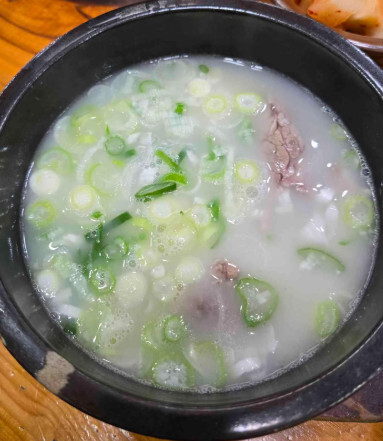
For travelers who want a larger or special serving, the menu also includes Special Seolleongtang.
In Korean restaurants, teuk (특) generally indicates a special version of a dish, often with a larger portion or additional ingredients.
The exact difference between the regular and special versions at Woori Seolleongtang should be confirmed when ordering.
If you’re particularly hungry after hiking, this is another option worth considering.
Group Dining Options
Woori Seolleongtang also offers menu items for groups of two or more.
Ssam Seolleongtang (쌈설렁탕) — ₩16,000
This menu requires at least two diners.
The name suggests a variation involving ssam, the Korean term commonly associated with wrapping food in vegetables.
However, the exact serving style and included ingredients should be confirmed with the restaurant.
Seolleongtang Set Meal (설렁탕정식) — ₩20,000
This is another menu requiring at least two diners.
For travelers visiting with family or friends, it may be worth considering if you want something beyond an individual bowl of soup.
The exact set contents and price unit should be confirmed before ordering.
Visiting with Children
Families traveling with young children may appreciate the restaurant’s children’s menu.
Kids’ Seolleongtang (어린이설렁탕) — ₩6,000
The menu is listed for children under 10 years old.
Because seolleongtang is generally mild rather than spicy, it can be an approachable Korean soup for children who enjoy beef-based dishes.
This makes Woori Seolleongtang another option for families visiting the Gwanaksan area.
Another Menu Option: Wooritang (우리탕) — ₩16,000
The restaurant also lists a dish called Wooritang for ₩16,000.
However, the menu name alone doesn’t explain the exact ingredients or preparation.
If you’re interested in ordering it, ask the restaurant for more details.
Why the Kimchi Is So Important Here
One thing I particularly want to emphasize about Woori Seolleongtang is the kimchi.
I really enjoy the kimchi at this restaurant.
The restaurant serves different kinds, and I appreciate that variety.
This may seem like a small detail, but kimchi can make a significant difference to the experience of eating seolleongtang.
Because the soup itself is relatively mild, kimchi provides a contrasting flavor.
Its fermented acidity and seasoning add another dimension to the meal.
You can enjoy a spoonful of soup, take a bite of kimchi, and then return to the broth.
The combination is simple, but it’s an important part of how many Koreans enjoy traditional beef soups.
For international visitors, I would encourage trying the kimchi alongside the soup rather than treating it as an optional side dish.
At Woori Seolleongtang, the kimchi is one of the main reasons I recommend the restaurant.
Why I Keep Returning in Winter
Seolleongtang can be enjoyed throughout the year.
However, I personally associate Woori Seolleongtang with winter.
When the weather gets cold, it’s one of the restaurants that comes to mind.
I’ve returned because I enjoy the combination of the soup and the kimchi.
This is also why I think personal experience matters when recommending restaurants.
A restaurant doesn’t always need an elaborate menu or an unusual signature dish to be worth visiting.
Sometimes, a familiar meal that makes you want to return is enough.
For me, Woori Seolleongtang is that kind of place.
Is Woori Seolleongtang Good for Solo Travelers?
Of the two restaurants in this guide, Woori Seolleongtang is particularly straightforward for someone dining alone.
Seolleongtang is generally served as an individual bowl, so you don’t need to order a large shared meal.
It’s also an approachable Korean dish for travelers who aren’t comfortable with very spicy food.
However, seolleongtang is made from beef.
It is not suitable for vegetarians or travelers avoiding beef for dietary or religious reasons.
Opening Hours: What Travelers Should Know
The supplied restaurant information lists Woori Seolleongtang as operating 24 hours a day.
This could make it a flexible dining option for hikers finishing at different times.
However, operating schedules can change, and temporary closures are possible.
If you’re planning to visit very early in the morning or late at night, confirm the current hours before traveling.
My Personal Verdict on Woori Seolleongtang
Woori Seolleongtang isn’t a restaurant I recommend because of an extensive menu.
I recommend it because I’ve returned during winter and genuinely enjoyed eating there.
The seolleongtang is good, but the kimchi is what makes the experience especially memorable to me.
If you’re visiting Seoul during colder weather and want to try a traditional Korean beef soup, this is a restaurant I would consider.
My recommendation: Order the seolleongtang, try the different kinds of kimchi, and enjoy them together.
How to Visit These Restaurants After Hiking Gwanaksan
One reason I wanted to introduce these two restaurants together is their location.
Kongdujubaek Gwanak Branch is located at 184 Sillim-ro, while Woori Seolleongtang is located at 190 Sillim-ro.
Because they are close to each other, travelers can choose between tofu dishes and beef soup without planning two completely different dining destinations.
However, there’s an important distinction between being in the Gwanaksan area and being directly beside the hiking trailhead.
Neither restaurant is immediately outside Gwanaksan Station’s Exit 1.
Both are farther along Sillim-ro, so visitors should check their walking route before setting off.
Start Your Hike at Gwanaksan Station
For international visitors, Gwanaksan Station on the Sillim Line is a convenient starting point.
Exit 1 is located close to Gwanaksan Park Entrance.
This entrance provides access to several hiking routes, including the Yeonjudae B Valley Trail.
The route described in my Gwanaksan hiking guide follows:
Gwanaksan Station → Fourth Campground → Upper Engineering Building Area → Yeonjusaem → Third Kkaltakgogae Ridge → Yeonjudae
The route is approximately 4.7 kilometers one way, with an estimated ascent time of around two hours and thirty minutes.
However, reaching Yeonjudae is only half the journey if you’re returning to the same starting point.
A round trip along the same route is approximately 9.4 kilometers, and you’ll need additional time for rest stops and the descent.
The route also includes rocky and demanding sections near the summit.
For a more detailed explanation of the trail, including the subway exit, major landmarks, hiking difficulty, and equipment rental information, see my Gwanaksan hiking guide.
A Practical Hiking and Dining Itinerary
If you’re planning to hike Gwanaksan and return to the Sillim-dong side, this is how I would organize the day.
Morning: Arrive at Gwanaksan Station
Take the Sillim Line to Gwanaksan Station.
If you need hiking equipment, check the Seoul Hiking Tourism Center located inside the station.
The center offers information and equipment rental services for eligible international visitors.
Make sure to confirm its opening hours and equipment return requirements before beginning a long hike.
Late Morning: Begin Your Hike
Leave through Exit 1 and enter Gwanaksan Park.
Follow the signs for your chosen trail.
If you’re planning to reach Yeonjudae, allow enough time for both the ascent and descent.
The final sections can be challenging, so suitable hiking shoes and careful route planning are important.
Afternoon: Return Toward Gwanaksan Station
After descending, return toward the park entrance.
If you’ve rented equipment, make sure you have enough time to return it.
From the Gwanaksan Station area, check the route to the restaurants on Sillim-ro.
After Hiking: Choose Your Meal
If you’re hiking with family or friends, I would consider Kongdujubaek.
Its tofu set meal is particularly appealing when you have someone to share it with.
If you’re hiking alone or want a warming bowl of beef soup, Woori Seolleongtang is a practical alternative.
During winter, it would be my personal choice.
An Easier Hiking Option
You don’t necessarily need to climb all the way to Yeonjudae to enjoy Gwanaksan.
The mountain also offers lower forest trails, including the Dorimcheon Valley Trail.
This route focuses more on forest scenery and the lower slopes of the mountain.
For travelers who prefer a gentler outdoor experience, it can be an alternative to the full summit hike.
You can still finish your outing with a Korean meal in the surrounding area.
Which Restaurant Should You Choose?
The answer depends on what kind of meal you want after hiking.
Choose Kongdujubaek If You Want to Explore Korean Tofu Cuisine
Kongdujubaek would be my choice for visitors who want to experience several Korean dishes in one meal.
The Kongdu Best Set Meal is especially appealing for two or more people.
I enjoyed the set meal, including the pot rice, and I also liked the restaurant’s seafood soft tofu stew and soybean pulp stew.
For international visitors interested in traditional Korean food, there’s more variety here than you might expect from a tofu restaurant.
Choose Woori Seolleongtang If You Want a Simple, Comforting Meal
Woori Seolleongtang would be my choice for someone who wants a familiar Korean soup without ordering a large shared meal.
It’s also the restaurant I associate most strongly with winter.
I’ve returned because I enjoy the seolleongtang and, particularly, the kimchi.
For first-time visitors, the mild beef broth and flavorful kimchi offer a straightforward introduction to a classic Korean combination.
Frequently Asked Questions
Are these restaurants near Gwanaksan Station?
Both restaurants are located on Sillim-ro in the broader Gwanaksan and Sillim-dong area.
However, neither is directly outside Gwanaksan Station.
Check the route from Gwanaksan Park Entrance before walking to either restaurant.
Which restaurant is better for families?
I would recommend Kongdujubaek Gwanak Branch.
Its menu includes several tofu dishes, and the Kongdu Best Set Meal is designed for at least two diners.
Woori Seolleongtang is another option, particularly for families who prefer individual soup meals or are traveling with young children.
Which restaurant is better for solo hikers?
Woori Seolleongtang is a straightforward choice because seolleongtang is served as an individual meal.
Kongdujubaek also offers individual dishes, including seafood soft tofu stew with pot rice.
What should I order at Kongdujubaek?
For two or more people, my first recommendation is the Kongdu Best Set Meal.
If you’re dining alone, consider the seafood soft tofu stew with pot rice.
Both are dishes I have enjoyed at the restaurant.
What should I order at Woori Seolleongtang?
I recommend seolleongtang.
It’s the dish I’ve returned for during winter, and I particularly enjoy eating it with the restaurant’s kimchi.
The menu also includes rice noodle seolleongtang, rice cake and dumpling seolleongtang, and a special version for travelers who want something different.
Is Woori Seolleongtang open 24 hours?
The supplied restaurant listing indicates 24-hour operation.
However, travelers should confirm the current schedule before visiting, particularly late at night or early in the morning.
Can I visit these restaurants without hiking Gwanaksan?
Yes.
Both restaurants can be visited independently of a hiking trip.
Kongdujubaek is worth considering if you’re interested in Korean tofu cuisine, while Woori Seolleongtang is an option for travelers looking for traditional beef soup.
Where to Eat After Hiking Gwanaksan: Quick Comparison
| Restaurant | Best For | Recommended Menu | Price |
|---|---|---|---|
| Kongdujubaek Gwanak Branch | Couples, families, and groups | Kongdu Best Set Meal | ₩19,000 listed price; minimum 2 diners |
| Kongdujubaek Gwanak Branch | Solo travelers | Seafood Soft Tofu Stew with Pot Rice | ₩11,000 |
| Woori Seolleongtang | Travelers who enjoy noodle soups | Seolleongtang with Rice Noodles | ₩11,000 |
| Woori Seolleongtang | Hikers wanting a filling meal | Seolleongtang with Rice Cakes and Dumplings | ₩14,000 |
| Woori Seolleongtang | Travelers with a larger appetite | Special Seolleongtang | ₩14,000 |
| Woori Seolleongtang | Families with young children | Kids’ Seolleongtang | ₩6,000; under age 10 |
Prices are based on the supplied menu information and may change. The ₩19,000 listed for Kongdu Best Set Meal requires confirmation as a per-person or total price.
My recommendation: Choose Kongdujubaek if you want to explore different Korean tofu dishes with family or friends. If you prefer a simple, warming bowl of beef soup, particularly during colder weather, Woori Seolleongtang would be my choice.
Both restaurants are located in the broader Gwanaksan area, but neither is immediately outside Gwanaksan Station. Check the route from the park entrance before walking to either restaurant.
Final Thoughts: Two Different Ways to Enjoy Korean Food After Gwanaksan
Gwanaksan is one of Seoul’s most accessible hiking destinations, but reaching the summit isn’t the only memorable part of a visit.
Exploring the food around the mountain can also be worthwhile.
Kongdujubaek Gwanak Branch and Woori Seolleongtang are two restaurants I’ve personally visited, and I recommend them for different reasons.
Kongdujubaek stands out for its variety of tofu dishes. I particularly enjoyed the Kongdu Best Set Meal, making it my recommendation for couples, families, and small groups interested in Korean soybean cuisine.
Woori Seolleongtang is a more personal favorite during winter. I keep returning for the seolleongtang, and the kimchi is one of the reasons the restaurant stays in my memory.
Neither restaurant needs an exaggerated description to be worth considering.
They offer two different kinds of everyday Korean food, both of which can fit naturally into a day spent exploring Gwanaksan.
If you’re planning a hike, choose the restaurant that suits your appetite, check the current operating information, and enjoy a Korean meal after your time in the mountains.