Looking for one last Korean meal before leaving Seoul?
Incheon International Airport has more to offer than burgers, sandwiches, and coffee shops.
Both Terminal 1 and Terminal 2 have restaurants serving Korean dishes such as bibimbap, beef soup, kimchi stew, kalguksu, and traditional set meals.
However, finding the right restaurant isn’t always straightforward.
Some restaurants are located before security, where anyone can enter. Others are inside the international departure area and are accessible only after completing the required departure procedures.
And because Incheon Airport is large, choosing a restaurant in the wrong terminal or on the wrong side of security can waste valuable time.
This guide explains where to eat Korean food at Incheon Airport Terminal 1 and Terminal 2, including restaurant locations, operating hours, recommended dishes, and practical tips for international travelers.
Whether you’re arriving in Korea, departing after a vacation, or waiting for a connecting flight, you’ll find options for a convenient Korean meal.
Restaurant locations and operating hours were checked against the official Incheon International Airport food and beverage directory. Menu selections and prices can change, so confirm the current menu before ordering.
Best Korean Food at Incheon Airport Terminal 1
Terminal 1 has several Korean dining options, including traditional restaurants, food courts, and casual soup counters.
For most travelers, the best choice depends on whether you’ve already passed security.
1. Sonsuheon (손수헌): Traditional Korean Dining Before Security
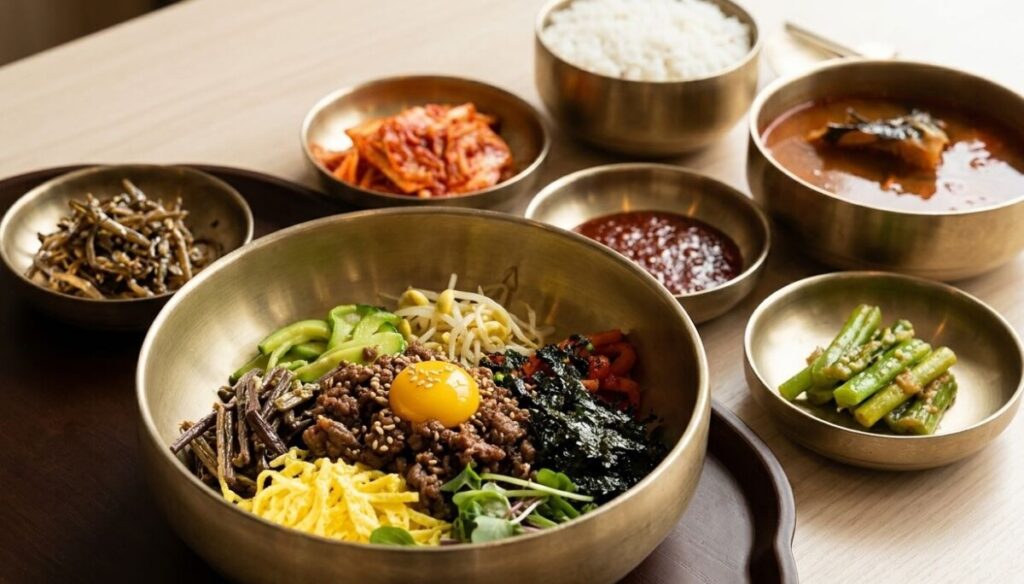
Best for: Travelers who want a sit-down Korean meal before departure.
Terminal: Terminal 1
Location: 4th Floor, West Side
Access: Public area — before security
Published hours: 06:00–22:00
Why Consider Sonsuheon?
Sonsuheon is a Korean restaurant located on the fourth floor of Terminal 1.
Its location makes it convenient for travelers who want to eat before entering the restricted departure area.
This can be particularly useful if you’re traveling with family members or friends who are not flying.
Unlike restaurants inside the departure lounge, public-area restaurants can generally be visited by people accompanying departing passengers.
Sonsuheon focuses on Korean meals rather than quick snacks.
It is worth considering if you want a more complete meal before a long flight.
What Korean Food Should You Look For?
Earlier published menus included traditional Korean set meals such as:
| Dish | Korean Name | What It Is |
|---|---|---|
| Beef Short Rib Soup Set | 갈비탕 한상 | Beef short rib soup served with rice and accompaniments |
| Bulgogi Set Meal | 불고기 반상 | Marinated beef served as part of a Korean meal |
These dishes were featured in earlier restaurant information. Their current availability and prices require confirmation.
Galbitang: Beef Short Rib Soup
Galbitang is a Korean soup made with beef short ribs.
It typically contains a savory broth and tender beef.
The dish is usually served with rice and Korean side dishes.
Galbitang is generally not spicy unless additional spicy seasonings are added.
For travelers unfamiliar with Korean food, it can be a relatively approachable choice.
Bulgogi: Korean Marinated Beef
Bulgogi is made with thinly sliced meat, usually beef, marinated in a savory and slightly sweet sauce.
Common ingredients include soy sauce, garlic, sugar, and sesame oil.
It is generally less spicy than dishes made with Korean red chili paste.
How Much Does It Cost?
An earlier published menu listed:
| Menu | Historical Reference Price |
|---|---|
| Galbitang Hansang | ₩16,000 |
| Bulgogi Bansang | ₩15,500 |
These are historical reference prices, not confirmed current prices.
Check the menu displayed at the restaurant before ordering.
Practical Visiting Tips
Sonsuheon is on the fourth floor of Terminal 1, on the west side.
If you’re departing, make sure you have enough time to return to the third-floor check-in and security areas.
Do not leave security procedures until the last minute just to finish a meal.
Choose Sonsuheon if: You want a traditional Korean meal before security and have enough time for a sit-down restaurant.
2. Nadri Hoegwan (나드리회관): Korean Rice Dishes After Security
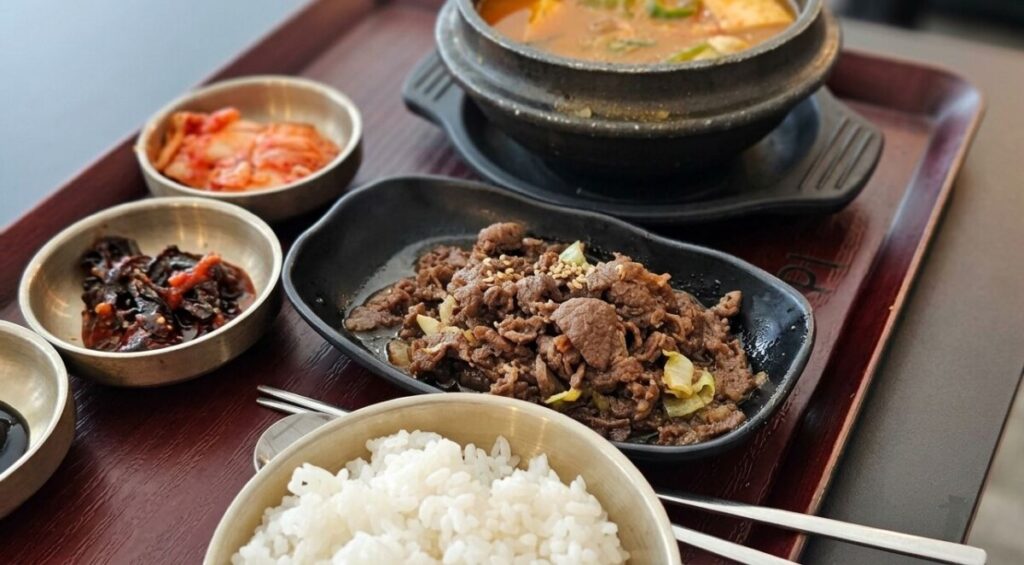
Best for: Departing passengers who want a Korean meal near the departure gates.
Terminal: Terminal 1
Location: 4th Floor, Near Gate 30
Access: Duty-free departure area — after security
Published hours: 06:00–22:00
Why Consider Nadri Hoegwan?
Nadri Hoegwan is located in the fourth-floor dining area near Gate 30.
The restaurant is part of a larger food court area with multiple dining options.
This makes it useful for travelers who have already completed departure procedures.
Rather than returning to the public area, passengers can eat within the restricted departure zone.
What Should You Order?
An earlier published menu featured dolsot bibimbap, or Korean stone pot mixed rice.
Dolsot Bibimbap (돌솥비빔밥)
Dolsot bibimbap is a variation of Korean mixed rice served in a heated stone bowl.
It commonly includes rice, vegetables, and other toppings.
The hot bowl can create a crispy layer of rice at the bottom.
This crispy rice is one of the dish’s distinctive features.
Bibimbap is often served with gochujang, a Korean red chili paste.
If you don’t like spicy food, ask whether the sauce can be served separately.
Menu Price
An earlier published menu listed dolsot bibimbap at ₩12,500.
The current price has not been independently confirmed.
Check the restaurant’s menu board or ordering kiosk for the latest price.
Practical Visiting Tips
The airport directory lists Nadri Hoegwan near Gate 30 on the fourth floor.
If your departure gate is in another part of Terminal 1, allow enough time to return to your boarding area.
Remember that boarding may begin well before the scheduled departure time.
Choose Nadri Hoegwan if: You want a Korean rice dish after security and your gate is reasonably close to the restaurant.
3. Ontangjip (온탕집): Korean Beef Soup Near Gate 30
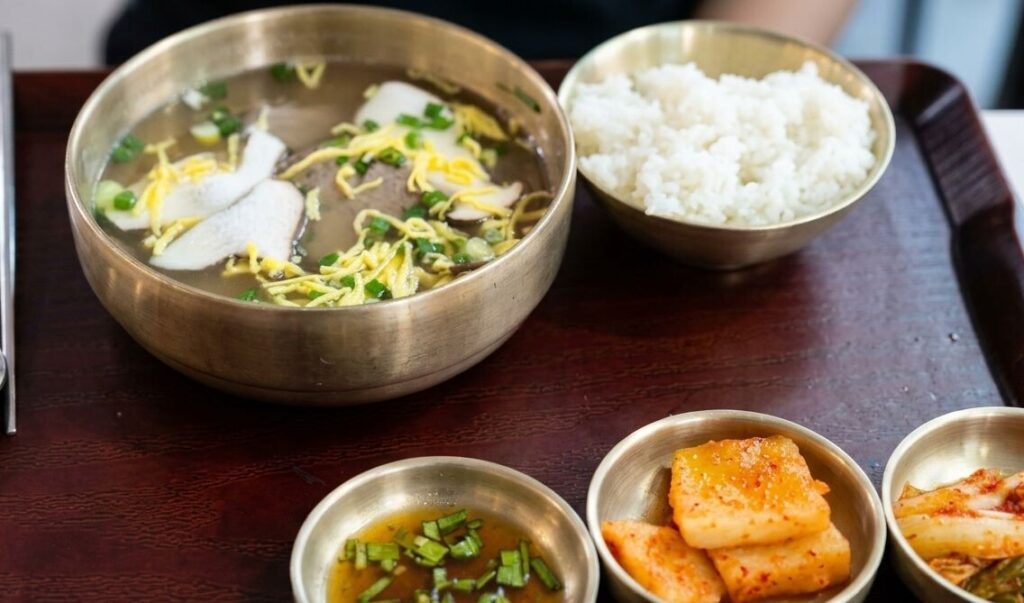
Best for: Travelers looking for warm Korean comfort food, including late-night and early-morning passengers.
Terminal: Terminal 1
Location: 4th Floor, Near Gate 30
Access: Duty-free departure area — after security
Published hours: 24 hours
Why Consider Ontangjip?
Ontangjip is another Korean dining option in the fourth-floor area near Gate 30.
One of its main advantages is its published operating schedule.
The official airport directory lists Ontangjip as operating 24 hours.
That makes it worth considering if you’re departing very early in the morning or late at night.
However, a 24-hour restaurant listing does not necessarily mean every dish is available at every hour.
What Should You Order?
An earlier published menu featured gamashot gomtang, a Korean beef soup.
Gomtang (곰탕)
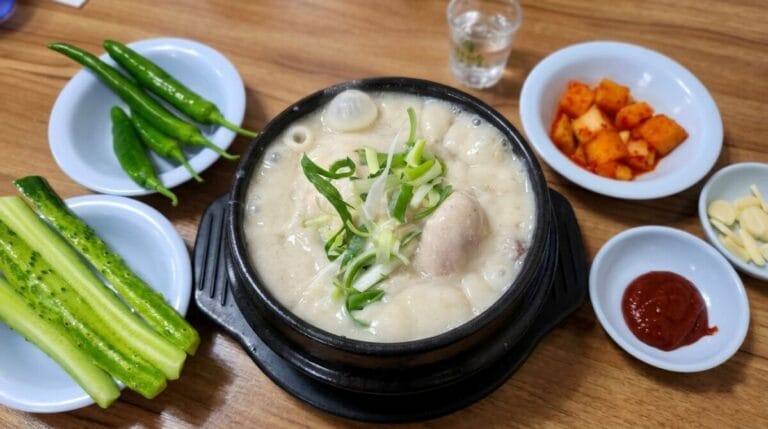
Gomtang is a Korean soup made by simmering beef and other ingredients to produce a savory broth.
It is commonly served with rice.
Depending on the recipe, the broth can be clear or slightly cloudy.
Gomtang is usually mild rather than spicy.
This makes it an option for travelers who prefer warm soup without strong chili flavors.
Menu Price
An earlier published menu listed gamashot gomtang at ₩13,000.
The current price and availability require confirmation.
Practical Visiting Tips
Ontangjip is listed near Gate 30 on Terminal 1’s fourth floor.
The restaurant may be especially useful when other dining options have closed.
However, if you’re transferring between flights, confirm that your itinerary allows access to this part of the terminal.
Choose Ontangjip if: You want a warm Korean soup after security, particularly outside typical restaurant hours.
4. Hansik Sodam-gil (한식소담길): Korean Food Court Before Security
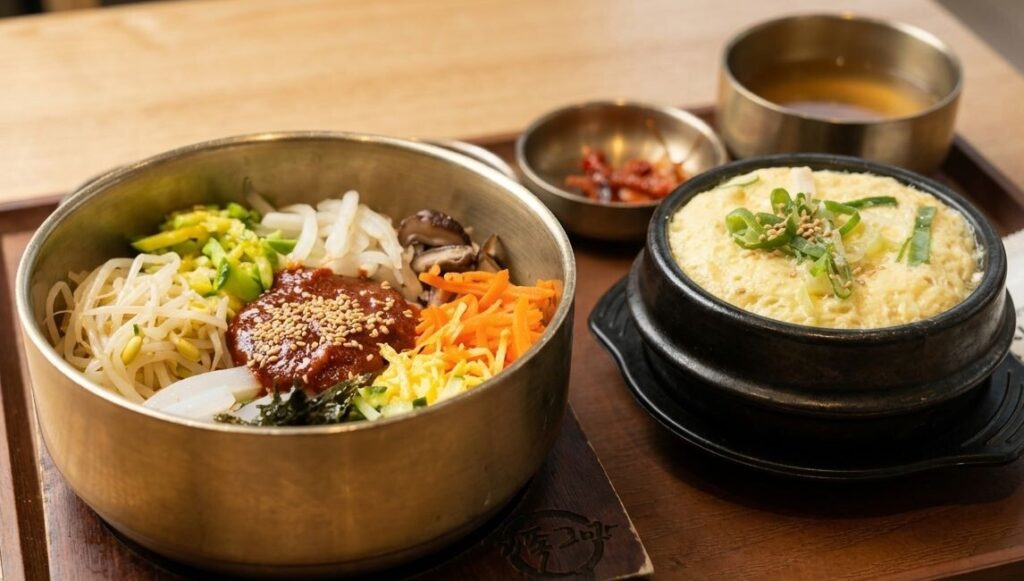
Best for: Families, groups, and travelers who want several Korean menu options.
Terminal: Terminal 1
Location: Basement 1, West Public Area
Access: Before security
Published hours: 06:00–22:00
Why Consider Hansik Sodam-gil?
Hansik Sodam-gil is a Korean-focused food court in Terminal 1.
Its location on the basement level makes it useful for travelers moving between the terminal and ground transportation.
A food court can be more convenient than a full-service restaurant when different members of a group want different meals.
Depending on the current vendors, travelers may find Korean dishes such as soups, noodles, and rice-based meals.
What Korean Dishes Should You Look For?
| Dish | Korean Name | Description |
|---|---|---|
| Soft Tofu Stew | 순두부찌개 | Hot stew made with soft tofu |
| Kalguksu | 칼국수 | Korean knife-cut noodle soup |
| Gomtang | 곰탕 | Mild beef soup |
| Bibimbap | 비빔밥 | Rice mixed with vegetables and other toppings |
These are examples of Korean dishes associated with this type of food court, not a guaranteed current menu at every counter.
Practical Visiting Tips
Hansik Sodam-gil is in the public area.
This means it can be convenient for both arriving and departing travelers.
If you’re arriving in Korea and want a Korean meal before taking the Airport Railroad or another form of transportation, a basement-level food court may fit your route.
Choose Hansik Sodam-gil if: You want several Korean meal options in one location before security.
Best Korean Food at Incheon Airport Terminal 2
Terminal 2 also offers several Korean restaurants and food courts.
The most important distinction is whether you’re dining before security or inside the departure area.
5. Hansik Sodam-gil (한식소담길): Korean Food Before Security at T2
Best for: Travelers who want a choice of traditional Korean dishes.
Terminal: Terminal 2
Location: Transportation Center, Basement 1
Access: Public area — before security
Published hours: 06:00–22:00
Why Consider Hansik Sodam-gil?
Hansik Sodam-gil is a Korean dining area located in Terminal 2’s Transportation Center.
The official airport directory lists several Korean food counters in this area.
These include restaurants specializing in kimchi dishes, regional Korean soups, cold noodles, and other traditional foods.
The variety makes this a useful choice for families or groups with different preferences.
Korean Restaurants Listed in the T2 Food Court
The airport’s published directory includes the following options.
| Restaurant | Korean Name | Food Specialty |
|---|---|---|
| Hanokjip Kimchijjim | 한옥집김치찜 | Braised kimchi dishes |
| Jeju Seho Haejangguk | 제주세호해장국 | Korean hangover soup |
| Sokcho Kodari Naengmyeon | 속초코다리냉면 | Cold noodles with seasoned pollock |
| Sinpo Sundae | 신포순대 | Korean blood sausage dishes |
| Yeongju Tofu Village | 영주두부마을 | Tofu-based Korean dishes |
Individual menus and prices may change.
What Should You Order?
Kimchijjim (김치찜)
Kimchijjim is a Korean braised kimchi dish.
It is commonly prepared with aged kimchi and meat.
The flavor is usually rich, tangy, and spicy.
It is a good option for travelers who enjoy strongly seasoned Korean food.
Haejangguk (해장국)
Haejangguk is a general term for Korean soups traditionally associated with recovering after drinking alcohol.
Different regional versions use different ingredients.
Some contain beef, vegetables, or other ingredients.
Spice levels vary by recipe.
Naengmyeon (냉면)
Naengmyeon is a Korean cold noodle dish.
Some versions are served in chilled broth, while others use a spicy sauce.
Kodari naengmyeon commonly includes seasoned semi-dried pollock.
It may be spicy.
How Much Should You Budget?
The airport directory confirms the dining area and participating restaurant names but does not provide a complete, verified current price list.
For that reason, this guide does not present estimated totals as confirmed prices.
Check the current menu at the food court.
Practical Visiting Tips
The food court is in the Transportation Center on Basement 1.
If you’re departing, remember that you must return to the departure level for check-in and security.
If you’re arriving, this location can be convenient before continuing into Seoul.
Choose Hansik Sodam-gil if: You want several Korean dishes to choose from and have not yet passed security.
6. Hwangsaengga Kalguksu (황생가칼국수): Korean Noodles at Terminal 2
Best for: Travelers who prefer noodle soup and familiar Korean comfort food.
Terminal: Terminal 2
Location: Basement 1, Central Area
Access: Public area — before security
Published hours: 06:00–22:00
Why Consider Hwangsaengga Kalguksu?
Hwangsaengga Kalguksu is listed in the official airport directory as a Korean restaurant in Terminal 2.
Its location on Basement 1 makes it another option for travelers who want to eat before security.
Kalguksu is a traditional Korean noodle dish.
The noodles are usually served in a hot broth.
Depending on the recipe, the soup may contain meat, seafood, or vegetables.
What Should You Order?
Kalguksu (칼국수)
Kalguksu literally means “knife-cut noodles.”
The name refers to the traditional method of cutting noodles from rolled dough.
The noodles are served in broth and are commonly eaten with kimchi.
Kalguksu is generally a comforting option, particularly during cold weather.
However, ingredients and spice levels depend on the specific menu.
Menu and Price Information
The airport directory confirms the restaurant’s location and operating hours.
It does not provide a complete verified current menu with prices.
Check the menu at the restaurant before ordering.
Practical Visiting Tips
Hwangsaengga Kalguksu is located in the central area of Terminal 2’s basement level.
It can be a useful alternative to the larger Korean food court.
Choose Hwangsaengga Kalguksu if: You want a Korean noodle meal before security.
7. Jayeon Dameun Hansang (자연담은한상): Korean Set Meals After Security
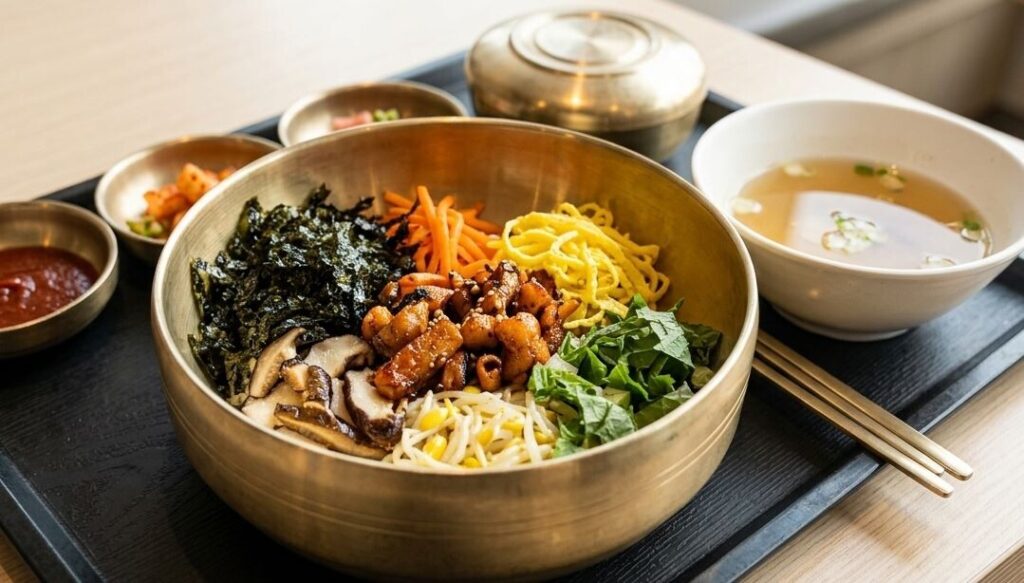
Best for: Departing passengers who want a Korean meal inside Terminal 2’s duty-free area.
Terminal: Terminal 2
Location: 4th Floor, Near Gate 252
Access: After security
Published hours: 06:00–22:00
Why Consider Jayeon Dameun Hansang?
Jayeon Dameun Hansang is a Korean dining option located in Terminal 2’s departure area.
The restaurant is listed in the official Incheon Airport directory near Gate 252.
Its Korean name can be translated approximately as “a meal inspired by nature.”
The restaurant focuses on Korean-style meals rather than Western fast food.
For travelers who want one final Korean meal after passing security, this can be a convenient choice.
What Should You Order?
Earlier published menus included the following dishes.
| Dish | Korean Name | Description |
|---|---|---|
| Tteokgalbi Set Meal | 떡갈비 정식 | Grilled minced meat patties with Korean accompaniments |
| Grilled Fish Set Meal | 생선구이 반상 | Grilled fish served as part of a Korean meal |
| Bulgogi Set Meal | 불고기 정식 | Korean marinated beef set meal |
These dishes were included in earlier restaurant information. Current availability and prices require confirmation.
Tteokgalbi (떡갈비)
Tteokgalbi is a Korean dish made with seasoned minced meat formed into patties.
It is typically grilled.
The seasoning is often savory and slightly sweet.
The dish is generally not spicy unless prepared with additional chili seasoning.
Grilled Fish Set Meal
Grilled fish is a common part of Korean home-style dining.
It is often served with rice, soup, and small side dishes.
If you prefer a meal without red meat, a fish set may be worth considering.
However, the exact fish and side dishes can change.
Historical Menu Prices
Earlier published prices included:
| Menu | Historical Reference Price |
|---|---|
| Tteokgalbi Jeongsik | ₩15,500 |
| Grilled Fish Bansang | ₩14,400 |
| Bulgogi Jeongsik | ₩14,000 |
These prices are not confirmed as current.
Practical Visiting Tips
The restaurant is located near Gate 252 on the fourth floor of Terminal 2.
If your gate is farther away, allow time to return to the boarding area.
Check the airport information screens for any gate changes.
Choose Jayeon Dameun Hansang if: You want a Korean set meal after security at Terminal 2.
Before or After Security: Where Should You Eat?
This is one of the most important decisions when choosing a restaurant at Incheon Airport.
Before Security
Public-area restaurants can generally be visited by anyone inside the terminal.
They are useful for:
- Travelers who have not checked in
- People meeting arriving passengers
- Families saying goodbye before departure
- Travelers who want to eat before entering the departure area
However, you must still allow enough time for check-in, baggage drop, security, and departure immigration.
After Security
Restaurants in the restricted departure area are intended for eligible departing or transferring passengers.
They are useful for:
- Travelers who have completed departure procedures
- Passengers waiting near their gates
- Eligible transit passengers remaining airside
You generally cannot return freely to a public-area restaurant after completing departure procedures.
Likewise, someone who is not traveling cannot enter the international departure area simply to visit a restaurant.
Important for Connecting Flights
If you’re transferring through Incheon Airport without entering South Korea, focus on restaurants accessible from your transfer route.
A restaurant in a public area may require immigration clearance and entry into Korea.
Not all transit passengers can or should do this.
Always follow your airline’s transfer instructions.
Which Korean Food Should You Try at Incheon Airport?
If this is your first trip to Korea, choosing a familiar dish may make your airport meal easier.
Best for Travelers Who Don’t Like Spicy Food
Consider:
Galbitang: Beef short rib soup with rice.
Gomtang: Mild Korean beef soup.
Bulgogi: Savory and slightly sweet marinated beef.
Tteokgalbi: Grilled Korean meat patties.
These dishes are generally prepared without strong chili seasoning, but individual recipes and side dishes can vary.
Best for Travelers Who Enjoy Spicy Food
Consider:
Kimchijjim: Braised kimchi, often served with meat.
Sundubu Jjigae: Soft tofu stew, frequently prepared with chili seasoning.
Spicy Naengmyeon: Cold noodles with a red chili-based sauce.
Always check the spice level before ordering.
Best for a Traditional Korean Rice Meal
Consider bibimbap or a Korean set meal.
Bibimbap combines rice with vegetables and other toppings.
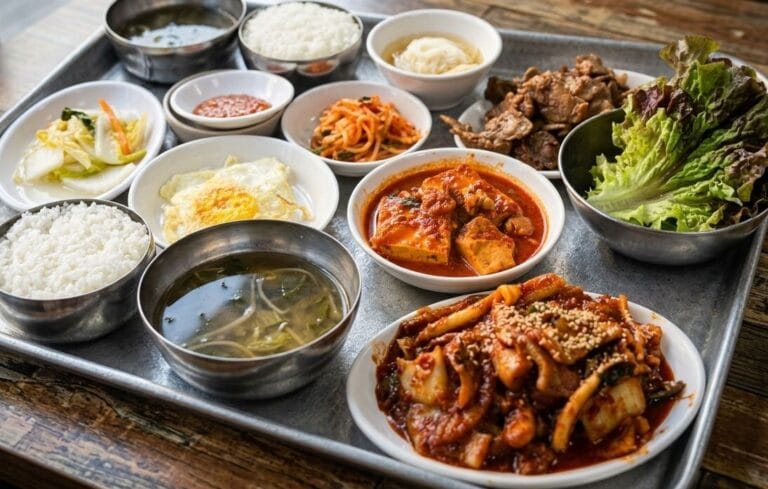
A Korean set meal may include rice, soup, a main dish, and several side dishes.
These meals provide an introduction to the variety of Korean dining.
Best for a Warm Meal Before Flying
Consider gomtang, galbitang, or kalguksu.
These dishes are commonly served hot and can be a practical choice for travelers who prefer soup or noodles.
How Much Does Korean Food Cost at Incheon Airport?
Airport restaurant prices depend on the terminal, dining area, restaurant, and dish.
Earlier published menus for the restaurants in this guide included the following examples.
| Restaurant | Dish | Historical Reference Price |
|---|---|---|
| Sonsuheon | Galbitang Hansang | ₩16,000 |
| Sonsuheon | Bulgogi Bansang | ₩15,500 |
| Nadri Hoegwan | Dolsot Bibimbap | ₩12,500 |
| Ontangjip | Gamashot Gomtang | ₩13,000 |
| Jayeon Dameun Hansang | Tteokgalbi Jeongsik | ₩15,500 |
| Jayeon Dameun Hansang | Grilled Fish Bansang | ₩14,400 |
These are previously published prices, not independently verified October 2026 prices.
They can provide a rough historical reference, but they should not be used as a guaranteed budget.
For accurate spending estimates, check the current restaurant menu.
Practical Tips for Eating at Incheon Airport
1. Confirm Your Terminal First
Incheon Airport has multiple passenger terminals.
Your airline determines which terminal you use.
Check your booking confirmation and the airport’s current airline information.
Do not assume that every airline uses the same terminal.
2. Check Whether the Restaurant Is Before or After Security
A restaurant may be only a few floors away but inaccessible from your side of the airport.
Always confirm whether it is in the public area or duty-free departure area.
3. Don’t Leave Your Meal Until Boarding Time
Restaurants near departure gates are convenient, but you still need time to reach your gate.
Some boarding gates may require additional walking or transportation.
Follow your airline’s boarding instructions.
4. Use Korean Names When Searching
| English Name | Korean Name |
|---|---|
| Sonsuheon | 손수헌 |
| Nadri Hoegwan | 나드리회관 |
| Ontangjip | 온탕집 |
| Hansik Sodam-gil | 한식소담길 |
| Hwangsaengga Kalguksu | 황생가칼국수 |
| Jayeon Dameun Hansang | 자연담은한상 |
The Korean names may help you identify restaurants on airport signs and digital maps.
5. Ask for Spicy Sauce Separately
Bibimbap and some other Korean dishes may come with chili-based sauces.
If you prefer mild food, ask for the sauce separately.
A useful Korean phrase is:
고추장은 따로 주세요.
Gochujang-eun ttaro juseyo.
“Please serve the red chili paste separately.”
6. Check Food Allergens
Korean food may contain ingredients such as soy, wheat, sesame, shellfish, eggs, and fish.
Broths and sauces may contain ingredients that are not obvious from the dish’s appearance.
If you have food allergies, ask staff to confirm the ingredients.
7. Check Opening Hours for Early Flights
Not every airport restaurant operates 24 hours.
The official airport directory lists some dining locations as open around the clock, while others have shorter schedules.
If your flight departs early in the morning, check which restaurants are operating before planning your meal.
Frequently Asked Questions
Can I eat Korean food at Incheon Airport before security?
Yes.
Both Terminal 1 and Terminal 2 have Korean restaurants in public areas.
These include restaurants on the fourth floor and food courts on the basement level.
Can I eat Korean food after immigration?
Yes.
Terminal 1 has Korean dining options near Gate 30.
Terminal 2 has Jayeon Dameun Hansang near Gate 252.
Check the current airport directory for additional options.
Is Korean food available 24 hours at Incheon Airport?
Some restaurants operate 24 hours.
For example, the official airport directory lists Ontangjip near Gate 30 in Terminal 1 as a 24-hour restaurant.
However, not every restaurant is open overnight.
Which terminal has better Korean food?
Both terminals offer Korean dining options.
Terminal 1 includes traditional restaurants and food courts.
Terminal 2 offers Korean food courts, noodle restaurants, and dining options in the departure area.
The best choice depends on your terminal and whether you’ve passed security.
Can I eat at Terminal 2 if my flight departs from Terminal 1?
Public-area restaurants may be accessible if you have enough time to travel between terminals.
However, transferring between terminals solely for a meal is usually impractical before a flight.
After security, access depends on your itinerary and airport procedures.
Do airport restaurants have English menus?
Many airport restaurants provide English-language information or ordering kiosks.
However, language support can vary by restaurant.
If you’re unsure about a dish, ask staff or use the Korean names provided in this guide.
Where can I find the latest restaurant information?
The official Incheon International Airport website provides a food and beverage directory.
You can search by terminal, restaurant category, and location.
Check the directory before your trip because airport restaurants and operating hours can change.
More Korean Food Guides for Your Trip
If you’re arriving in Korea and heading into Seoul, you may want to explore Korean restaurants outside the airport.
Our guide to local restaurants in Myeongdong introduces Korean noodle dishes, traditional set meals, and other popular foods in central Seoul.
If you’re staying near Hongdae, our Hongdae restaurant guide covers several Korean dining options within the neighborhood.
For travelers who want to try one of Korea’s distinctive seafood dishes, our Seoul ganjang gejang guide explains soy-marinated crab, restaurant prices, and ordering tips.
These guides can help you plan your meals after leaving Incheon Airport.
Quick Guide: Korean Restaurants at Incheon Airport
If you’re short on time, start with this comparison.
| Terminal | Restaurant | Location | Access | Published Hours |
|---|---|---|---|---|
| T1 | Sonsuheon | 4F, West Side | Before security | 06:00–22:00 |
| T1 | Nadri Hoegwan | 4F, Near Gate 30 | After security | 06:00–22:00 |
| T1 | Ontangjip | 4F, Near Gate 30 | After security | 24 hours |
| T1 | Hansik Sodam-gil | B1, West Public Area | Before security | 06:00–22:00 |
| T2 | Hansik Sodam-gil | B1, Transportation Center | Before security | 06:00–22:00 |
| T2 | Hwangsaengga Kalguksu | B1, Central Area | Before security | 06:00–22:00 |
| T2 | Jayeon Dameun Hansang | 4F, Near Gate 252 | After security | 06:00–22:00 |
Important: Before-security restaurants are in public areas, also called landside. After-security restaurants are in restricted departure areas, also called airside.
The operating hours above reflect published airport information, not a guarantee that every individual menu item is available throughout the day.
Final Thoughts: Where Should You Eat Korean Food at Incheon Airport?
The best restaurant depends on your terminal and how much time you have before boarding.
At Terminal 1, Sonsuheon is an option for traditional Korean dining before security.
After security, Nadri Hoegwan and Ontangjip offer Korean food near Gate 30.
Terminal 1 also has Hansik Sodam-gil, a Korean-focused food court in the public basement area.
At Terminal 2, Hansik Sodam-gil provides several Korean dining options before security, while Hwangsaengga Kalguksu offers a noodle-focused alternative.
After security, Jayeon Dameun Hansang is a convenient option near Gate 252.
Whether you prefer bibimbap, bulgogi, beef soup, or Korean noodles, Incheon Airport offers opportunities to enjoy Korean food without leaving the terminal.
The most important thing is to choose a restaurant that matches your departure terminal, security status, and boarding schedule.
Editorial note: Restaurant locations and operating hours were checked against Incheon International Airport’s published food and beverage directory in October 2026. Previously published menu prices are labeled as historical references because current prices were not independently verified. Restaurant availability, menus, and hours may change.