What if you could walk through the streets of Seoul and recognize the places that inspired your favorite scenes from KPop Demon Hunters?
From the traditional rooftops where Rumi and Jinu share emotional moments to the towering landmark overlooking the film’s final confrontation, Seoul offers fans an opportunity to connect the animated world with real Korean culture.
Unlike live-action movies, KPop Demon Hunters was not filmed on location. Instead, its creators incorporated recognizable Seoul landmarks, neighborhoods, and architectural details into the animated setting.
That distinction matters when planning your visit. Some locations are closely connected to specific scenes, while others offer complementary experiences that help you explore the city’s K-pop culture.
This three-day KPop Demon Hunters Seoul tour focuses on seven locations, combining movie connections with realistic sightseeing and Korean food experiences.
Before You Start: Are These Real KPop Demon Hunters Filming Locations?
The short answer is no.
KPop Demon Hunters is an animated movie, so its Seoul locations are not traditional filming sites.
However, several recognizable places appear in the film’s animated interpretation of the city.
Netflix’s official location guide identifies landmarks including Bukchon Hanok Village, Naksan Park, Myeongdong, N Seoul Tower, COEX K-Pop Square, and Lotte World Tower.
For fans, visiting these places offers something different from a conventional movie-location tour: an opportunity to compare fictional scenes with the real neighborhoods and architecture that helped shape them.
Quick Overview: Your 3-Day Seoul Tour
| Day | Locations | Main Experience |
|---|---|---|
| Day 1 | Bukchon Hanok Village and Naksan Park | Traditional Seoul and Rumi–Jinu scenes |
| Day 2 | Myeongdong and N Seoul Tower | K-pop street culture and the movie’s finale |
| Day 3 | COEX, Lotte World Tower, and Ttukseom Hangang Park | Modern Seoul, skyline views, and riverside food |
Recommended schedule: Three relaxed days, with time for sightseeing, meals, and transportation.
Travelers with limited time can visit selected locations instead of completing the entire itinerary.
Day 1: Traditional Seoul and Rumi–Jinu’s Story
Day 1 focuses on two locations associated with the emotional relationship between Rumi and Jinu.
These stops also provide a particularly interesting contrast between Seoul’s traditional architecture and its modern skyline.
1. Bukchon Hanok Village (북촌 한옥마을)

Movie connection: Rumi and Jinu’s meetings and their performance of “Free”
Bukchon Hanok Village is one of the most recognizable real-world locations featured in KPop Demon Hunters.
In the movie, Rumi meets Jinu among traditional Korean houses with curved tiled roofs. Their relationship develops through several encounters, including scenes associated with the song “Free.”
The real Bukchon neighborhood is located between Gyeongbokgung Palace and Changdeokgung Palace.
Its narrow streets, traditional architecture, and hillside views make it a particularly meaningful destination for fans interested in the film’s visual design.
What Should You See?
Rather than searching for one exact building, pay attention to the overall architectural setting.
Look for traditional tiled rooftops, wooden doors, narrow residential streets, and viewpoints where historic houses contrast with modern Seoul.
These are the visual elements that make Bukchon recognizable.
One important detail is that Bukchon is a residential neighborhood, not an outdoor movie set.
Visitors should respect residents’ privacy, avoid blocking entrances, and follow local sightseeing restrictions.
Certain sections have designated visitor hours, so check current access rules before arriving.
How to Get There
Take Seoul Subway Line 3 to Anguk Station.
Exit 2 is a convenient starting point for exploring Bukchon.
From the station, follow local signs toward Bukchon Hanok Village.
Expect some uphill walking, particularly if you want to reach the neighborhood’s higher viewpoints.
What to Eat Nearby
A simple gimbap lunch fits this part of the itinerary.
Gimbap is a Korean rice roll wrapped in seaweed, typically filled with vegetables and ingredients such as egg, meat, or tuna.
It is convenient for travelers who want a relatively quick meal before continuing their sightseeing.
For additional dining options, explore our 5 Restaurants Near Anguk Station guide.
Editorial recommendation: If you only have time for one traditional Seoul location connected to the movie, Bukchon deserves serious consideration. Its connection to Rumi and Jinu is specific, and the neighborhood also offers an introduction to Korean architecture beyond the film.
Suggested visit: Approximately 1–2 hours, depending on how much of the neighborhood you explore.
2. Naksan Park and Seoul City Wall (낙산공원)

Movie connection: Rumi and Jinu’s private conversation overlooking Seoul
Naksan Park offers a different atmosphere from Bukchon.
Instead of traditional residential alleys, visitors encounter sections of Seoul’s historic fortress wall overlooking the city.
In KPop Demon Hunters, Rumi and Jinu meet here to discuss their complicated situation and the possibility of changing their futures.
The scene uses the contrast between the old stone wall and the surrounding city to create an intimate atmosphere.
The real park offers a similar visual combination.
Why Visit Naksan Park?
For movie fans, the park provides a recognizable connection to the relationship between the two characters.
For general travelers, its greatest attraction is the opportunity to walk beside the historic Seoul City Wall while enjoying elevated views of the city.
The scenery is particularly appealing around sunset, when the changing light creates a contrast between the fortress wall and modern buildings.
During an earlier evening walk at Naksan Park, I encountered international travelers recreating a scene from the film.
Seeing their excitement was a reminder that recognizable places can become meaningful travel experiences through the stories people associate with them.
How to Get There
Hyehwa Station on Subway Line 4 is a convenient starting point.
From the station, follow directions toward Naksan Park.
The route includes uphill sections, so allow additional time if you prefer walking at a relaxed pace.
From Bukchon, you can use public transportation or a taxi to reach the Hyehwa area rather than attempting to walk the entire distance.
Important Visiting Tips
The park’s outdoor walking areas are generally accessible without an admission fee.
However, the route includes slopes and uneven sections.
Wear comfortable shoes, especially if you plan to visit after sunset.
Some areas may have limited lighting compared with the main walking paths.
Editorial recommendation: Naksan Park is one of the strongest stops on this itinerary because its movie connection is recognizable and the location remains rewarding even for travelers who have not watched the film.
Suggested visit: Approximately 1–1.5 hours.
Day 2: Myeongdong Street Food and the N Seoul Tower Finale
The second day combines one of Seoul’s busiest shopping neighborhoods with a landmark associated with the movie’s climactic confrontation.
This is also the most convenient day for travelers interested in Korean street food.
3. Myeongdong (명동)
Movie connection: Saja Boys’ “Soda Pop” performance
Myeongdong is more than a general example of Seoul’s neon-lit shopping culture.
Netflix’s official location guide identifies the tiled circular pattern outside Myeongdong Theater as a recognizable detail associated with the Saja Boys’ “Soda Pop” performance.
That makes the theater area especially interesting for fans hoping to identify a specific real-world connection.
What Should You Explore?
Start around Myeongdong Theater and explore the surrounding pedestrian streets.
The neighborhood contains fashion stores, cosmetics shops, restaurants, and street-food vendors.
Unlike Bukchon, which emphasizes traditional Korean architecture, Myeongdong represents the modern commercial atmosphere that appears throughout the movie.
For fans, this contrast helps explain how KPop Demon Hunters combines different sides of Seoul into one fictional world.
Korean Street Food to Try
Myeongdong is a convenient place to sample Korean street food.
Two familiar options are:
Korean corn dogs: Battered and fried snacks that may contain sausage, mozzarella cheese, or both. Some versions are coated with small potato pieces.
Tteokbokki: Chewy rice cakes served in a spicy, slightly sweet red sauce.
Prices vary by vendor, ingredients, and portion size, so check the displayed menu before ordering.
Street-food stalls may also have different operating schedules depending on the day and weather.
How to Get There
Take Seoul Subway Line 4 to Myeongdong Station.
Exit 6 provides convenient access to the main shopping streets.
Is Myeongdong Worth Visiting?
For travelers who enjoy shopping, snacks, and busy commercial neighborhoods, Myeongdong is an easy recommendation.
However, visitors looking for quiet streets or traditional architecture may prefer spending more time in Bukchon.
Myeongdong’s strongest advantage is its combination of a specific movie reference and an accessible introduction to contemporary Seoul.
Suggested visit: Approximately 1.5–2 hours, including a food stop.
4. N Seoul Tower and Namsan (N서울타워)

Movie connection: The final confrontation involving HUNTR/X, Saja Boys, and Gwi-Ma
N Seoul Tower is among the most significant landmarks associated with KPop Demon Hunters.
In the movie’s climax, Gwi-Ma gathers a crowd at a fictional concert venue beneath the tower.
The Saja Boys perform “Your Idol,” setting the stage for the final confrontation.
The real N Seoul Tower stands on Namsan Mountain and is one of Seoul’s best-known skyline landmarks.
Importantly, the stadium shown in the movie is fictional.
Visitors should not expect to find an identical concert venue beneath the tower.
What Can You Do Here?
The main attraction is the elevated view of Seoul.
Visitors can explore the public areas around the tower or purchase admission to the indoor observatory.
The surrounding outdoor viewpoints offer an alternative for travelers who do not want to pay for the observatory.
Sunset is an appealing time to visit because you can see the city transition from daylight to illuminated buildings.
However, it can also be a popular visiting period.
Getting to N Seoul Tower
From Myeongdong, travelers can reach the Namsan Cable Car boarding area on foot.
The approach includes an uphill section.
The cable car provides transportation toward the tower area, although additional walking is still required.
Alternatively, visitors can explore public transportation and walking routes to Namsan.
For a more detailed comparison, read our N Seoul Tower Without Cable Car: 3 Best Ways.
Namsan Cable Car Information
The official adult round-trip fare is listed as KRW 15,000.
Cable car tickets and N Seoul Tower observatory admission are separate purchases.
Operating conditions may change because of weather or maintenance.
Check the official Namsan Cable Car website before visiting.
Is the Observatory Necessary?
Not necessarily.
For fans primarily interested in recognizing the movie’s setting, visiting the outdoor tower area may be sufficient.
The observatory is more appealing if panoramic city views are a major part of your travel plans.
Editorial recommendation: If your main purpose is recreating the atmosphere of the film’s finale, prioritize Namsan itself rather than assuming you need an expensive observation-deck ticket.
Suggested visit: Approximately 1.5–2.5 hours, excluding unusually long transportation queues.
Day 3: K-Pop Screens, Skyscrapers, and the Han River
The final day moves away from Seoul’s historic neighborhoods and focuses on the city’s contemporary architecture and riverside culture.
The three stops are geographically separated, so leave enough time for subway travel and breaks.
5. COEX K-Pop Square (코엑스 K-POP 광장)
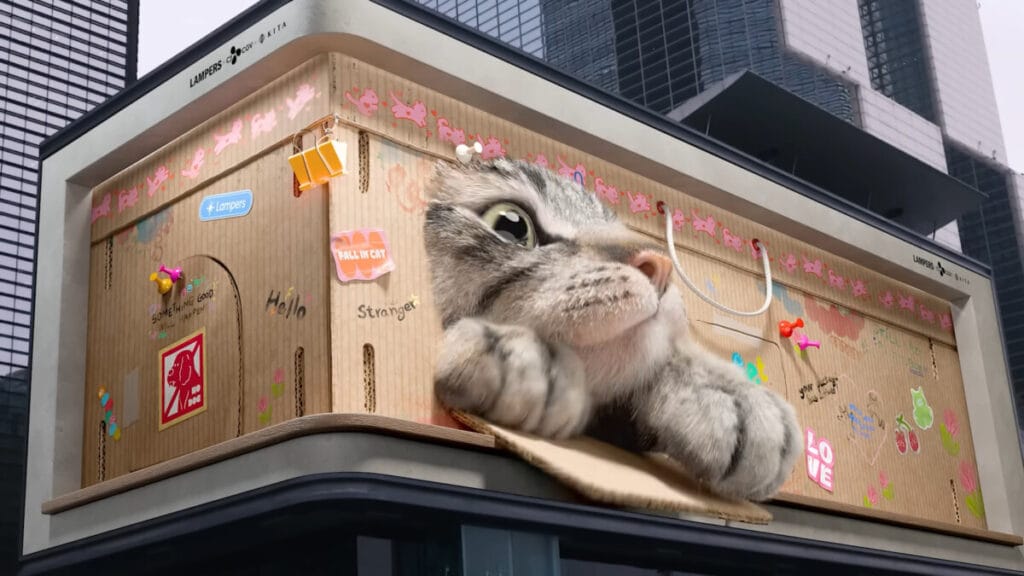
Movie connection: HUNTR/X and Saja Boys’ giant digital advertisements
COEX K-Pop Square is one of the clearest examples of modern Seoul appearing in KPop Demon Hunters.
The real location features a large curved digital screen capable of displaying striking three-dimensional-looking advertisements.
In the film, this recognizable setting is used to display promotional content involving HUNTR/X and the Saja Boys.
The movie includes an announcement connected to HUNTR/X’s song “Golden” and later promotional imagery featuring the rival group.
What Should You See?
The main attraction is the enormous outdoor digital screen.
Its content changes, so visitors should not expect to see KPop Demon Hunters advertisements during an ordinary visit.
The surrounding COEX area also offers shopping and indoor attractions.
One convenient addition is Starfield Library, known for its towering bookshelves and open interior.
Although the library is not the primary movie connection, it is a practical nearby stop.
How to Get There
Take Seoul Subway Line 2 to Samseong Station.
Use Exit 5 or 6 to access the COEX area.
The outdoor plaza does not require an admission ticket.
Is It Worth a Special Trip?
For fans interested in the movie’s K-pop industry imagery, COEX has a particularly direct connection.
However, travelers who prefer historic landmarks may find it less compelling than Bukchon or Naksan Park.
The strongest reason to visit is the combination of recognizable movie imagery and modern Seoul architecture.
Suggested visit: Approximately 45–90 minutes, longer if exploring COEX Mall.
6. Lotte World Tower and Seoul Sky (롯데월드타워 서울스카이)

Movie connection: Inspiration for HUNTR/X’s fictional home
Lotte World Tower is one of the most interesting architectural references in KPop Demon Hunters.
According to Netflix’s official location guide, the fictional building containing HUNTR/X’s penthouse was inspired by the real tower’s location and prominent place in Seoul’s skyline.
However, the animated building is not an exact reproduction.
The production team created a fictionalized version to suit the movie’s visual world.
That distinction is important for visitors hoping to identify the group’s apartment.
You can see the real tower, but you cannot visit HUNTR/X’s fictional penthouse.
What Can You Experience?
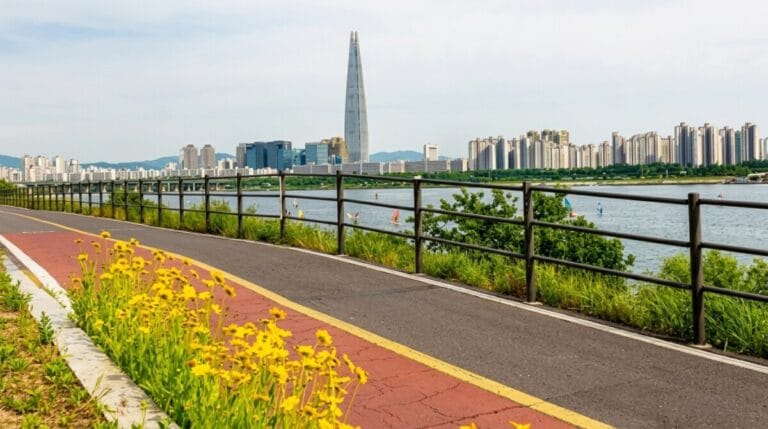
Lotte World Tower rises 555 meters above Seoul.
Its Seoul Sky observatory provides panoramic views from the upper levels of the building.
Visitors can also explore the surrounding Lotte World Mall area without purchasing an observatory ticket.
For movie fans, simply seeing the building from outside provides a meaningful connection to the film.
Seoul Sky Admission
The official general admission prices are:
- Adults aged 13 and older: KRW 33,000
- Eligible child and senior tickets: KRW 29,000
Prices and operating arrangements may change.
Check the official Seoul Sky ticket information before purchasing.
How to Get There
Take Seoul Subway Line 2 or Line 8 to Jamsil Station.
Follow signs toward Lotte World Mall and Seoul Sky.
From COEX, travelers can take Line 2 from Samseong Station toward Jamsil.
Should You Pay for Seoul Sky?
This depends on your priorities.
If you want a panoramic observation-deck experience, Seoul Sky offers an opportunity to see the city from a very different perspective.
If your main interest is the movie connection, viewing the tower from outside may be enough.
For budget-conscious travelers, this is one of the easiest places to reduce the overall cost of the itinerary without losing the essential movie reference.
Suggested visit: Approximately 1–2 hours, depending on whether you enter the observatory.
7. Ttukseom Hangang Park (뚝섬한강공원)

Fan-culture connection: Han River experiences and KPop Demon Hunters-related events
Ttukseom Hangang Park is different from the previous stops.
It is best understood as an additional Seoul experience connected to the movie’s fan culture rather than a confirmed recreation of a specific scene.
The park provides access to the Han River, an important part of Seoul’s everyday recreational culture.
It has also been associated with KPop Demon Hunters through themed public entertainment events.
Past events should not be confused with permanent attractions or regularly scheduled performances.
Why Include It in the Tour?
After two days of sightseeing and a third day exploring busy commercial areas, the Han River offers a more relaxed ending.
Visitors can walk along the riverside, enjoy views of the bridges, and experience a popular Korean leisure activity.
For travelers interested in contemporary Korean culture, this may be just as memorable as visiting another major landmark.
Try Korean Convenience-Store Ramyeon
One of the most recognizable Han River food experiences is instant ramyeon prepared using a dedicated cooking machine.
Some convenience stores near the river sell compatible noodle products and provide cooking facilities.
Availability depends on the individual store.
Shin Ramyun is a familiar option, although other varieties may be available.
You can also buy gimbap, snacks, or drinks to enjoy during your visit.
Check the store’s instructions before using a cooking machine, and dispose of food packaging properly.
How to Get There
Take Seoul Subway Line 7 to Jayang Station, also identified with Ttukseom Hangang Park.
Follow signs toward the park.
From Jamsil, travelers can use Line 2 toward Konkuk University Station and transfer to Line 7.
Is Ttukseom Essential for Movie Fans?
Not necessarily.
If your priority is visiting locations with clearly documented movie connections, the first six stops should take precedence.
However, Ttukseom is a worthwhile optional addition for travelers who want to finish their itinerary with a relaxed Han River experience.
Suggested visit: Approximately 1–2 hours.
Which KPop Demon Hunters Locations Should You Prioritize?
You do not need three full days to enjoy the most recognizable movie locations.
The best choices depend on which aspects of the film interest you most.
Best for Rumi and Jinu Fans
Choose Bukchon Hanok Village and Naksan Park.
These locations are directly associated with the characters’ relationship and offer some of the most recognizable traditional Seoul scenery.
Best for Saja Boys Fans
Choose Myeongdong and N Seoul Tower.
Myeongdong is connected to “Soda Pop,” while the Namsan setting plays an important role in the movie’s finale.
Best for HUNTR/X Fans
Choose COEX K-Pop Square and Lotte World Tower.
These locations connect with the group’s fictional celebrity lifestyle, promotional imagery, and distinctive home.
Best for Travelers on a Budget
Prioritize outdoor locations such as Bukchon, Naksan Park, Myeongdong, and the public areas around N Seoul Tower.
The main expenses will be transportation, food, and any optional paid attractions.
Best for First-Time Visitors to Seoul
Consider Bukchon, Myeongdong, and N Seoul Tower.
Together, they provide an introduction to traditional architecture, contemporary shopping culture, and Seoul’s skyline.
Can You Complete the Tour in One Day?
Visiting all seven locations in one day would require considerable travel and leave limited time for sightseeing.
A more realistic one-day alternative is to select three or four stops.
For example:
Morning: Bukchon Hanok Village
Afternoon: Myeongdong
Late afternoon: N Seoul Tower
Evening: Optional dinner or additional sightseeing
This route combines traditional Seoul, Korean street food, and one of the film’s most recognizable landmarks.
However, it does not include every important movie location.
Travelers especially interested in Rumi and Jinu may prefer replacing Myeongdong with Naksan Park.
The best itinerary is not necessarily the one with the most stops. It is the one that gives you enough time to appreciate the locations you care about.
Practical Tips for International Visitors
Use Korean Map Applications
Naver Map and KakaoMap are useful for navigating Seoul.
Search using Korean destination names when an English search produces confusing results.
Subway directions are generally easier to follow when you confirm the station name, line number, and direction of travel before boarding.
Respect Residential Neighborhoods
Bukchon Hanok Village is home to local residents.
Follow posted access restrictions and avoid photographing private interiors or blocking residential entrances.
Check Attraction Information Before Traveling
Cable car schedules, observatory admission prices, and access arrangements can change.
Check official information before visiting paid attractions.
Prepare for Hills and Stairs
Bukchon, Naksan Park, and Namsan involve uphill walking.
Comfortable shoes are recommended, particularly if you plan to explore several locations on the same day.
Do Not Expect Permanent Movie Decorations
Most locations are ordinary public landmarks rather than dedicated movie attractions.
Digital advertisements, promotional installations, and themed events may be temporary.
The purpose of this itinerary is to explore the real Seoul behind the animated setting, not to promise permanent movie-themed exhibits.
Is a KPop Demon Hunters Seoul Tour Worth It?
For fans of KPop Demon Hunters, this itinerary offers a way to connect familiar scenes with real Korean places.
Its greatest strength is the variety of Seoul experiences it brings together.
Bukchon and Naksan Park reveal traditional architecture and historic landscapes. Myeongdong and COEX introduce modern commercial culture. N Seoul Tower and Lotte World Tower highlight the city’s skyline.
However, not every location requires a long visit or an expensive admission ticket.
Travelers with limited time should prioritize the places most closely associated with their favorite scenes.
For those who want to explore beyond the movie, the itinerary also works as an introduction to several distinct sides of Seoul.
Ultimately, the most rewarding part of a KPop Demon Hunters tour may be discovering how the film transforms recognizable Korean places into a fictional world—and then experiencing those places for yourself.
For additional background on the movie’s real-world inspirations, read Netflix’s official KPop Demon Hunters locations guide.